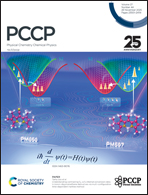
Issue 44, 2025

Understanding the microwave heating properties of La–Ce–Ni oxides based on structural, dielectric, and conductive analysis

Abstract

Microwaves can selectively and rapidly heat materials upon absorption, offering advantages over conventional heating methods. However, practical applications in oxide materials remain limited due to insufficient understanding of fundamental heating mechanisms and inadequate control of heating characteristics. In this study, we elucidated the heating mechanism of La–Ce–Ni oxides to develop oxide materials with excellent microwave heating properties. We comprehensively investigated the crystal structure, microstructure, electrical conductivity, and dielectric properties of La–Ce–Ni oxides with various compositions. In La–Ce–Ni oxides, the strong CeO2–LaNiO3 interaction induced structural distortions and modified dielectric properties, which predominantly contributed the heating properties under a microwave electric field, rather than electrical conductivity. The dielectric properties, rather than the electrical conductivity, were the primary factors determining the microwave heating performance of this system.

Graphical abstract: Understanding the microwave heating properties of La–Ce–Ni oxides based on structural, dielectric, and conductive analysis

Supplementary files

Transparent peer review

To support increased transparency, we offer authors the option to publish the peer review history alongside their article.

View this article’s peer review history

Article information

Article type
Paper
Submitted
14 Jun 2025
Accepted
09 Oct 2025
First published
21 Oct 2025
This article is Open Access
Creative Commons BY-NC license

Phys. Chem. Chem. Phys., 2025,27, 23802-23812

Understanding the microwave heating properties of La–Ce–Ni oxides based on structural, dielectric, and conductive analysis

T. Hamashima, M. Nishioka, T. Sugiyama, K. Watanabe, H. Hojo and H. Einaga, Phys. Chem. Chem. Phys., 2025, 27, 23802 DOI: 10.1039/D5CP02279G

This article is licensed under a Creative Commons Attribution-NonCommercial 3.0 Unported Licence. You can use material from this article in other publications, without requesting further permission from the RSC, provided that the correct acknowledgement is given and it is not used for commercial purposes.

To request permission to reproduce material from this article in a commercial publication, please go to the Copyright Clearance Center request page.

If you are an author contributing to an RSC publication, you do not need to request permission provided correct acknowledgement is given.

If you are the author of this article, you do not need to request permission to reproduce figures and diagrams provided correct acknowledgement is given. If you want to reproduce the whole article in a third-party commercial publication (excluding your thesis/dissertation for which permission is not required) please go to the Copyright Clearance Center request page.

Read more about how to correctly acknowledge RSC content.

Social activity

Spotlight

Advertisements