


 PLATFORM UPDATE:


Nanomedicine-mediated co-expression of a PD-1 blockade agent and CXCL9 synergizes T cell infiltration and activation in solid tumors

Abstract
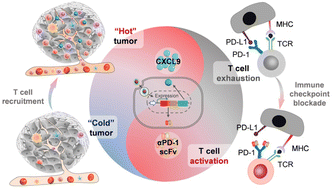
Considerable progress has been made in cancer immunotherapy with the use of immune checkpoint blockade (ICB). However, its clinical efficacy remains limited due to poor T cell infiltration in solid tumors. Here, we engineered a co-expression plasmid-based gene nanomedicine to drive tumor cells to simultaneously secrete the single-chain variable fragment of an antibody targeting programmed cell death protein 1 (αPD-1 scFv, a PD-1 blocking agent) and C–X–C Motif Chemokine Ligand 9 (CXCL9, a T cell chemokine). The gene nanomedicine showed a synergistic effect on enhancing the migration and the cytotoxicity of CD8+ T cells in vitro and in vivo. With its dual functions, the growth of subcutaneous melanoma was effectively inhibited, and the survival time of melanoma-bearing mice was prolonged. This study provides a synergistic strategy for improving the therapeutic efficacy of immune checkpoint blockade through nanoparticle-delivered nucleic acid drugs to modulate the tumor microenvironment.
 Please wait while we load your content...


