


 PLATFORM UPDATE:


Development of a surface plasmon resonance biosensor for the quantification of bevacizumab in human serum
 *a
*a
Abstract
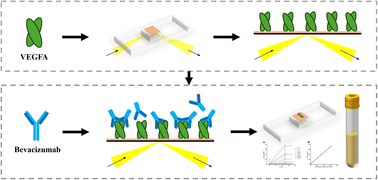
Bevacizumab, a monoclonal antibody targeting vascular endothelial growth factor A (VEGFA), is a widely used anti-angiogenic drug for malignancies. Its complex pharmacokinetics causes significant inter-individual concentration variations, making therapeutic drug monitoring (TDM) essential. Conventional liquid chromatography-tandem mass spectrometry (LC-MS/MS) and enzyme-linked immunosorbent assay (ELISA) for the TDM of bevacizumab suffer from limitations such as complex sample preparation and large sample volume requirements, highlighting the need for novel detection technologies. In this study, a surface plasmon resonance (SPR) biosensor for quantifying bevacizumab in human serum was developed. VEGFA was immobilized on a CM5 sensor chip, demonstrating high activity and specificity for bevacizumab. To mitigate nonspecific interference from the serum matrix, bovine serum albumin (BSA) was immobilized on the reference flow cell (Fc), serum dilution was optimized, and an appropriate sample diluent was selected. The sensor exhibited a detection range of 25–3200 ng mL−1. Intra-day and inter-day precision showed a coefficient of variation (CV) below 15% and an accuracy ranging between 85% and 115%. Finally, the biosensor was successfully applied to 15 clinical serum samples, showing significant correlation with the ELISA results. Compared to traditional methods, the SPR biosensor offers simpler preparation, faster analysis, and smaller sample volumes, which provides a new option for the TDM of bevacizumab.
 Please wait while we load your content...


