


 PLATFORM UPDATE:


Multi-analytical characterization of the physicochemical stability of proteinaceous binders in traditional painted coatings
 *b
*b
Abstract
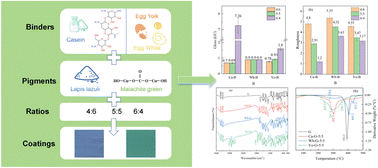
Proteinaceous binders (casein, egg white, and egg yolk) remain widely used in traditional tempera and are central to conservation decisions for painted cultural heritage. This study presents a systematic evaluation of binder–pigment systems comprising malachite green and lapis lazuli applied on wood substrates, employing a multi-technique approach that includes colorimetry, gloss and surface-roughness measurements, adhesion testing, thermogravimetric analysis (TGA) and Fourier-transform infrared (FTIR) spectroscopy. Quantitative surface measurements show that casein markedly increases specular reflection (gloss up to ∼39 GU) but induces measurable darkening and desaturation (L* decreased by 12–15%; C* decreased by 25–30%), whereas egg white preserves chromatic stability with limited gloss gain and egg yolk produces intermediate effects. TGA demonstrates that higher binder-to-pigment ratios delay the onset of thermal decomposition and that the malachite green–casein system retains higher residual mass and superior thermal stability versus egg-derived binders. FTIR spectra reveal shifts in amide-region vibrations consistent with coordination between casein phosphate/carboxyl groups and metal ions in the pigments. Together, these multi-technique results provide a robust, comparative framework linking binder chemistry to macroscopic coating performance and offer practical guidance for binder selection and formulation in conservation practice. The practical guidance provided in this work is limited to malachite green and lapis lazuli pigments, and careful consideration is required when applying these results to other pigments with different physicochemical properties.
 Please wait while we load your content...


