


 PLATFORM UPDATE:


Detection of E. coli O157:H7 using a molecularly imprinted bacterial bipolar electrode and an Au@metal–organic framework
 *a
*a
Abstract
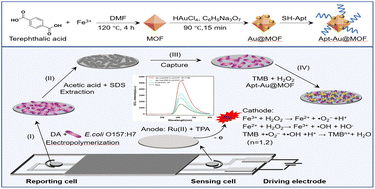
A molecularly imprinted bacterial bipolar electrode (BPE) sensor combined with an Au@metal–organic framework (Au@MOF) was developed for E. coli O157:H7 detection. Firstly, dopamine (DA) was mixed with E. coli O157:H7 through an electropolymerization process to form a polymer film on the BPE cathode. After bacteria removal, the molecularly imprinted bacterial polydopamine (PDA) film remained on the cathode, exhibiting high specificity for bacterial recognition and binding. Secondly, the E. coli O157:H7 aptamer was integrated into the Au@MOF surface by Au–SH covalent bonds. Then, E. coli O157:H7 was present at the cathode, and the Au@MOF was assembled onto the electrode surface through the specific binding of aptamers to E. coli O157:H7. Finally, a 3,3′,5,5′-tetramethylbenzidine/H2O2 (TMB/H2O2) solution was added to the cathode. Au@MOF exhibited peroxidase-like activity and could catalyze the reduction reaction of the TMB/H2O2 system. Due to the electrical neutrality principle of the BPE, the oxidation reaction of the [Ru(bpy)3]2+/tripropylamine ([Ru(bpy)3]2+/TPA) system occurred at the anode, generating a distinct electrochemiluminescence (ECL) signal. The sensor detected E. coli O157:H7 within a concentration range of 1 to 106 CFU mL−1, with a detection limit of 1 CFU mL−1, demonstrating high selectivity and sensitivity. This BPE platform, integrating molecular imprinting and Au@MOF-assisted oxygen reduction, shows significant potential for bacteria detection in various applications.
 Please wait while we load your content...


