


 PLATFORM UPDATE:


Stability and performance investigation using different electrode configurations and electrolyte compositions in an oxyhydrogen gas generator†
 *ab
Pei
Ji,
*a
*ab
Pei
Ji,
*a
Abstract
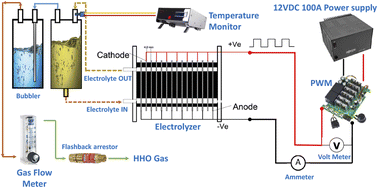
This study aimed to develop an efficient HHO generator with higher gas production, enhanced electrodes, and stable current density. For HHO generator stack fabrication, 15 plates of 304L stainless steel were utilized, accompanied with a 4 mm rubber separator to maintain the gap between electrodes. Each plate in the stack was connected via a separate wire through lug spot welding, enabling the assembly of different configurations for testing. The study introduced three distinct configurations: in the first configuration, no neutral plate was used between the electrodes; the second incorporated one neutral plate; and the third configuration utilized six neutral plates between the cathode and anode. These configurations were tested at 2, 4, and 6 g per L KOH concentrations. In addition, the HHO generator was tested using the pulse width modulation (PWM) approach to adjust voltages at different levels. According to the results, Configuration-2 produced the most significant amount of oxyhydrogen gas with KOH concentrations of 4 and 6 g L−1. Further examination showed that the gas production was unstable when the generator operated continuously for 10 hours, displaying a consistent decrease over time. However, when tested at 2 g L−1 concentration, the yield was slightly lower but more stable. Additionally, it was observed that in Configuration 1, applying higher voltage and current to each cell in the stack led to the formation of iron oxide, resulting in a significant 43% drop in current density in the first 10 hours, which reached 65% after 10 days. In this study, a mathematical model was developed to predict the electric conductivity of the prepared aqueous electrolytic solution of KOH at different temperatures, along with a mathematical model for predicting HHO gas production at different voltages, KOH concentrations and electrode arrangements.
 Please wait while we load your content...


