


 PLATFORM UPDATE:

From byproducts to NLO-active dyes: catalyst-free transfer hydrogenation in the modular synthesis of merocyanines†

Abstract
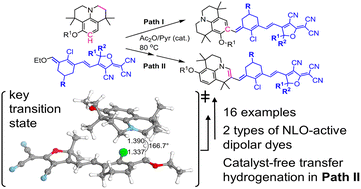
We report an unexpected direct transfer hydrogenation (TH) from 8-alkoxyjulolidine as a strong electron donor to tricyanofuran-based hemicyanines and tandem condensation for the synthesis of push–pull chromophores. Density functional theory calculations identify the α-hydride transfer of julolidine derivatives, instead of nucleophilic addition, as the key initial step of reaction cascades, followed by efficient β-deprotonation to generate a nucleophilic enamine of isojuloline that condenses in situ with a second equivalent of hemicyanines as electrophiles. The scheme represents an exceptional example of TH reactions from 8-alkoxyjulolidine to highly polarizable hemicyanines, notably under simple reaction conditions without using potent catalysts of metal complexes or Lewis acids. The resulting products of isojuloline-based merocyanines exhibit strong near-infrared (NIR) absorption and large first hyperpolarizabilities. The study suggests that direct TH can be exploited to construct new NIR merocyanines by following rational, regioselective condensation pathways for photonic applications.
 Please wait while we load your content...


