


 PLATFORM UPDATE:

Fatty acids and their sn-2 positional distribution in breast milk and their association with edible oils in maternal diet: a study of five regions in China†
 *ab
and
*ab
and
Abstract
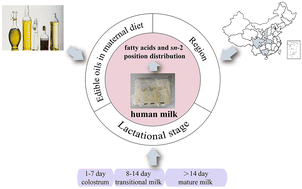
This study analyzed total fatty acids (FAs) and their sn-2 positional distribution in triacylglycerol (TAG) in breast milk (n = 300) from three lactational stages in five regions of China, and further investigated their association with the effect of the type of edible oil consumed by lactating mothers. A total of 33 FAs including 12 saturated fatty acids (SFAs), 8 monounsaturated fatty acids (MUFAs), and 13 polyunsaturated fatty acids (PUFAs) were determined using GC. Breast milk from different regions showed significant differences in MUFAs, sn-2 MUFAs, and PUFAs (P < 0.01, P < 0.001, and P < 0.001). The results showed that 10 : 0, 18 : 0, 18 : 1 n-9, 18 : 2 n-6 (LA), and 18 : 3 n-3 (ALA) were mainly esterified at the sn-1 and sn-3 positions; 20 : 4 n-6 (ARA) seemed homogeneously esterified at all sn-positions in TAG, while 14 : 0, 16 : 0, and 22 : 6 n-3 (DHA) were primarily esterified at the sn-2 position. In breast milk, major FAs (16 : 0, 18 : 1 n-9, LA, and ALA) and the ratio of PUFAs (LA/ALA and n-6/n-3) were obviously influenced by maternal edible oils. Breast milk from mothers consuming rapeseed oil had the lowest LA (∼19%) and the highest ALA (∼1.9%). The MUFAs, especially 18 : 1 n-9, in breast milk from mothers consuming high oleic acid oils were significantly higher than those in breast milk from mothers consuming other types of edible oils. These results provide a potential nutritional strategy for better breastfeeding by specifically adjusting maternal edible oils despite other fat sources being part of the diet of lactating women.
 Please wait while we load your content...


