


 PLATFORM UPDATE:

Comparative evaluation of long non-coding RNA-based biomarkers in the urinary sediment and urinary exosomes for non-invasive diagnosis of bladder cancer†
 *a
*a
Abstract
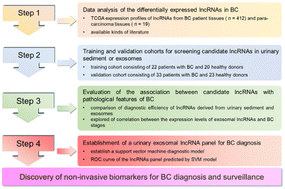
Bladder cancer (BC) frequently causes a heavy disease burden for patients because of its easy recurrence. There is still a lack of convenient and effective methods to diagnose or monitor BC in the clinic. Emerging evidence suggests that long non-coding RNAs (lncRNAs) in urine are promising biomarkers for BC diagnosis. This study aimed to evaluate the performance of lncRNAs in urine for BC diagnosis. Seven lncRNAs (UCA1, H19, MALAT1, TUG1, GAS5, RMRP, and LINC01517) were selected as candidates by analyzing The Cancer Genome Atlas database or the literature. Expression of the candidate lncRNAs in the urinary sediment and exosomes was determined in a training cohort (n = 42) and an independent validation cohort (n = 56). Compared with normal controls, the patients with BC had a higher expression of RMRP, UCA1 and MALAT1 in the urinary exosomes and a higher expression of MALAT1 in the urinary sediment. Compared with MALAT1 in the urinary sediment, RMRP, UCA1, and MALAT1 in urinary exosomes exhibited higher combined diagnostic performance for BC diagnosis. Furthermore, higher RMRP expression in urinary exosomes was correlated with advanced tumor stages. A lncRNA panel consisting of urinary exosomal RMRP, UCA1 and MALAT1 was used to establish the support vector machine (SVM) model. An area under receiver operating characteristic (ROC) curve of the lncRNA panel predicted by the SVM model was 0.875 (sensitivity = 80.0% and specificity = 81.4%). Therefore, the lncRNA panel consisting of three urinary exosomal RMRP, UCA1 and MALAT1 has the potential to be biomarkers for BC diagnosis.
 Please wait while we load your content...