


 PLATFORM UPDATE:


Phosphoproteomic analysis reveals the effects of sleep deprivation on the hippocampus in mice†
 *b
*b
Abstract
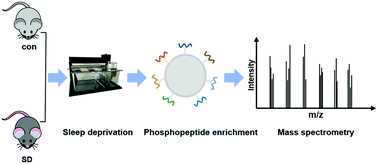
Sleep is essential for brain physiology, including nerve repair, neuronal activity, and metabolite clearance. The hippocampus is responsible for short-term memory, long-term memory, and spatial positioning. Herein, we investigated the effects of sleep deprivation on protein phosphorylation and related signaling pathways in the mouse hippocampus. The treatment group was sleep deprived for nine hours a day, and at the end of sleep deprivation, we removed the hippocampus for phosphoproteomic analysis. Through this analysis, we identified 65 sites and 27 proteins whose phosphorylation was significantly different between sleep-deprived animals and control animals. Differentially phosphorylated proteins (DPPs) were mainly distributed in the postsynaptic density, cytoplasm, and synapse. They participated in metabolic pathways, endocytosis, oxidative phosphorylation and other processes, and they were associated with Huntington's disease, Parkinson's disease, Alzheimer's disease, etc. Functional analysis of the phosphoproteome shows that sleep deprivation significantly affects the level of protein phosphorylation in the hippocampus of mice. This is the first reported study that has used phosphoproteomics to investigate the effects of sleep deprivation on hypothalamic regions. This study provides data resources that can serve as a valuable reference for sleep mechanism research, sleep disorder treatment, and drug development.
 Please wait while we load your content...