


 PLATFORM UPDATE:

Comprehensive expression profiles of mRNAs, lncRNAs and miRNAs in Kashin-Beck disease identified by RNA-sequencing
 a
Xiaoxia
Dai
*ab
a
Xiaoxia
Dai
*ab
Abstract
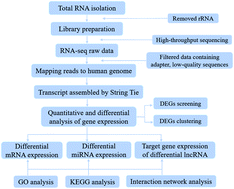
Kashin-Beck disease (KBD) is a chronic, endemic and deforming osteochondropathy, whose basic pathological alterations include apoptosis and necrosis of chondrocytes in articular cartilage and growth plates and imbalanced extracellular matrix metabolism. Numerous studies have reported that long noncoding RNAs (lncRNAs) and microRNA (miRNAs) are aberrantly expressed in KBD. Our study was comprised of 5 KBD patients and 5 healthy individuals and we compared the expression profiles of mRNAs, lncRNAs and miRNAs through RNA-sequencing (RNA-seq). Bioinformatic analysis of GO and KEGG was employed to conduct functional annotation and pathway enriched analysis. In total, 3194 mRNAs, 4103 lncRNAs and 1550 miRNAs were detected to be differentially expressed by RNA-seq (P < 0.05; |log2FC| ≥1). The lysosome pathway, Wnt signaling pathway, TNF signaling pathway, endocytosis and mTOR signaling pathway were identified to be involved in the KBD development according to the result of the KEGG analysis. In addition, a ceRNA network based on lncRNA–miRNA–mRNA was constructed to probe the intricate regulatory mechanism and interaction between transcripts, which was visualized using the Cytoscape software. The ce-lncRNAs of four aberrantly expressed genes, FOSB, EGR3, BCAM and SOX6, were determined through the network. Among the identified DElncRNAs, we selected 8 differentially expressed lncRNAs to confirm the reliability of RNA-seq data by qRT-PCR in 11 KBD patients and 11 healthy individuals. We aimed to provide a comprehensive understanding ofmRNA, lncRNA and miRNA alterations between KBD patients and healthy individuals, and meanwhile reveal several potential causative molecular and signaling pathways involved in KBD.
 Please wait while we load your content...