


 PLATFORM UPDATE:

The extent of carbon surface oxygen affinity and its effects on the activity of metal-free carbon catalysts in the oxygen reduction reaction: the interplay of porosity and N-, O- and S-enriched surface chemistry†

Abstract
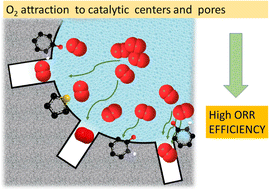
Highly porous carbon black, Black Pearl 2000, was modified with urea and thiourea to introduce only N- or N- and S-containing functional groups, affecting its activity in the oxygen reduction reaction. The samples were exposed to heating at 450 and 850 °C to vary surface features. Their chemistry and porosity were evaluated using various physical and chemical methods. An almost identical porosity of the urea-modified samples allowed for the evaluation of the effects of their surface chemistry on the ORR, assuming similar contributions of their micropores activity to an adsorption-induced oxygen reduction process. Even though the results suggested that pyridones were involved in the oxygen reduction activity, the number of electron transferred (∼4) and the onset potential were found to be directly dependent on the affinity of the surface to transport and adsorb dissolved oxygen, either into ultramicropores and onto N- and/or S- and N-based catalytic centers. The introduction of N and S led to a high catalytic activity. Sulfur, mainly in hydrophobic thiophenic species, compensated for the smaller absolute amounts of nitrogen. For the thiourea-modified series, the effect of ultramicropores in advancing the ORR was clearly indicated by the higher activity with fewer catalytic sites on the surface.
 Please wait while we load your content...


