


 PLATFORM UPDATE:

Gold nanoparticles grown on a hydrophobic and texturally tunable PDMS-like framework†

Abstract
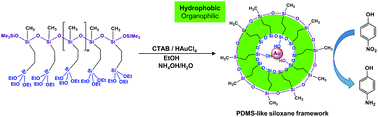
Mesoporous silicas are among the most suitable high-surface area solids to support small-sized metal clusters and nanoparticles. Unfortunately, the instability of silica in water constitutes a serious impediment for its widespread use and large implementation as a catalytic support for fine chemical synthesis and for biomass upgrading in the context of biorefineries. While end cupping silanols provides a way for delaying framework degradation, further investigations are needed to design more robust, water-resistant supports. Prompted by the success of polydimethylsiloxane (PDMS) in surface coating and water-repellent technologies, we herein explore the transformation of triethoxysilyl-functionalized polymethylethylsiloxane – a sol–gel analogue of PDMS – into a hydrophobic disordered mesoporous MCM-41-type siloxane framework. The concomitant addition of a soluble gold precursor during the mesophase formation followed by surfactant removal resulted in the entrapment and growth of gold nanoparticles inside. Thermally induced evolution of the PDMS-like siloxane framework was further investigated both under inert and open air atmospheres. Gold accessibility was ascertained during the transformation of nitrophenol, a harmful water pollutant, into aniline as a valuable amine-based precursor. Owing to the virtues of the PDMS-like framework for slowing down water and oxygen diffusion, the catalysts preserve their activity even after 18 months of storage under an open air atmosphere.
 Please wait while we load your content...


