


 PLATFORM UPDATE:


Bifunctional liposomes reduce the chemotherapy resistance of doxorubicin induced by reactive oxygen species†

Abstract
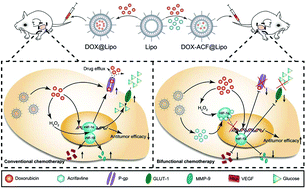
Doxorubicin (DOX) liposome is a widely used nano-medicine for colorectal cancer treatment. However, doxorubicin therapy increases the level of reactive oxygen species (ROS) in tumor cells, such as hydrogen peroxide (H2O2), which can stabilize hypoxia-inducible-factor-1α (HIF-1α). In a tumor hypoxic microenvironment, HIF-1 can up-regulate tumor-resistance related proteins, including P-glycoprotein (P-gp), glucose transporter 1 (GLUT-1), and matrix metalloproteinase 9 (MMP-9), leading to tumor tolerance to chemotherapy. The functional inhibition of HIF-1 can overcome this resistance and enhance the efficacy of tumor therapy. Here, we encapsulated one of the most effective HIF-1 inhibitors, acriflavine (ACF), and DOX in liposomes (DOX-ACF@Lipo) to construct bifunctional liposomes. ACF and DOX, released from DOX-ACF@Lipo, could effectively suppress the function of HIF-1 and the process of DNA replication, respectively. Consequently, the bifunctional liposome has great potential to be applied in clinics to overcome chemotherapy resistance induced by hypoxia.
 Please wait while we load your content...


