


 PLATFORM UPDATE:

Development and validation of a novel fluorescence method via sequential injection analysis to determine formaldehyde in drinking water†

Abstract
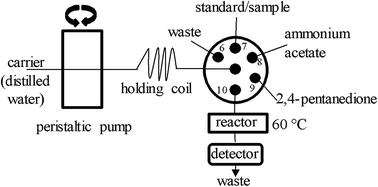
Herein, a new method for the determination of formaldehyde in drinking water was proposed by sequential injection analysis using a fluorescent filter detector. The method allowed the determination of formaldehyde at 0.05 mg L−1, which is below the permissible limit of formaldehyde in drinking water (0.9 mg L−1), without a preconcentration step. The method was optimized using factorial designs evaluating the principal factors: 2,4-pentanedione concentration, volume of the reagent and buffer, reaction pH, temperature and aspiration sequence. A twice injection of the sample at the beginning and end of the sequence allowed the quantification of formaldehyde at 0.05 mg L−1. Once the method was optimized, it was validated using the principal parameters such as linear range (from 0.05 mg L−1 to 1.0 mg L−1); detection limit (0.01 mg L−1); intra-laboratory reproducibility of 6.73% and recoveries between 86% and 124% for different samples of drinking water. The method is simple and it can be easily implemented in routine laboratories, and it could be easily automated.
 Please wait while we load your content...


