


 PLATFORM UPDATE:


Real-time probing of mercury using an efficient “turn-on” strategy with potential as in-field mapping kit and in live cell imaging†
 *a
Chunyang
Yu
*a
*a
Chunyang
Yu
*a
Abstract
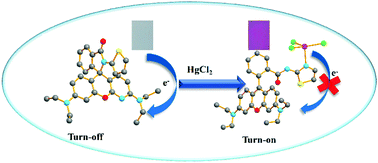
Based on a rhodamine scaffold as a fluorophore and 2-aminothiazole as a receptor, we present a highly selective and sensitive sensor (TS). An enhanced photophysical response (fluorescence as well as absorption) accompanied by high sensitivity and selectivity was observed upon interaction of TS with Hg2+ among various competitive cations (Ag+, Al3+, Ba2+, Ca2+, Co3+, Co2+, Cd2+, Fe3+, Fe2+, K+, Li+, Mg2+, Mn2+, Cu2+, Pb2+, Ni2+, Na+ and Zn2+) in CH3CN : H2O (7 : 3 v/v, HEPES buffer 10 mM pH 7.0). The synthesized sensor can detect Hg2+ as low as 0.326 μM with a complexation constant of 2.37 × 10⁶ M−1. This complexation between TS and Hg2+ is reversible in the presence of ethylenediaminetetraacetate (EDTA). Furthermore, single crystal X-ray diffraction (XRD) and Job's plot results show a 1 : 1 binding stoichiometry. The most interesting feature of the sensor is the real-time determination of Hg2+ in real contaminated water. Furthermore, the fabricated sensor can be employed as an intracellular monitoring agent for live cell imaging of the HeLa cell line.
 Please wait while we load your content...


