


 PLATFORM UPDATE:

Biosynthesis, characterization and potentiality of lipopeptides produced by Bacillus flexus S1 without inductive carbon sources†
Abstract
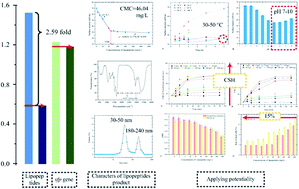
This study newly isolated a bacterial stain of Bacillus flexus S1 which had abilities of synthesizing lipopeptides without any inductive operations, and thus it could effectively save operational procedures or cost. This microorganism produced 1.53 g L−1 of lipopeptides with a basal medium, which was 2.59-fold higher than that with an inductive medium. Meanwhile, the sfp gene was highly expressed under non-inductive conditions. The results firstly noted micellization characteristics of a biosurfactant, including a 46.04 mg L−1 critical micelle concentration, the main chemical structure, and micelles mainly distributing at 30.2–52.5 nm and 181.9–239.9 nm. The lipopeptides indicated good stability over a temperature range of 30–50 °C and pH range of 6–9. Furthermore, monatomic (K+ and Na+) and divalent (Ca2+ and Mg2+) ions respectively alleviated generating smaller and bigger micellar aggregates. The lipopeptides could effectively increase the solubility of hydrophobic organic carbons. As the lipopeptides were adopted together with oil-degrading bacteria, it increased the hydrophobicity of bacterial cells by 1.92–3.04 fold, and had low toxicity to bacterial cells. This study not only provided a new lipopeptides producing bacterium which did not need any conductive operations, but also systematically investigated the characteristics of lipopeptides, providing impactful significance for commercial application.
 Please wait while we load your content...


