


 PLATFORM UPDATE:

Binary gene vectors based on hyperbranched poly(l-lactide-co-polyglycerol) and polyethylenimine for prolonged transgene expression via co-assembly with DNA into fiber core–shell triplexes†
Abstract
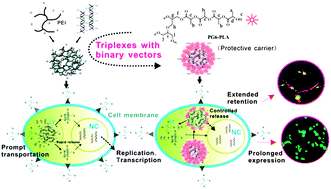
Hyper-branched PG6–PLA polymers based on hydrophilic hyperbranched polyglycerol (PG6) and the ester chain poly(L-lactide) (PLA) were synthesized and facilitated to develop a novel biocompatible release-controlled gene vector. The hyper-branched structure of PG6–PLA was verified by NMR, FT-IR and SEC-MALLS analysis. The co-assembly of PG6–PLA with high molecular weight polyethylenimine (PEI) of 25 kDa was discussed. The results of TEM, fluorescence tracking and size/zeta-potential analysis revealed that the PG6–PLA/PEI25k/DNA could co-assemble to generate a novel fiber core–shell conformation. In vitro cell experiment demonstrated that PG6–PLA significantly enhanced the ability of PEI25k to remain within cells and mediate luciferase and EGFP expression in the human embryonic kidney cell line 293T and human cervical carcinoma cell line HeLa, which was accompanied by improved cell biocompatibility and an extended period of transgene expression. Importantly, the binary vector PG6–PLA/PEI25k exhibited specific affinity to some tumour cell lines including HeLa and the HepG2 human hepatoma cell line. These results suggested that the novel gene delivery system based on fiber core–shell PG6–PLA/PEI25k/DNA can serve as a gene delivery system to mediate more efficient transgene expression.
 Please wait while we load your content...


