


Erasable and regenerated multicomponent patterned polymer brushes

Abstract
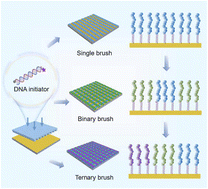
Patterning polymer brushes represents a significantly controllable approach to surface modifications, capable of producing tailored interfacial properties. In particular, multi-component patterned polymer brushes consist of various polymer types, thereby offering enhanced versatility in surface functionalization and interface regulation. Here, we present a novel DNA hybridization-based microcontact printing technique (µCP) for the fabrication of patterned polymer brushes, which enhances the precision and controllability of the patterning process. Initially, µCP is employed to immobilize thiol end-functionalized single-stranded DNA (ssDNA) to a gold substrate. The immobilized ssDNA subsequently hybridizes with initiator-functionalized complementary ssDNA, facilitating surface-initiated atom transfer radical polymerization (SI-ATRP) within the delineated regions to fabricate patterned polymer brushes. This method enables precise control over the molecular weight, chemical composition, and functionality of polymer brushes, and also allows reversible grafting of polymer brushes by modulating the unwinding and rehybridization of double-stranded DNA (dsDNA). Furthermore, this surface grafting technique exhibits remarkable adaptability for constructing binary and ternary brush surfaces through the integration of diverse polymer types. Consequently, it provides a robust platform for developing multifunctional surfaces tailored to specific applications, such as biosensing and diagnostics.
- This article is part of the themed collections: 2026 Chemical Science HOT Article Collection and 2026 Chemical Science Covers
 Please wait while we load your content...


