


 PLATFORM UPDATE:

Neuroprotective effects of fermented yak milk-derived peptide LYLKPR on H2O2-injured HT-22 cells†
 *ab
*ab
Abstract
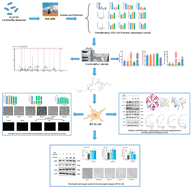
This study explored the neuroprotective effect of the peptide LYLKPR derived from fermented yak milk by Lactiplantibacillus plantarum JLAU103 on H2O2-injured HT-22 cells. Peptide LYLKPR showed good stability in the simulated gastrointestinal tract and strong penetrating ability of the blood–brain barrier (BBB) in vitro. LYLKPR could activate the Nrf2/Keap-1/HO-1 pathway, increase the activities of SOD and CAT, and reduce the levels of ROS and MDA in HT-22 cells. In addition, LYLKPR controlled the activation of the NLRP3 inflammasome by inhibiting the oxidative stress, ultimately preventing the cleavage of pro-IL-18 and pro-IL-1β by caspase-1, and reducing the level of intracellular mature IL-18 by 29.08%. Based on the molecular docking verification, LYLKPR could effectively bind to the Keap-1 protein, and directly inhibit the inflammasome to significantly increase intracellular BDNF, synaptophysin, and PSD95, and protect synaptic function. Collectively, LYLKPR ameliorated oxidative stress-mediated neuronal injury by inhibiting the NLRP3 inflammasome via modulation of the Nrf2/Keap-1/HO-1 pathway.
- This article is part of the themed collection: Food & Function HOT Articles 2022
 Please wait while we load your content...


