


(−)-Epicatechin prevents alterations in the metabolism of superoxide anion and nitric oxide in the hearts of l-NAME-treated rats
Abstract
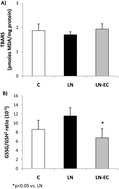
The aim of this work was to evaluate the effects of (−)-epicatechin administration in the heart of a rat model with reduced NO production that follows a short-term treatment with L-NAME. Sprague-Dawley rats were treated for 4 d with L-NAME in the absence or presence of (−)-epicatechin in the diet. The redox status in cardiac tissue was improved by (−)-epicatechin administration. L-NAME treatment induced a decrease in NO synthase activity (−62%, p < 0.05) and an increase in NADPH-dependent superoxide anion production (+300%, p < 0.05) that were totally prevented by (−)-epicatechin administration. These effects of (−)-epicatechin were associated with a higher endothelial NO synthase phosphorylation at an activation site and a reduced expression of the regulatory subunit, p47phox, suggesting the involvement of posttranslational mechanisms in (−)-epicatechin action. Thus, the (−)-epicatechin treatment would restore NO steady state levels in vivo through effects on both, its synthesis and degradation via the reaction with superoxide anion. The fact that (−)-epicatechin is commonly present in human diet makes this compound a reasonable explanation for the positive cardiovascular effects of a high consumption of fruits and vegetables.
- This article is part of the themed collection: VI International Conference on Polyphenols and Health
 Please wait while we load your content...


