DOI:
10.1039/D5OB00216H
(Communication)
Org. Biomol. Chem., 2025,
23, 3314-3319
pH-Activated NIR fluorescent probe for sensitive mitochondrial viscosity detection†
Received
6th February 2025
, Accepted 5th March 2025
First published on 6th March 2025
Abstract
Understanding mitochondrial viscosity is crucial for comprehending cellular health and function. Therefore, accurate and sensitive measurement of mitochondrial viscosity is essential for advancing medical diagnostics and treatment strategies. In this study, a novel near-infrared (NIR) fluorescent probe SSN was developed, based on the dual mechanisms of Excited-State Intramolecular Proton Transfer (ESIPT) and Twisted Intramolecular Charge Transfer (TICT). SSN incorporates a thiophene-enhanced HBT structure and a hemicyanine moiety for effective mitochondrial targeting. It exhibits a large Stokes shift (240 nm) and high sensitivity to viscosity changes, enabling accurate detection under physiological conditions. The probe was successfully applied in HepG2 cells, zebrafish, and glucose-treated systems, demonstrating its potential for real-time viscosity monitoring in complex biological environments.
Mitochondrial viscosity stands as a pivotal parameter within the intracellular microenvironment, exerting significant influence on the interaction among intracellular biomolecules, chemical signal transmission, and the diffusion of active metabolites.1–4 Departures from typical viscosity levels are closely linked to various cellular dysfunctions and the initiation of pathologies, encompassing Alzheimer's disease, hypertension, diabetes, even cancer.5,6 Recent research highlights mitochondrial viscosity as a precise marker of oxidative stress, emphasizing the need for real-time, effective detection methods to advance medical diagnostics and treatment strategies.7–9
Despite the rapid development of various analytical methods such as electrochemical analysis, spectroscopic analysis, and chromatographic analysis, ideal tools for polarity detection remain scarce. Fluorescence imaging has gained prominence due to its high selectivity, sensitivity, stability, minimal cytotoxicity, and real-time observation capabilities.10–18 Among fluorescence mechanisms, Excited-state Intramolecular Proton Transfer (ESIPT) has drawn significant interest since Weller's 1950s discovery, as it avoids issues like self-absorption and inner-filter effects seen in conventional fluorophores.19–22 ESIPT-based probes, such as 2-(2-hydroxyphenyl)benzothiazole (HBT) derivatives, are widely studied due to their large Stokes shifts (>100 nm), tunable fluorescence, and ease of modification.23–29 However, limitations such as blue-shifted emission and false positives in single-point detection systems hinder their broader application.
Near-infrared (NIR) fluorescent probes with donor–π–acceptor (D–π–A) structures offer deeper tissue penetration and reduced damage, addressing some of these challenges.30–35 Most small organic molecules with a D–π–A structure often exhibit the typical twisted intramolecular charge transfer (TICT) phenomenon, making them suitable as microenvironment-sensitive probes.36–43 Combining ESIPT and TICT mechanisms enables the design of NIR mitochondrial-targeted probes with heightened sensitivity to viscosity changes. Sequentially activated dual-locked fluorescence probes further mitigate false positives, offering higher accuracy through two-step activation processes.44–48 Despite these advancements, dual-locked probes for viscosity detection in biological systems remain underexplored.
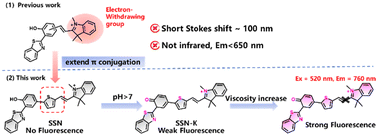
In this study, a novel probe SSN, based on HBT and hemicyanine, was developed for sequential viscosity detection. HBT's photophysical properties were enhanced by integrating a thiophene group to extend π-conjugation, while a hemicyanine moiety served as an electron acceptor and mitochondrial-targeting unit. SSN exhibited a large Stokes shift (240 nm) and highly sensitive turn-on responses to viscosity. Under acidic conditions, the TICT state of SSN is suppressed, minimizing fluorescence responses. At mitochondrial pH (8.0–8.5), the HBT structure transitions from enol to keto form (key 1), amplifying fluorescence in response to elevated viscosity (key 2). This dual activation yields high signal-to-background ratio imaging of mitochondrial viscosity. SSN was applied to monitor mitochondrial viscosity in HepG2 cells under varying pH levels, validated in nystatin-treated cells and zebrafish, and tested for pH and viscosity changes during glucose treatment. These findings highlight SSN as a practical tool with broad application potential (Scheme 1).
 |
| | Scheme 1 Rational design of SSN to viscosity. | |
Experimental section
Materials and apparatus
Reagents were marketably accessible and utilized with no additional refinement. Obtained 1H NMR and 13CNMR spectra in ppm (δ) using Brucker Avance 400 MHz spectrometers with reference to tetramethylsilane (TMS) in CDCl3 or DMSO-d6. Reaction monitoring was carried out using thin layer chromatography (TLC) on pre-coated silica gel plates (Merck 60 F254 nm) with a UV254 fluorescent indicator. Silica gel with a mesh size of 300–400 was employed for column chromatography. Obtained fluorescence and UV-Vis spectra using SpectraMax M5 (Molecular Devices).
Synthesis of compound 2.
The synthetic route of SSN was shown in Scheme S1.† According to the previous report, the initial compound 1 was synthesized.49 Compound 1 (2 mmol, 608 mg), (5-formylthiophen-2-yl) boronic acid (2 mmol, 312 mg), and Pd(pph3)4 (0.02 mmol, 24 mg) were mixed in a 100 mL reaction flask at room temperature, added in 10 mL THF, and K2CO3 solution (552 mg in 4 mL H2O) to completely dissolve the solid compound. The resulting yellow transparent solution was stirred and heated to 80 °C under N2 atmosphere until the synthesis was complete. The reaction solution was cooled to room temperature and extracted 3 times with DCM. The collected organic phase was dried with anhydrous sodium sulfate. After the solvent was evaporated, the crude product was purified by using DCM/PE (v/v, 5
:
1) on a silica gel column chromatography to obtain the yellow solid (382 mg, yield: 57%). 1H NMR (400 MHz, DMSO-d6) δ (ppm) 12.01 (s, 1H), 9.91 (s, 1H), 8.63 (s, 1H), 8.16 (dd, J = 15.0, 10.6 Hz, 2H), 8.06 (s, 1H), 7.88 (d, J = 8.5 Hz, 1H), 7.74 (s, 1H), 7.57 (d, J = 9.7 Hz, 1H), 7.48 (d, J = 12.2 Hz, 1H), 7.21 (d, J = 11.3 Hz, 1H).
Synthesis of SSN.
A mixture of compound 2 (34 mg, 0.1 mmol), 1,2,3,3-tetramethyl-3H-indol-1-ium chloride (32 mg, 0.2 mmol), and piperidine (0.015 g, 0.185 mmol) in 5 mL ethanol was refluxed for 6 h. After being cooled to room temperature, the solvent was evaporated under reduced pressure and the residue was then purified via silica gel column chromatography using CH2Cl2/MeOH (10
:
1, v/v) as the eluent to obtain a purple solid (25 mg, 49%). 1H NMR (400 MHz, DMSO-d6) δ 7.98–7.88 (m, 2H), 7.85–7.75 (m, 2H), 7.68 (d, J = 1.5 Hz, 1H), 7.66–7.54 (m, 4H), 7.50–7.45 (m, 1H), 7.45–7.38 (m, 4H), 6.99 (d, J = 7.5 Hz, 1H), 3.93 (s, 3H), 1.47 (s, 6H). 13C NMR (100 MHz, CDCl3) δ 167.99, 159.70, 155.85, 151.42, 146.49, 142.49, 141.54, 140.71, 138.48, 132.75, 130.62, 129.60, 129.32, 126.93, 126.19, 125.97, 125.50, 124.28, 122.44, 122.24, 121.74, 119.04, 117.43, 114.02, 51.95, 34.12, 26.78. HRMS (ESI) calcd for C30H25N2OS2+, [M]+: 493.1403, found: 493.1405.
Live subject statement
All animal procedures were performed in accordance with the Guidelines for Care and Use of Laboratory Animals of Taizhou University and approved by the Animal Ethics Committee of Taizhou University.
Results and discussion
Spectroscopic response of SSN to viscosity
Firstly, the molecular rotor SSN was examined for its sensitivity to viscosity, particularly in PBS-glycerol mixtures. In Fig. S1,† the absorption maxima (λabs) of SSN at 520 nm showed a gradual increase with the addition of glycerol. pH 7.4 is chosen for the measurements because it closely mimics the physiological conditions.50,51 Upon excitation at 520 nm, Fig. 1a demonstrates a fluorescence emission peak (λem) around 760 nm, indicating a turn-on response. Remarkably, SSN responded significantly to viscosity, ranging from PBS (∼0.893 cP) to glycerol (∼945 cP), with its fluorescence at 760 nm increasing about 108-fold upon excitation at 520 nm. When both fluorescence intensity (log(I760nm)) and viscosity were plotted on a logarithmic scale, a linear relationship (R2 = 0.9810) was observed across a viscosity range of 1–458 cP (corresponding to glycerol content of 0–60%), as illustrated in Fig. 1b. The limit of detection (LOD) for viscosity was determined to be 0.22 cP using the equation LOD = 3σ/k, where σ represents the standard deviation of the blank, and k (0.9574) denotes the slope of the calibration curve. Regarding fluorescence quantum yield, SSN exhibited a remarkable enhancement of approximately 106-fold in glycerol (Φ = 0.1281) compared to PBS (Φ = 0.0012), using fluorescein as a reference. This enhancement is significant as it reduces background fluorescence, thereby enhancing the probe's utility. In summary, SSN demonstrates a robust and reliable response to variations in viscosity, as evidenced by the presented data.
 |
| | Fig. 1 (a) Fluorescence spectra of SSN (5 μM) with increasing glycerol contents; (b) the linear relationship among log (I760nm) and log (viscosity) plot in the PBS/glycerol solvents. R2 = 0.9810; (c) fluorescence intensity at 760 nm of 5 μM SSN toward various species (100 μM) in PBS: (1) blank; (2) Ser; (3) Phe; (4) Arg; (5) Cys; (6) GSH; (7) Hcy; (8) BSA; (9) SO32−; (10) SO42−; (11) ClO−; (12) ClO4−; (13) H2O2; (14) ONOO−; (15) CO32−; (16) OAc−; (17) 50% glycerol; (d) emission spectra of SSN (5 μM) in PBS solution and 95% glycerol mixture with different pH. The excitation wavelength was 520 nm. | |
Evaluating the selectivity of SSN towards viscosity
Assessing the selectivity of SSN towards viscosity is crucial to understand its performance as a fluorescent probe, considering both its specificity and potential interference from various cellular components. The impact of solvent polarity on SSN was investigated in various solvents, including glycerol, DMF, DCM, THF, ACN, dioxane, MeOH, and DMSO. Fig. S2† illustrates that the fluorescence intensity at 760 nm was significantly higher in glycerol compared to some other solvents with varying polarities. These findings indicate that solvent polarity has minimal influence on fluorescence properties.
Then, the study further assessed the response of SSN to elevated levels of interfering ions and interferents, including biological reactive sulfur species (RSS) (Hcy, Cys, SO32−, and GSH), reactive oxygen species (ROS) (such as HOCl and H2O2), and various anions. The fluorescence intensity in PBS solution remained unchanged despite the addition of interfering ion (100 μM), suggesting minimal interference on the probe (Fig. 1c). Notably, in a PBS/glycerol mixture (v
:
v = 1
:
1), SSN demonstrated remarkable stability towards these ions, suggesting its ability to observe viscosity changes in intricate cellular surroundings, thus expanding its applicability (Fig. S3†).
To assess the sensitivity of SSN to viscosity under different pH conditions, its response was systematically examined across a pH range from 6.2 to 8.6 in PBS solution (Fig. S4†). Fig. S5† demonstrates that at pH 6.2, SSN shows minimal changes in absorbance, whereas at pH 8.6, there is a marked increase in absorbance, reflecting enhanced sensitivity to viscosity and indicating more pronounced fluorescence in alkaline conditions. This increased sensitivity to viscosity can be attributed to the ESIPT process, characterized by a transition from the enol to the keto form. Fig. 1d shows the changes in fluorescence intensity of SSN at PBS solution and 95% glycerol under different pH values. Notably, while pH > 7, the viscosity sensitivity of the probe increases dramatically, from a 21.5-fold to a 108-fold enhancement (Fig. S5†). This indicates that SSN exhibits strong fluorescence response to viscosity specifically in neutral and alkaline environments, making it particularly advantageous for mitochondrial imaging. Additionally, SSN's photobleaching behavior in glycerol under continuous irradiation with 660 nm (300 mW cm−2) for 1200 s was investigated (Fig. S6†). Despite prolonged exposure to 660 nm laser irradiation, SSN showed no significant photobleaching, highlighting its excellent photostability.
DFT calculation of SSN
Time-dependent density functional theory (TD-DFT) calculations were performed on SSN and SSN-K using the B3LYP exchange functional and 6-31+G(d, p)* basis sets with Gaussian 09 software. Fig. S7† shows the optimized geometries of SSN and SSN-K in both ground and first excited states, where the indolium moiety is coplanarly conjugated with the thiophene and benzothiazole core, forming an extended π-conjugated system. The HOMO is delocalized over the HBT unit and extends onto the indolium moiety, while the LUMO is primarily localized on the hemicyanine-vinyl bridge, enabling TICT from HBT to the indolium moiety, resulting in red fluorescence emission. The HOMO–LUMO energy gap for SSN-K (1.7918 eV) is smaller than that of SSN (1.9493 eV), implying that SSN-K exhibits longer wavelength emission. Moreover, the lower LUMO energy of SSN-K (−2.3922 eV vs. −1.9879 eV) indicates greater excited state stabilization and enhanced TICT, contributing to an increased Stokes shift and a red-shifted emission, attributed to the more pronounced electron density redistribution in SSN-K. In a word, SSN-K exhibits a stronger TICT effect, making it more sensitive to changes in viscosity, as higher viscosity suppresses TICT and enhances fluorescence emission, which is consistent with the experimental results.
Cell cytotoxicity and fluorescence imaging of viscosity in cells
The MTT assay confirmed that SSN is non-toxic to HepG2 cells, demonstrating its suitability for imaging in living cells. In the cellular localization experiment (Fig. S9†), the fluorescence signal of SSN overlapped significantly with the mitochondrial tracker MTG, as evidenced in the merged image. A Pearson correlation coefficient of 0.9612 further confirms the probe's excellent mitochondrial targeting capability. Additionally, the photostability of SSN was assessed over time. Fig. S10† shows the photostability of the fluorescent probe during a 120-minute observation period. The results indicate that the probe maintains a stable fluorescence signal throughout this time, confirming its reliability for long-term imaging.
Next, the fluorescence imaging of viscosity in living cells and zebrafish were performed. Nystatin is a reported ionophore that can significantly induce viscosity alteration in living cells.46 As demonstrated in Fig. 2(A), the results indicate that nystatin-treated cells exhibit a viscosity approximately three times greater than that of the control group. Similarly, Fig. 2(C) depicts nystatin-treated zebrafish embryos displaying a marked increase in fluorescence intensity—about twice that of the control group, as quantified in panel (D). These findings confirm the effectiveness of SSN in monitoring viscosity changes induced by nystatin in both cellular and organismal models.
 |
| | Fig. 2 Laser Scanning Confocal Microscopy (LSCM) images of HepG2 cells stained with SSN (5 μM) (A) and zebrafish stained with SSN (10 μM) (C) before and after addition of nystatin. Corresponding F.I. quantification of SSN in HepG2 cells (B) and zebrafish (D). The images were collected at 650–780 nm. Data are expressed as mean ± SD (*** P < 0.001, experiment times n = 3). Scale bars: 20 μm in panel (A) and 50 μm in panel (C). | |
Fluorescence imaging of viscosity at various pH values
To simulate an acidic or alkaline environment in HepG2 cells, buffer solutions at various pH values (5.64, 6.55, 7.04, 8.36 and 9.27) containing 10 μM nigericin (a K+/H+ antiporter commonly used for the modulation of intracellular pH) were employed to incubate the cells.52 As demonstrated in Fig. 3(a1–e1), the probe exhibits negligible fluorescence under acidic conditions (pH 5.64 and 6.55, panels a1 and b1), indicating minimal fluorescence in low pH environments. However, as the pH increases to neutral (pH 7.04, panel c1) and further into alkaline conditions (pH 8.36 and 9.27, panels d1 and e1), a significant enhancement in fluorescence intensity is observed. This pattern suggests that SSN is highly responsive to changes in pH, becoming prominently fluorescent primarily in neutral and basic environments.
 |
| | Fig. 3 Fluorescence images of cells stained with SSN (5 μM) under varying pH conditions: (a1–e1) red channel fluorescence images at pH 5.64, 6.55, 7.04, 8.36, and 9.27, respectively; (a2–e2) BF images; (a3–e3) merged images. The scale bar = 20 μm. | |
Monitoring mitochondrial viscosity changes and coupled with pH dynamics following glucose treatment
To elucidate the metabolic responses of cells to nutrient availability, particularly glucose, it is crucial to understand how intracellular conditions such as viscosity and pH are affected (Fig. 4). In this study, we observed the dynamic relationship between cell viscosity and pH changes following glucose treatment. The results show that during the first 60 minutes of treatment, peak fluorescence intensity increased significantly, approximately threefold, a phenomenon that can be attributed to glucose metabolism, which results in the accumulation of viscous substances within the cells, thereby increasing cellular viscosity. However, as the incubation time extended to 120 minutes, the fluorescence intensity returned to nearly its initial level. Specifically, data indicated that at 240 minutes, the fluorescence intensity further declined to approximately 60% of the peak value. This reduction in fluorescence intensity is closely associated with the formation of an acidic intracellular environment, as the accumulation of lactate led to a gradual decrease in pH, marking a significant reduction in the fluorescence activity of SSN. Consequently, the relationship between intracellular viscosity and pH is a mutually interrelated dynamic process. Understanding this relationship is crucial for elucidating changes in cellular metabolism and the microenvironment.
 |
| | Fig. 4 Changes in fluorescence intensity of SSN (5 μM) in cells over the course of glucose treatment. (a1–e1) Red channel fluorescence images; (a2–e2) BF images; (a3–e3) merged images. The right: corresponding F.I. quantification. Data are expressed as mean ± SD (*** P < 0.001, experiment times n = 3). The scale bar = 20 μm. | |
Conclusion
In summary, a viscosity probe based on ESIPT and TICT, SSN, with a large Stokes shift, high sensitivity, and specificity, is reported. Compared to other HBT-structured ESIPT probes, SSN exhibits the largest Stokes shift (240 nm) and the longest emission wavelength, which can be attributed to its elongated conjugated structure. Importantly, SSN has been used to monitor viscosity in biological systems under various pH conditions. This novel probe is expected to significantly contribute to a deeper understanding of the physiological and pathological processes related to viscosity and pH in complex living organisms, ultimately advancing the study of bio-dynamics and medical diagnostics.
Data availability
The datasets supporting this article have been uploaded as part of the ESI.†
Conflicts of interest
The authors declare no competing financial interest.
Acknowledgements
We gratefully acknowledge the Zhejiang Provincial Natural Science Foundation of China (No. LY23H300001, LTGD24C040004) and the National Natural Science Foundation of China (No. 21937002).
References
- H. Yu, J. Liu, J. Li, T. Zang, G. Luo and J. Shen, Appl. Biochem. Biotechnol., 2005, 127, 133 CrossRef CAS PubMed.
- B.-Y. Qiu, N. Turner, Y.-Y. Li, M. Gu, M.-W. Huang, F. Wu, T. Pang, F.-J. Nan, J.-M. Ye, J.-Y. Li and J. Li, Diabetes, 2010, 59, 256 Search PubMed.
- J. R. Friedman and J. Nunnari, Nature, 2014, 505, 335 CrossRef CAS PubMed.
- Y. Baek, S. J. Park, X. Zhou, G. Kim, H. M. Kim and J. Yoon, Biosens. Bioelectron., 2016, 86, 885 CrossRef CAS PubMed.
- Y. Yang, S. Karakhanova, W. Hartwig, J. G. D'Haese, P. P. Philippov, J. Werner and A. V. Bazhin, J. Cell. Physiol., 2016, 231, 2570 CrossRef CAS PubMed.
- M. Idelchik, U. Begley, T. J. Begley and J. A. Melendez, Semin. Cancer Biol., 2017, 47, 57 CrossRef CAS PubMed.
- J. L. Yin, X. Y. Zheng, Y. X. Zhao, X. T. Shen, T. Cheng, X. Y. Shao, X. Y. Jing, S. H. Huang and W. Y. Lin, Angew. Chem., Int. Ed., 2024, 63, e202402537 Search PubMed.
- B. Aydemir, I. Onaran, A. R. Kiziler, B. Alici and M. C. Akolcu, J. Androl., 2008, 29, 41 Search PubMed.
- P. Gyawali, R. S. Richards, E. U. Nwose and P. T. Bwititi, Clin. Lipidol., 2012, 7, 709 CrossRef CAS.
- Z. D. Xie, M. L. Fu, B. Yin and Q. Zhu, Chin. J. Chem., 2018, 38, 1364 CAS.
- Y. Q. Lai, Z. D. Xie, M. L. Fu, X. Chen, Q. Zhou and J. F. Hu, Prog. Chem., 2022, 34, 2024 CAS.
- M. L. Fu, F. L. He, Z. L. Jiang, X. Chen, Z. D. Xie and J. F. Hu, RSC Adv., 2023, 13, 26247 Search PubMed.
- X. Chen, Z. L. Jiang, Z. Y. Wang, F. L. He, M. L. Fu, Z. D. Xie and J. F. Hu, RSC Adv., 2024, 14, 11151 RSC.
- S. Xu, K.-C. Yan, Z.-H. Xu, Y. Wang and T. D. James, Chem. Soc. Rev., 2024, 53, 7590 RSC.
- K. Grover, A. Koblova, A. T. Pezacki, C. J. Chang and E. J. New, Chem. Rev., 2024, 124, 5846 CrossRef CAS PubMed.
- W.-N. Wu, X. Chen, S.-S. Liu, H.-Y. Bie, Y.-C. Fan, Y. Wang, Z.-H. Xu and T. D. James, Sens. Actuators, B, 2025, 423, 136695 CrossRef CAS.
- W.-N. Wu, Y.-F. Song, X.-L. Zhao, Y. Wang, Y.-C. Fan, Z.-H. Xu and T. D. James, Chem. Eng. J., 2023, 464, 142553 CrossRef CAS.
- S.-S. Liu, W.-N. Wu, X.-L. Zhao, Y.-C. Fan, Y. Wang and Z.-H. Xu, Anal. Chim. Acta, 2023, 1245, 340867 CrossRef CAS PubMed.
- A. C. Sedgwick, L. Wu, H.-H. Han, S. D. Bull, X.-P. He, T. D. James, J. L. Sessler, B. Z. Tang, H. Tian and J. Yoon, Chem. Soc. Rev., 2018, 47, 8842 RSC.
- P. Zhou and K. Han, Acc. Chem. Res., 2018, 51, 1681 CrossRef CAS PubMed.
- L. He, B. Dong, Y. Liu and W. Lin, Chem. Soc. Rev., 2016, 45, 6449 RSC.
- V. S. Padalkar and S. Seki, Chem. Soc. Rev., 2016, 45, 169 RSC.
- X. L. Lu and W. He, Chin. J. Anal. Chem., 2021, 49, 184 Search PubMed.
- C. X. Lu, J. W. Xu, Z. Song and Z. Y. Dai, Dyes Pigm., 2024, 224, 111994 Search PubMed.
- S. Liu, S. Fang, J. Jang, W. J. Yoon and L. Zhang, Anal. Chem., 2024, 96, 12794 Search PubMed.
- S. Ahamed, M. Mahato, N. Tohora, T. Sultana, R. Sahoo, S. Ghanta and S. K. Das, Talanta, 2023, 258, 124448 CrossRef CAS PubMed.
- H. Chang, Y. Mei, Y. Li and L. Shang, Spectrochim. Acta, Part A, 2022, 247, 123583 CAS.
- Z. K. Wang, M. Yan, M. M. Yu, G. Zhang, W. W. Fang and F. B. Yu, Anal. Chem., 2024, 96, 3600 Search PubMed.
- W. Y. Liao, S. W. Zhang, X. W. Wang, Y. Y. Sun, T. Wang, H. Q. Xu, Y. Yuan, G. Chen and X. D. Jia, Dyes Pigm., 2023, 219, 111649 CrossRef CAS.
- Z. Guo, S. Park, J. Yoon and I. Shin, Chem. Soc. Rev., 2014, 43, 16 Search PubMed.
- C. Yan, Y. Zhang and Z. Guo, Coord. Chem. Rev., 2021, 427, 213556 Search PubMed.
- C. Ding and T. Ren, Coord. Chem. Rev., 2023, 482, 215080 CrossRef CAS.
- Y. Xu, N. Mao, C. Zhang, X. Wang, J. Zeng, Y. Chen, F. Wang and J.-X. Jiang, Appl. Catal., B, 2018, 228, 1 CrossRef.
- T. Wu, Y. Wang, X. Li, Y. Wu, X. Meng, D. Cui, X. Yang and L. Han, Adv. Energy Mater., 2019, 9, 1803766 CrossRef.
- Z. Li, T. Deng, S. Ma, Z. Zhang, G. Wu, J. Wang, Q. Li, H. Xia, S.-W. Yang and X. Liu, J. Am. Chem. Soc., 2023, 145, 8364 Search PubMed.
- W. Shen, P. Wang, Z. Xie, H. Zhou, Y. Hu, M. Fu and Q. Zhu, Spectrochim. Acta, Part A, 2021, 234, 122621 CAS.
- M. Fu, K. Wang, Q. Ma, J. Zhu, M. Bian and Q. Zhu, Org. Biomol. Chem., 2022, 20, 672 Search PubMed.
- M. Fu, K. Wang, J. Xue, Y. Li, M. Bian and Q. Zhu, Org. Biomol. Chem., 2022, 20, 3359 RSC.
- S. I. Reja, I. A. Khan, V. Bhalla and M. Kumar, Chem. Commun., 2016, 52, 1182 RSC.
- M. Ren, B. Deng, X. Kong, K. Zhou, K. Liu, G. Xu and W. Lin, Chem. Commun., 2016, 52, 6415 RSC.
- X. Zhang, F. Zhang, J. Chai, B. Yang and B. Liu, Spectrochim. Acta, Part A, 2021, 256, 119735 CrossRef CAS PubMed.
- C. Wang, W. Jiang, D. Tan, L. Huang, J. Li, Q. Qiao, P. Yadav, X. Liu and Z. Xu, Chem. Sci., 2023, 14, 4786 Search PubMed.
- Q. Wang, Y.-X. He, Y.-X. Wu, X.-F. Wang, D.-Q. Zhang and J.-J. Li, Dyes Pigm., 2024, 231, 112416 Search PubMed.
- Y. Fang, J. Wang, H. Yu, Q. Zhang, S. Chen, K.-P. Wang and Z.-Q. Hu, Sens. Actuators, B, 2022, 371, 132514 CrossRef CAS.
- J. Ou-Yang, W.-L. Jiang, K.-Y. Tan, H.-W. Liu, S.-J. Li, J. Liu, Y.-F. Li and C.-Y. Li, Sens. Actuators, B, 2018, 260, 264 Search PubMed.
- J. Qiang, Y. R. Wang, Y. J. Li, Z. W. Guo, L. Jiang, F. Wang, S. Lu and X. Q. Chen, Sens. Actuators, B, 2024, 405, 135344 CrossRef CAS.
- K. Y. Zheng, W. X. Luo, L. F. Duan, S. X. Zhao, S. L. Jiang, H. H. Bao, H. L. Ho, C. T. Zheng, Y. Zhang, W. L. Ye and W. Jin, Sens. Actuators, B, 2024, 415, 135984 Search PubMed.
- X. Wei, C. Zhang, S. S. He, J. G. Huang, J. S. Huang, S. S. Liew, Z. L. Zeng and K. Y. Pu, Angew. Chem., Int. Ed., 2022, 61, e202202966 Search PubMed.
- Q. Yang, Y. Wen, A. Zhong, J. Xu and S. Shao, New J. Chem., 2020, 44, 16265 Search PubMed.
- M. A. Haidekker and E. A. Theodorakis, Org. Biomol. Chem., 2007, 5, 1669 RSC.
- S. Zhang, Y. Zhang, L. Zhao, L. Xu, H. Han, Y. Huang, Q. Fe, Y. Sun, P. Ma and D. Song, Talanta, 2021, 233, 122592 Search PubMed.
- P. Anees, K. V. Sudheesh, P. Jayamurthy, A. R. Chandrika, R. V. Omkumar and A. Ajayaghosh, Chem. Sci., 2016, 7, 6808 RSC.
Footnote |
| † Electronic supplementary information (ESI) available: Experimental general, additional data, spectra including the synthetic scheme of SSN and characterization spectra. See DOI: https://doi.org/10.1039/d5ob00216h |
|
| This journal is © The Royal Society of Chemistry 2025 |
Click here to see how this site uses Cookies. View our privacy policy here.