

Representative modeling of biocompatible MXene nanocomposites for next-generation biomedical technologies and healthcare
Siwaluk
Srikrajang
a,
Latiful
Kabir
d,
Suresh
Sagadevan
b,
Karna
Wijaya
 c and
Won-Chun
Oh
*d
c and
Won-Chun
Oh
*d
aDepartment of Physical Therapy, Faculty of Medicine, Prince of Songkla University, Songkla, Thailand
bNanotechnology & Catalysis Research Centre, University of Malaya, 50603 Kuala Lumpur, Malaysia
cDepartment of Chemistry, Faculty of Mathematics and Natural Sciences, Universitas Gadjah Mada, Yogyakarta, Indonesia
dDepartment of Advanced Materials Science & Engineering, Hanseo University, Seosan, Chungnam 31962, Republic of Korea. E-mail: wc_oh@hanseo.ac.kr; Fax: +82-41-688-3352; Tel: +82-41-660-1337
First published on 18th January 2025
Abstract
MXenes are a class of 2D transition metal carbides and nitrides (Mn+1XnT) that have attracted significant interest owing to their remarkable potential in various fields. The unique combination of their excellent electromagnetic, optical, mechanical, and physical properties have extended their applications to the biological realm as well. In particular, their ultra-thin layered structure holds specific promise for diverse biomedical applications. This comprehensive review explores the synthesis methods of MXene composites, alongside the biological and medical design strategies that have been employed for their surface engineering. This review delves into the interplay between these strategies and the resulting properties, biological activities, and unique effects at the nano-bio-interface. Furthermore, the latest advancements in MXene-based biomaterials and medicine are systematically summarized. Further discussion on MXene composites designed for various applications, including biosensors, antimicrobial agents, bioimaging, tissue engineering, and regenerative medicine, are also provided. Finally, with a focus on translating research results into real-world applications, this review addresses the current challenges and exciting future prospects of MXene composite-based biomaterials.
1. Introduction
In recent years, the development of biomaterials in the medical field and healthcare has led to significant growth, paving the way for the development of a variety of novelties. According to a recent report published by the National Institutes of Health in America, the emergence of new biomaterials holds promise to treat, diagnose, or augment the body's functions over a period of time.1 Bio-friendly and ideal biomaterials are designed to be compatible with the body, with reliable physical properties, mechanical strength, and an ability to interfere with biological rejection within an appropriate time frame and degradability. Biomaterials are derived from nature or made in various forms using metals, ceramics, polymers, or composites with a variety of physical, mechanical, or medical properties. These properties can be explicitly engineered.2Bone tumors in both primary and metastatic forms pose a significant threat to human health.3,4 Primary bone tumors arising from the cartilage or bone itself can develop in young adolescents and has a high mortality rate.5 In contrast, metastatic bone tumors develop cancers elsewhere in the body, spreading (metastasizing) to the bones and causing systemic symptoms.6,7 For patients with bone metastasis, the average survival period is only 2–4 years. A significant number of cases have been documented worldwide.8 These tumors can wreak havoc on bone and cartilage tissues, leading to various complications, such as pain, pathological fractures, and hypercalcemia. This can considerably reduce patients' quality of life and increase mortality due to pain.9,10 Currently, the main treatment for bone tumors involves surgical resection combined with radiation and chemotherapy.11 To achieve complete tumor removal during these surgical procedures, bone defects are produced, often far exceeding the ability of the bone tissue to self-heal. After removing most tumors, post-excision physical prosthetic replacement is essentially required to ensure the physiological function of patients.12 In addition, due to anatomical complexity, the resection location often causes the tumor to be incompletely resected, resulting in recurrence or metastasis.13 Therefore, developing a multifunctional scaffold is essential for enabling ergonomic removal of residual tumor tissue and acceleration of bone defect repair.
The development of bio-friendly biomaterials may be done by various means. Metal–organic frameworks (MOFs) can form organic ligands through self-assembly by coordination with metal nodes. These structures may be useful for gas separation, chemical sensing, catalysis, and biological drug delivery because they can form intramolecular pores and their compositions and structures can be controlled through these pores. Considering their use in the field of electrocatalysis, MOFs are employed due to their oxidation–reduction behavior, which may rapidly produce electron pathways.14 They also have very specific surface functionalities due to the characteristics of MOFs and their derivatives, together with a variety of adjustable porous structures, which allow them to serve as electrocatalysts.15 Furthermore, metal oxides derived from MOFs may constitute complex compounds that can be obtained by the fusion of various metal elements. The complexes thus formed show excellent bio-friendly chemical and physical properties and novel properties.16 In particular, organic frameworks (TMOs) derived from transition metals are widely used in many applications, such as biochemical and gas detection sensors, because of their electrocatalytic properties and chemical stability.17 As another example, mixed metal oxides (MMOs) are composed of two or three transition metal cations with different nanostructures. MMOs have found applications in electrical devices due to their better electrocatalytic activity than other component oxides.18,19 Therefore, MMOs have been extensively used in electrical sensors and image analysis. So far, various tertiary MO-based composites have been used for detecting tertiary-butylhydroquinone,20 hydroquinone,21 chlorambucil,22 dopamine,17para-nitrophenol,23 and 3-methoxyphenyl hydrazine.24 Tertiary MOs (Co3O4–CuO–MnO2) have been synthesized as graphene oxide nanocomposites. These are some of the examples that have been used to evaluate copper ion electrodes electrochemically for supercapacitor applications. A simple, environmentally friendly, and cost-effective approach has been presented for high-performance electrode materials.25 Graphene's abundant active sites offer strong binding capabilities for metal oxides (MOs).26 Incorporating heteroatoms, such as nitrogen, into 2D nanomaterials has also been proposed as a strategy to enhance both the surface chemistry and electron-transport properties. It has demonstrated great potential across various applications.27 Nitrogen-doped 2D nanomaterials have prominently increased surface areas, biocompatibility, and affinity for the CN microenvironment, with a larger ratio of active surface groups to volume. They also show some other notable properties, including enhanced electrocatalytic effects. CuMnCoOx was synthesized with 2D nanocomposites with a catalyst label of HER2-ECD Ab2. These 2D nanocomposites offered two important benefits: they could not only act as supportive scaffolds to enhance biomolecules' electrocatalytic performances, but could also be strategically utilized to amplify the resulting signals.28
Researchers have successfully synthesized or separated a variety of thin 2D materials, including transition metal dichalcogenides (TMDs), such as MoS2 and WSe2.29 Beyond TMDs, other layered materials have been explored, including layered double hydroxides (LDHs),30,31 layered clay minerals,32 and single-layer metal carbides. These metal carbides encompass an entire family of materials known as Xenes, including silicene (2D silicon), germanene (2D germanium), and many more (stannine, phosphorene, boropene, tellurene, iodine, gallene, arsen, antimonene, bismuthine, and selinene). These 2D materials are suitable for various applications, particularly in biological and medical fields. A summary of these materials is provided in Scheme 1.
 | ||
| Scheme 1 Illustration of the synthetic methodology and surface engineering strategies used to create MXene-based biomaterials. | ||
In terms of surface engineering, which modifies the surface and introduces new functional groups,33 soybean phospholipid (SP),34–38 polyoxometalate (POM),39 mesoporous silica nanoparticles (MSN),40 polyvinylpyrrolidone (PVP),41,42 polyethylene glycol (PEG),43 cellulose,44 polyvinyl alcohol (PVA), and so on can be used for inducing chemical bonds and non-chemical bonds on the surface to synthesize inorganic nanoparticles that can be applied in various fields. As they have specificity and advantages in the biological field, biodegradable polymers are particularly preferred as medical materials. In addition, they can be reabsorbed by biological fluids without requiring any surgery to remove them from the body after treatment.45 In an experimental study, MXene composed of Ti, Ta, and Nb was found to be inert when applied to biological systems. Also, nitrogen and carbon are essential biological elements and are not toxic to the human body. Thus, they are suitable for biological bonding and are easily biodegradable.46 Compared to previous studies, MXenes have shown better properties in biological and medical applications in terms of antibacterial activity, photothermal treatment, tissue regeneration, biosensing, drug delivery, and bioimaging than graphene and its derivatives.47,48 Guided bone regeneration (GBR) technology has long been considered as one of the most effective methods for bone regeneration and replacement.49,50 To maximize bone regeneration, the GBR membrane should cover the defective area as effectively as possible, which can overcome the physical barrier of fibroblasts and serve as space maintenance for bone formation.51 Through isolated and stable regeneration during this process, bone cells must be able to satisfy chain processes of migration, attachment, growth, and differentiation without the need for the rapid invasion interference of epithelial cells.52 To understand these chain processes, new materials with innovative manufacturing technologies are essentially needed. Because Ti3C2Tx MXene has unique properties, such as hydrophilicity, photothermal stability, high biocompatibility, and easy surface functionalization, it is used in various fields, such as photothermal treatment,53 drug delivery,40 cancer treatment,54 biosensing,55 and antimicrobial treatment.56 Other studies on bone regeneration57 have reported that MXenes often exhibit synergistic effects in Osteosarcoma and antimicrobial therapy.58 However, the application of MXene in the GBR application field is limited. It should be taken into account that MXene has some relative limitations due to its inherent brittleness and rapid degradation rate.59 To address these limitations, it has been proposed that polymeric materials can enhance the mechanical and physical properties of MXene, which is capable of forming hydrogen bonds on the polymeric substrate with abundant active surface functional groups.60 In addition, the combination of polymeric compounds has the advantage of contributing to a more controllable rate of degradation in vivo. The environmentally friendly and biocompatible nature of bacterial cellulose (BC)61 should also be considered. Its mechanical properties may appear to make it an ideal choice for polymeric substrates62,63 for biomaterials. Therefore, this review systematically summarizes the latest advancements in MXene-based biomaterials and medicine, highlighting the reported composites designed for diverse applications, including biosensors, antimicrobial agents, bioimaging, tissue engineering, and regenerative medicine. Finally, the current challenges and future prospects are discussed with an aim to bridge the gap between research and the real-world applications of MXene composite-based biomaterials.
2. Various fabrication methods for MXene composites for biomedical applications
The synthesis of MXene composites is a pivotal step in determining their final properties and suitability for biomedical applications. Among the various synthesis methods, HF acid etching stands out as a highly effective technique for removing the A-layer from the MAX phases, yielding high-quality MXene flakes. However, the use of hazardous HF acid limits the scalability of this technique and necessitates stringent safety protocols. Moreover, batch-to-batch variability can compromise reproducibility. In contrast, molten salt synthesis is a safer and more environmentally friendly approach, potentially enabling large-scale production. However, it requires high temperatures and specific salt compositions, which can be energy-intensive and can limit the range of MXene compositions. Electrochemical etching provides precise control over the etching process, allowing for the synthesis of MXene flakes with tailored properties. Nevertheless, its lower production rates compared to chemical etching methods hinder its scalability. Hydrothermal synthesis can be achieved under mild reaction conditions, and has good energy efficiency, and the potential for large-scale production. However, the typically longer reaction times and lower product yields can be limiting factors. The choice of synthesis method also impacts the final properties of MXene composites. For instance, the surface chemistry, morphology, and functionalization capabilities of MXene flakes are influenced by the synthesis method. These properties, in turn, affect their biocompatibility, cellular uptake, and drug-delivery performance. By carefully considering the desired properties and limitations of each synthesis method, researchers can optimize the production of MXene composites for specific biomedical applications.Major progress has been made in synthesizing MXene composites on a laboratory scale, but translating these methods to large-scale production is still required and is essential for their widespread application. Therefore, it is imperative to discuss the potential challenges and strategies for scaling up the synthesis process. This could involve exploring alternative etching agents, optimizing the reaction conditions, etc.
Many composite materials of functionalized polymeric compounds and MXene have been applied in the areas of affinity biomaterials and medical engineering materials, including 2D planar structures and materials with superior antibacterial, drug delivery, diagnostic imaging, biosensors, photothermal therapy (PTT), and bone regeneration capabilities. Zhang et al. developed a scaffold with n-HA/g-C3N4/MXene composites with a hierarchical planar structure and nanosurface morphology for the real-time field treatment of bone tumors and the rapid recovery of bone defects.64 A scaffold manufactured using g-C3N4/MXene heterodifunctional materials with melamine sponge (MS), another functionalized polymeric compound, as the skeleton, showed superior performance in the PTT and PDT fields and an ability to rapidly remove bone tumors under NIR light irradiation. At the same time, the introduction of composite n-HA into the scaffold showed major effects in promoting the repair of bone defects and in inhibiting the recurrence of tumors produced in post-operative bone.64 The photothermal conversion efficiency of Ti3C2Tx under near-infrared (NIR) light irradiation, was the key factor influencing the photothermal performance of the composite scaffold. After 10 min of exposure to an 808 nm laser (0.6 W cm−2), the temperature of the HA/C-8 scaffolds was increased to 38.8 °C. Notably, the HA/C@M-8/Q scaffolds demonstrated a more substantial temperature rise, ranging from 47.5 °C to 58 °C with increasing the Ti3C2Tx content (0.3–0.9 g). The elevated temperature of the HA/C-8 scaffolds could primarily be attributed to the formation of carbon-containing black material during the muffle heating process. Furthermore, the photothermal effect was influenced by laser power. As the laser power density increased from 0.3 W cm−2 to 0.9 W cm−2, the temperature of the HA/C@M-8/0.6 scaffolds rapidly rose from 46.9 °C to 59.6 °C. The consistent on–off photothermal response of the HA/C@M-8/0.6 scaffolds highlighted their excellent stability during the photothermal transformation process. This characteristic makes them suitable for the continuous photothermal treatment of potential bone neoplasms.64
Ternary oxide CuMnCoOx derived from a MOF is a high-performance and cost-effective material. When applied in a sensitive sandwich-type electrochemical immunosensor (SEI), since NG/CuMnCoOx immobilizes Ab2, thereby increasing the conductivity, electrocatalytic active sites, and surface area, Au/MXene could capture more Ab1 on the active material surface by facilitating and speeding up electron transport. Both the Au/MXene concentration and NG/CuMnCoOx concentration could be modified. In addition, several parameters, including BSA, HER2-ECD, pH, and temperature, could be optimized according to changes in the Ab1 concentration and Ab1 deformation time to achieve the desired sensor effects. Using these composites, the optimum conditions for promoting the electrochemical properties and selectivity of SEI could be established. The developed method demonstrated high selectivity for HER2-ECD, with a low limit of detection (LOD) of 0.757 pg mL−1. It also exhibited a wide linear range from 0.0001–50.0 ng mL−1, indicating its ability to accurately measure HER2-ECD across a broad concentration spectrum. Additionally, the method showed good reproducibility and stability, both during multiple measurements (circulation) and long-term storage. These combined features, particularly the superior detection ability in human serum samples, suggested the potential for clinical application in tumor marker monitoring.
In addition, by combining magnetic nanocomposites and alloys having functional components with an ultra-thin MXene nanosheet to synthesize a composite, the functionality of the 2D MXene may be diversified due to the synergies of the individual components. These effects may be further greatly improved. Composite materials with these effects are finding greatly expanded applications in diagnostic MR imaging.65,66 Manganese (Mn)-based MXene composites can also be used as paramagnetic materials with relatively high biosafety for MR imaging. By inducing oxidation–reduction reactions of oxidative MnOx and Ti3C2 MXene between MnO4 and MXene surfaces, MnOx/Ta4C3 and MnOx/Ti3C2 nanocomposites for MR imaging were prepared. In addition, synthesis by the in situ growth of MnOx on Ta4C3 and Ti3C2 MXene surfaces is possible (Fig. 1(a)).67,68 Functionalization with phosphorus (P) ions opens up further application potential as contrast agents.69,70 Their addition to Ta4C3 and Ti3C2 MXenes could further enhance the contrast (Fig. 1(d)).71–73 Ion P/MXene nanocomposites have demonstrated superior relaxation rates (205.46 and 394.2 mM−1 s−1) over the commonly clinically used drugs ferumoxide and ferumoxsil (98.3 and 72.0 mM−1 s−1). This suggests a high transverse relaxation and potentially superior MR performance due to strong magnetic saturation and self-cohesion. Further in vivo studies using these P-functionalized nanocomposites could confirm their ability to enhance tumor signals in MR imaging. Also, MnOx on the MXene nanosheet surface exhibits sensitivity depending on the pH and GSH values. This sensitivity may be used for tumor bioimaging (Fig. 1(e) and (f)). MnOx/MXene nanocomposites show promise for cancer theranostics, offering concentration-dependent control over MR imaging signals within the acidic tumor microenvironment (TME), which can boost the imaging signals. This aligns with studies using these nanocomposites in mice that have shown their efficient accumulation due to the weak acidic TME with an enhanced permeability and retention (EPR) effect (Fig. 1(g)).
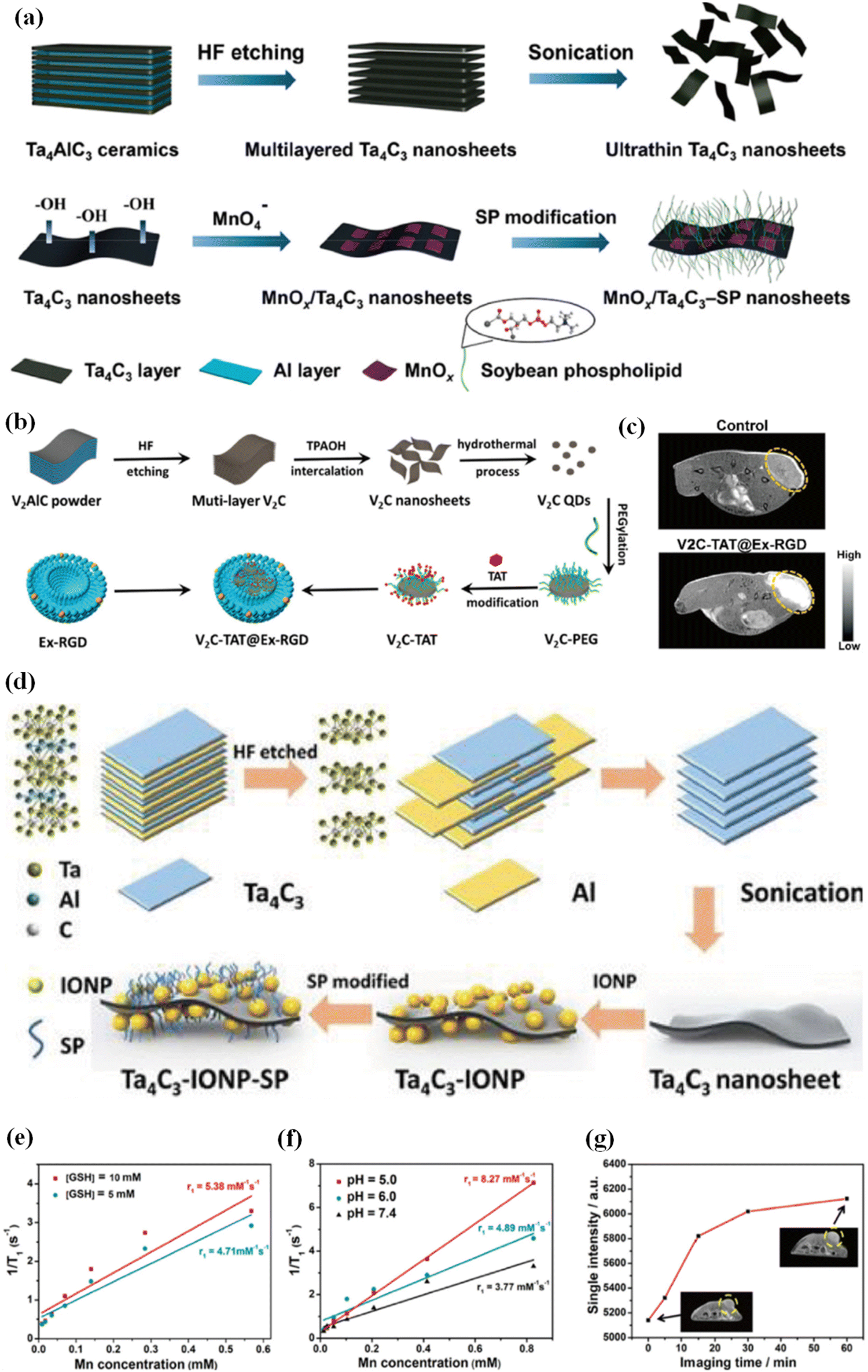 | ||
| Fig. 1 MXene-based magnetic resonance imaging (MRI) contrast agents; (a) schematic of the synthesis of MnOx/Ta4C3 nanocomposites. Reproduced from ref. 67 with permission from the American Chemical Society, copyright 2017. (b) Fabrication process of V2C MXene nanosheets. (c) T1-Weighted MR images demonstrating the effect of intravenously administered V2C MXene nanosheets on mice. (d) Synthetic pathway for IONPs/Ta4C3 nanocomposites. Reproduced from ref. 71 with permission from Ivyspring, copyright 2018. (e) Correlation between Mn concentration and 1/T1 relaxation rate in MnOx/Ta4C3 nanocomposites dispersed in buffer solutions with varying glutathione (GSH) levels. Reproduced from ref. 67 with permission from the American Chemical Society, copyright 2017. (f) Relationship between pH and 1/T1 relaxation rate for MnOx/Ta4C3 nanocomposites in buffer solutions. Reproduced from ref. 67 with permission from the American Chemical Society, copyright 2017. (g) MR signal intensity changes in mice following the intravenous injection of MnOx/Ta4C3 nanocomposites over time.67 | ||
Thus, SEI systems may be useful in the biomedical field to display and monitor various tumors in the future. The electrode constructed for practical application may be used for HER2-ECD detection by applying CV and DPV technologies. The synthesis of NG/CuMnCoOx/Ab2 and its use in the development of an SEI are illustrated in Scheme 2.
 | ||
| Scheme 2 Designing Self-Enzymes (SEIs) for HER2-ECD detection using; (a) preparation procedure of NG/CuMnCoOx, (b) preparation of gold (Au)/MXene and (c) gold (Au)/MXene and nitrogen-doped graphene (NG)/copper manganese cobalt oxide (CuMnCoOx) nanocomposites. Reproduced from ref. 65 with permission from Elsevier, copyright 2024. | ||
Specific surface functional groups, such as AOH, AO, AF, can impart hydrophilic properties to MXene, giving it excellent stability in a colloidal aqueous solution without the need for surfactants.74,75 However, exfoliated MXene nanosheets exhibit apparent aggregation and precipitation under physiological conditions similar to other major 2D materials in biological and medical fields, leading to a lack of multifunctionality.76,77 By functionalizing/deforming the surface using an appropriate surface group, other functional nanomaterials can be decorated, thereby improving the multifunctional and biomedical performance, such as the dispersibility, stability, loading capacity, biocompatibility, and targeting capacity. This phenomenon is an important aspect for multifunctional materials in medical fields (Fig. 2(a)). For example, soybean phospholipids (SPs) extracted from natural soybeans have been proven to be functional molecules that are advantageous for MXene surface functionalization due to their biocompatibility, expandability, and cost-effective synthesis. To further improve the biocompatibility, suitability, and stability for efficient tumor heating, a Ti3C2–SP nanosystem was designed by grafting on an SP.78 With this approach, a series of MXene-based nanoplatform designs were used to buffer SPs through physical interactions, enabling effective diagnosis, treatment, and application in theranostics for cancer.71,72,79–81 Other biocompatible polymers. including PEI (polyethyleneimine)82 and polydopamine (PDA),83 can also efficiently prevent or inhibit the erosion and aggregation of MXene nanosheets. Recently, self-initiated photography–photopolymerization (SIPGP) has been extensively studied as a polymerization method that can enable the easy surface functionalization of various materials including silicon-based materials and diamonds,84–86 carbon nanotubes, and graphene. Many application cases can be found. Unlike general polymerization approaches, SIPGP can be easily performed under ultraviolet irradiation at room temperature without the need for catalysts, ligands, or other special conditions. Chen et al.87 successfully bound poly2-dimethylaminoethyl methacrylate (PDMAEMA) on the surface of V2C MXene using SIPGP. This may be considered a powerful approach to provide CO2 and temperature dual reaction properties to MXene for the functionalization of MXene. This result was obtained from a study on surface functionalization of MXene-related nanomaterials through surface initiation polymerization. It may be used as basic data to develop a more controlled surface functionalization method for MXene. The results of UV-visible-NIR absorbance spectroscopy, dynamic light scattering (DLS) measurements, and TEM images confirmed that Nb2C MXene exhibited excellent hMPO reactivity in the presence of H2O2 (Fig. 2(b)–(d)). In addition, more advanced research confirmed that Mo2CMXene is easily biodegradable under physiological conditions and it can also be ionized to soluble MoO42− with no toxicity.88,89 MXene-based composites have emerged as promising candidates for biomedical applications due to their exceptional physical properties. These 2D materials have a large surface area, hydrophilicity, adjustable size, electrical conductivity, near-infrared light absorption, drug-loading capacity, biocompatibility, and low cytotoxicity, making them attractive for various medical interventions. In addition, their properties can be further enhanced by polymer surface modification without mitigating their inherent NIR absorption or photothermal transformation ability to demonstrate both physiological stability and biocompatibility. Table 1 summarizes the preparation methods for various MXene composites for use in applications as biological and medical materials and their polymer functionalization properties. Several types of 2D MXenes based on Nb2C, Mo2C, and Ti3C2 have been observed to show biodegradable effects. It has also been reported that Nb2C MXene essentially has high hMPO (human myeloperoxidase) reactivity in the presence of H2O2, indicating its biodegradability.88 This phenomenon indicates the desirable biodegradable behavior and benign biocompatibility that are needed for biomedical applications. Hypochlorous acid, which can produce reactive radical intermediates with a biodegradable behavior and promote the degradation of carbon-based nanomaterials, can be used to effectively demonstrate the biodegradable performance of Nb2C MXene. In such studies, the Nb2C MXene suspension became translucent within 24 h of adding both hMPO and H2O2 to the suspension (Fig. 2(e)).
 | ||
| Fig. 2 Biodegradability profiles of MXene composites; (a) schematic showing different modifications of MXene, reproduced from ref. 89 with permission from Elsevier, copyright 2022. (b) TEM images, (c) photographs, (d) DLS analysis, and (e) vis-NIR spectra of various MXene composites Reproduced from ref. 41 with permission from the American Chemical Society, copyright 2017. | ||
| MXene-based material | Polymer functionalization | Results | Application | Ref. |
|---|---|---|---|---|
| Nb2C | Polyvinylpyrrolidone (PVP) | Ultra-thin, laterally nanostructured Nb2C displayed exceptional photothermal conversion efficiencies of 36.4% and 45.65% in the NIR-I and NIR-II regions, respectively, along with robust photothermal stability. These Nb2C nanostructures inherently possess unique enzyme-responsive degradation by human myeloperoxidase, minimal phototoxicity, and excellent biocompatibility. | Photothermal therapy (PTT) | 41 |
| Nb2C | Polyvinylpyrrolidone (PVP) | Pre-treatment with Nb2C–PVP could provide effective protection against radiation-induced damage to multiple tissues, including the hematopoietic system, testes, small intestine, lungs, and liver, in mice exposed to a sublethal dose (5 Gy) of gamma radiation. Furthermore, pre-treatment with Nb2C–PVP mitigated radiation-induced destruction of the hematopoietic system, as evidenced by a significant increase in bone marrow mononuclear cells, a decrease in hematopoietic stem cell injury and micronucleated polychromatic erythrocytes, and a recovery of white blood cells, red blood cells, and platelets in peripheral blood. | Radioprotectant | 42 |
| Ti2C | Polyethylene glycol (PEG) | In vitro studies showed that PEG-modified Ti2C effectively ablated cancerous cells upon NIR irradiation, with minimal toxicity to non-cancerous cells up to a concentration of 37.5 μg mL−1 | Photothermal therapy (PTT) | 43 |
| Ti3C2 | Cellulose hydrogel | A developed MXene/DOX@cellulose composite hydrogel exhibited excellent biocompatibility, strong photothermal conversion efficiency, and high drug-loading capacity for DOX. The drug-release rate was controlled by a photothermal effect, enabling a dynamic and self-regulated drug-delivery system. This innovative approach resulted in complete tumor eradication and relapse prevention in animal models, demonstrating potential for effective cancer therapy. | Synergistic PPT/Chemotherapy | 44 |
| Mo2C | Polyvinyl alcohol (PVA) | Significantly, experimental data confirmed that Mo2C–PVA nanoflakes have a wide absorption spectrum encompassing both NIR-I and NIR-II regions, along with photothermal conversion efficiencies of 24.5% and 43.3% for NIR-I and NIR-II radiation, respectively. | Photothermal therapy (PTT) | 33 |
| Ta4C3–IONP | soybean phospholipid (SP) | The Ta component of Ta4C3–IONP–SPs, with its high atomic number and X-ray attenuation coefficient, offers exceptional contrast enhancement for CT imaging. Additionally, the integrated superparamagnetic IONPs can serve as potent contrast agents for T2-weighted MRI. Notably, these Ta4C3–IONP–SPs composite nanosheets, exhibiting a high photothermal conversion efficiency (η: 32.5%), demonstrated complete tumor ablation without recurrence, confirming their remarkable efficacy in photothermal therapy for breast cancer. | CT imaging | 34 |
| MR imaging | ||||
| PTT | ||||
| MnOx/Ta4C3 | Soybean phospholipid (SP) | The tantalum components within MnOx/Ta4C3 served as high-performance contrast agents for contrast-enhanced computed tomography. Simultaneously, the integrated MnOx component functioned as tumor microenvironment-responsive contrast agents for T1-weighted magnetic resonance imaging. The photothermal conversion capabilities of the MnOx/Ta4C3 composite nanosheets not only enabled contrast-enhanced photoacoustic imaging but also facilitated significant tumor growth suppression through photothermal hyperthermia. | MR imaging | 35 |
| CT imaging | ||||
| PTT | ||||
| Ta4C3 | Soybean phospholipid (SP) | The exceptional photothermal conversion performance (efficiency η of 44.7%) and in vitro/in vivo photothermal tumor ablation capabilities of biocompatible soybean phospholipid-modified Ta4C3 nanosheets were comprehensively investigated. | PA imaging | 36 |
| CT imaging | ||||
| PTT | ||||
| Ti3C2 | Soybean phospholipid (SP) | This study investigated the drug-delivery capabilities and synergistic therapeutic efficacy of Ti3C2 MXenes for highly effective tumor eradication. These Ti3C2 MXenes not only possess a high drug-loading capacity of up to 211.8% but also exhibit both pH-responsive and near-infrared laser-triggered on-demand drug-release mechanisms. | PA imaging | 37 |
| PTT | ||||
| Chemotherapy | ||||
| DOX/Ti3C2 | Hyaluronic acid (HA) | Fabricated Ti3C2 nanosheets exhibited an outstanding mass extinction coefficient (28.6 L g−1 cm−1 at 808 nm), high photothermal conversion efficiency (approximately 58.3%), and effective singlet oxygen (1O2) generation upon 808 nm laser irradiation. Based on these nanosheets, a multifunctional nanoplatform (Ti3C2–DOX) was developed through layer-by-layer surface modification with doxorubicin (DOX) and hyaluronic acid (HA). | Synergistic PTT/chemotherapy | 38 |
| MnOx/Ti3C2 | Soybean phospholipid (SP) | MnOx/Ti3C2 composite MXene nanosheets were further surface-engineered with SP (MnOx/Ti3C2–SP) for systematic in vitro and in vivo biomedical antitumor applications. The MnOx component in MnOx/Ti3C2–SP demonstrated a unique tumor microenvironment (mildly acidic)-responsive T1-weighted MRI capability. Importantly, the high photothermal conversion performance not only provided the MnOx/Ti3C2–SP composite nanosheets with excellent contrast-enhanced PA-imaging properties but also enabled highly efficient tumor ablation and tumor growth suppression. | MR imaging | 68 |
| PA imaging | ||||
| PTT | ||||
| GOx/Au/Ti3C2/Nafion/GCE | — | A GOx/Au/MXene/Nafion/GCE biosensor electrode demonstrated a linear amperometric response to glucose concentrations ranging from 0.1 to 18 mM. This response was characterized by a high sensitivity of 4.2 μA mM−1 cm−2 and a low detection limit of 5.9 μM (S/N = 3). | Biosensor | 90 |
| Nafion/Hb/TiO2–Ti3C2/GCE | — | The unique organ-like hybrid structure of TiO2–Ti3C2 facilitated the direct electron transfer of Hb, resulting in biosensors with excellent performance for H2O2 detection. These biosensors exhibited a wide linear response range of 0.1–380 μM for H2O2, a high sensitivity of 447.3 μA mM−1 cm−2, and an extremely low detection limit of 14 nM for H2O2. | Biosensor | 91 |
| Nafion/Hb/Ti3C2/GCE | — | The large surface area and high conductivity of MXene–Ti3C2 facilitated the direct electron transfer of Hb, leading to biosensors with excellent nitrite detection capabilities. These biosensors showed a wide linear response range of 0.5–11![[thin space (1/6-em)]](https://www.rsc.org/images/entities/char_2009.gif) 800 μM and an extremely low detection limit of 0.12 μM. 800 μM and an extremely low detection limit of 0.12 μM. |
Biosensor | 92 |
| Ti3C2T2–OTES | Poly(lactic acid) (PLA) | An optimized OTES-Ti3C2Tz/PLA nanocomposite membrane showed an ultimate tensile strength of 72 MPa, representing a 33% increase compared to the pure PLA membrane. The incorporation of Ti3C2Tz enhanced the membrane's biological properties, including the improved in vitro adhesion, proliferation, and osteogenic differentiation of MC3T3-E1 mouse preosteoblasts. | Guided bone regeneration | 93 |
| Ti3C2 | Polycaprolactone (PCL) | PCL–MXene composite electrospun fibers (up to 0.5 wt% MXene) demonstrated greater biocompatibility with pre-osteoblast cells compared to fibroblast cells. Additionally, their enhanced wettability, biomineralization, and protein adsorption suggested that these composite fibers hold promise for applications in wound dressing, bone-tissue engineering, and cancer therapy. | Guided bone regeneration | 94 |
3. Applications
3.1. Antimicrobial activity
Coating a PVDF film with Ti3C2Tx with a high aspect ratio can increase its hydrophilicity (contact angle of 37°) and alleviate the presence of large pores in the membrane. Its antimicrobial activities were also confirmed with a decrease in viability and growth inhibition of about 73% of E. coli (Gram-negative bacteria) and 67% of B. subtilis (Gram-positive bacteria). The structure and environmental conditions of the bacterial cell wall are among various factors that can affect the antimicrobial efficiency. A thin layer of peptidoglycan was formed between the outer and inner cell membranes in E. coli, but this was thicker in B. subtilis, indicating they showed different resistance to MXene. The influence of the Ti3C2Tx coating on the antimicrobial activity (measured at 1.2 μm) appeared minimal, suggesting thickness-independence within this range. Fig. 3 shows the concentration-dependent antimicrobial effects observed at various MXene concentrations. Interestingly, the older Ti3C2Tx membranes showed enhanced antimicrobial efficiency (>99% growth inhibition) compared to the newly formed ones. This improvement arose from the formation of anatase TiO2 nanocrystals during Ti3C2Tx surface oxidation in air. TiO2 is known to have significant antimicrobial activity. Several mechanisms have been proposed to explain the observed antimicrobial activity. These include physical damage to the cell wall caused by the roughened surface of MXene and TiO2 upon contact with bacteria and the generation of radicals on aged Ti3C2Tx membranes, leading to oxidative stress on the bacterial surface. Jastrzebska et al.95 highlighted the potential role of the stoichiometry (chemical composition) of MXenes in influencing their antimicrobial activity, suggesting that it is a crucial factor for further exploration. | ||
| Fig. 3 Antibacterial properties of MXene. (a) and (b) SEM images of bacteria treated with different concentrations. (c) and (d) Agar plates showing the concentration-dependent antibacterial activity of Ti3C2 MXene. Reproduced from ref. 96 with permission from the American Chemical Society, copyright 2016. (e) Photographs depicting bacterial growth on pristine PVDF membranes and PVDF membranes coated with fresh and aged Ti3C2 MXene. (f) E. coli and B. subtilis cell viability on fresh and aged PVDF membranes coated with Ti3C2 MXene. Reproduced from ref. 97 with permission from Springer Nature, copyright 2017. (g) Schematic illustrating the antibacterial mechanism of Ti3C2 MXene. Reproduced from ref. 96 with permission from the American Chemical Society, copyright 2016.98 | ||
Recently, Li et al. [Reproduced from ref. 99 with permission from Springer Nature, copyright 2021] elaborated on eco-friendly photoelectric materials consisting of interfacial Schottky junctions of Bi2S3/Ti3C2Tx nanocomposites utilizing the difference in contact potential between Bi2S3 and Ti3C2Tx to overcome their resistance due to the increasing use of many kinds of antibiotics (Fig. 4(a)). Bi2S3/Ti3C2Tx nanocomposites have excellent photocatalytic activities. They showed a concentrated increase in ROS production upon 808 nm laser irradiation (Fig. 4(b)).
 | ||
| Fig. 4 Antibacterial properties of MXene-based materials. (a) Optimized crystal structures of Bi2S3, Ti3C2Tx MXene, and their composite (Bi2S3/Ti3C2Tx). (b) Schematic illustrating the antibacterial mechanism of the Bi2S3/Ti3C2Tx composite under near-infrared (808 nm) irradiation. Reproduced from ref. 99 with permission from Spinger Nature, copyright 2021. (c) Schematic of a trimodal antibacterial strategy offered by Nb2C MXene: resistance against biofilms, inherent bactericidal effect, and thermoablative capability. Reproduced from ref. 100 with permission from the American Chemical Society, copyright 2021. | ||
These Bi2S3/Ti3C2Tx nanocomposites have exhibited excellent effects against S. aureus (99.86%) and E. coli (99.92%) under NIR irradiation within 10 min. Their killing efficacy was further demonstrated by live/dead fluorescence staining, spread plate tests, and SEM observations. Yang et al.100 reported that Nb2C MXene titanium plates can destroy biofilms directly and kill bacteria through downregulation of the bacterial energy metabolic pathways, inhibition of biofilm formation, and enhancement of biofilm dissection (Fig. 4(c)). Clinical studies have suggested that photothermal therapy can further reduce bacterial formation on implants, allowing for minimizing damage to healthy tissues. For instance, Nb2C MXene implants may offer above benefit. Additionally, they could potentially reduce inflammation by clearing excess reactive oxygen species (ROS) from an infected area, helping promote tissue remodeling and blood vessel regeneration. Zada et al.101 highlighted V2C MXene as a promising photothermal material with exceptional antibacterial properties. Its strong near-infrared (NIR) absorption and efficient photothermal conversion enabled the effective elimination of both Gram-positive Staphylococcus aureus and Gram-negative E. coli upon exposure to NIR laser irradiation for just 5 min. This efficiency surpassed previously reported results for Ti3C2, Ta4C3, and Nb2C MXenes.96
3.2 Composite-type MXene monolayer membrane for tissue application
Ultra-thin MXene nanosheets hold promise for various biological and medical applications due to their biocompatibility and unique properties. They are especially emerging as promising candidates for tissue engineering and regenerative medicine. Much progress has recently been made in the research and development of 2D MXenes and their composites, with a particular focus on their potential to address challenges in tissue engineering and bio-regenerative medicine.MXenes are highly utilized in medical fields due to their ability to promote efficient tumor treatment and serve as multifunctional platforms for bone regeneration.102 By combining reduced graphene oxide, which has excellent hydrophilicity and a unique interconnected porous structure as a biocompatible and medical material, with Ti3C2Tx MXene, a hybrid rGO-MXene hydrogel was developed that exhibited an excellent ability to create interconnected three-dimensional networks across three human cell types: epithelial adenocarcinoma, fibroblasts, and neuroblastoma (Fig. 5(a)).103 Better results were observed for cell adhesion to the rGO-MXene hybrid hydrogel compared to using the rGO-control hydrogel alone. The binding of ultra-long hydroxyapatite nanowires and MXene remarkably improved the hydrophilic and mechanical properties due to improved cell adhesion, proliferation, and osteogenic differentiation. However, a membrane prepared using this MXene-based nanocomposite demonstrated effectively improved bone-tissue production in the cartilage bone defects of mice, resulting in optimal mechanical features and biological improvement (Fig. 5(b)).104 The logical combination of 2D Ti3C2 MXene with bioaffinity and 3D printed bioactive glass scaffold manufacturing technology proved that the induction of bone-tumor death by photothermia and increased bone-tissue regeneration using a bioactive scaffold could be achieved simultaneously (Fig. 5(c)).102
 | ||
| Fig. 5 (a) Interaction between MXene and ultra-long hydroxyapatite nanowires (UHAPNWs). Reproduced from ref. 104 with permission from Elsevier, copyright 2021. (b) Cellular network formation in rGO-MXene hydrogels. Reproduced from ref. 103 with permission from Elsevier, copyright 2020. (c) Fabrication and testing of a multifunctional Ti3C2-bioactive glass scaffold (TBGS). Reproduced from ref. 102 with permission from John Wiley & Sons, copyright 2022. | ||
A schematic of the synthesis process for obtaining Ti3C2Tx MXene and biodegradable bacterial cellulose (BC)/MXene membranes is presented in Fig. 6. Although MXene has demonstrated great potential in regenerative medicine, its application in guided bone regeneration (GBR) membranes has shown limitations to date due to their mechanical vulnerability, brittleness, and rapid decomposition. The introduction of polymer nanofibers can enhance the properties of raw MXene. However, this has the disadvantage of complicating many treatment methods and increasing the time required. To address this, a method has been proposed involving developing a BC/MXene Janus membrane through vacuum filtration and etching, which are relatively simple technical manufacturing strategies.105 Also, compared to other synthetic methods, such as electrospinning or solvent casting, vacuum filtration methods do not require expensive equipment. In addition, they are less sensitive to external reaction factors. such as process change processes, solution property changes, and environmental changes. Thus, they can be better controlled cost-effectively for manufacturing membrane structures.105–107
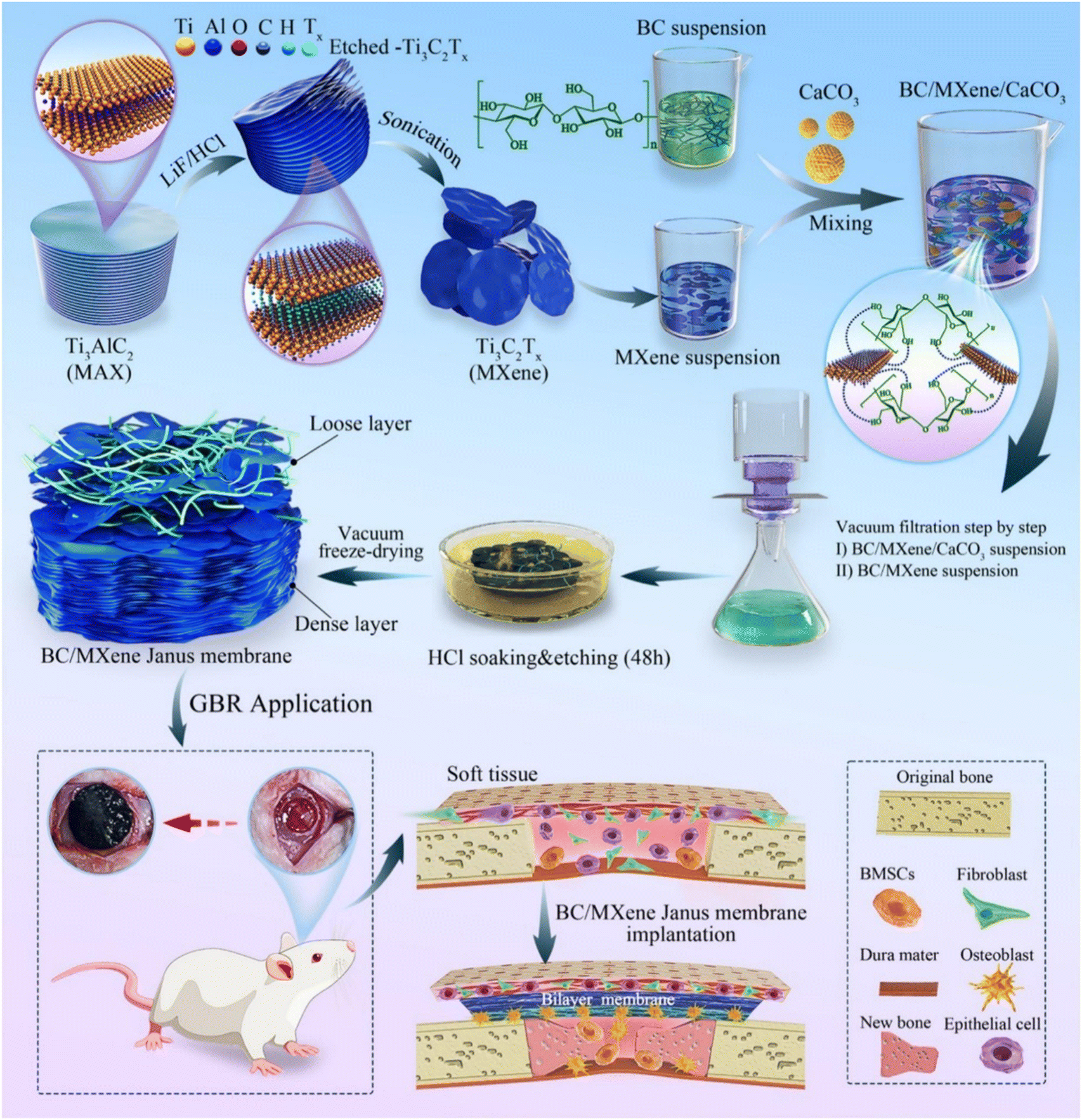 | ||
| Fig. 6 Schematic of the Janus BC/MXene membrane fabrication process and its utilization as a guided bone regeneration (GBR) membrane in a rat calvarial defect model. Reproduced from ref. 108 with permission from Elsevier, copyright 2020. | ||
Fig. 7 presents the fabrication and characterization of MXene nanosheets, pure bacterial cellulose (BC), pure MXene, and BC/MXene monolayer films. Fig. 7(a) displays the overall morphology and scanning electron microscopy (SEM) microstructures of pure BC, pure MXene, and 10B/5 M monolayer films. Scale bars of 2.5 μm and 1 μm are included for the middle and right panels, respectively. Fig. 7(b) illustrates the Fourier-transform infrared spectroscopy (FTIR) spectra of Ti3C2Tx MXene, BC, and 10B/5 M monolayer films. Fig. 7(c) depicts representative stress–strain curves. The mechanical properties of all the samples were influenced by the BC-to-MXene mass ratio within the composite films. As shown in Fig. 7(d), the pure MXene film exhibited hydrophilic behavior, although the water contact angle was relatively high compared to previous reports. This could be attributed to the presence of various functional groups on the MXene surface and the large-sized Ti3C2Tx flake structures with minimal defects.109 The introduction of hydrophilic BC enhanced the wettability of all the composite membranes, with the 10B/5 M sample demonstrating the lowest water contact angle of 41.3 ± 0.5°. Fig. 7(e) and (f) reveal the physical properties of pure MXene, including its maximum tensile strength of approximately 0.8 ± 0.4 MPa and tensile modulus of 376.6 ± 67.5 MPa. These values suggest that the mechanical susceptibility of MXene arises from defects within its randomly stacked layered structure, its high bending strength, and its weak inter-flake interactions.110 In contrast, the pure BC membrane displayed a higher tensile strength of 76.8 ± 3.6 MPa. The incorporation of BC notably improved the mechanical strength of the BC/MXene composite films. The 10B/5 M sample exhibited the most favorable properties, surpassing the mechanical performance of the pure MXene and BC membranes by factors of 18 and 1.2, respectively. This remarkable enhancement was attributed to the formation of a “brick-and-mortar” structure facilitated by strong hydrogen bonding between the MXene and BC nanofibers, involving functional groups such as –F, –O, and –OH.111
 | ||
| Fig. 7 Fabrication and characterization of MXene nanosheets, pure bacterial cellulose (BC); (a) Gross morphology and SEM microstructure of pure BC, pure MXene, and 10B/5 M monolayer membrane. Scale bars: 2.5 μm (middle panel) and 1 μm, (b) FTIR spectra curves of Ti3C2Tx MXene, BC, and 10B/5 M monolayer membrane, (c) The mechanical property of the pure BC, pure MXene, and BC/MXene monolayer membranes of different mass ratios, (d) The water contact angle of pure BC, pure MXene, and BC/MXene monolayer membranes of different mass ratios, (e) tensile strengths, and (f) tensile modulus. Data in (be) and (f) are presented as Mean ± SD. (n = 6 in each group, *P < 0.05, **P < 0.01, ***P < 0.001). Reproduced from ref. 108 with permission from Elsevier, copyright 2020. | ||
Liu et al.61 and Mao et al.112 identified several factors, such as weak physical forces, physical van der Waals forces, hydrogen bonds, and the reinforcement of BC, as well as self-assembled anisotropic interconnect networks, that greatly contribute to the improvement of the physical tensile strength of the BC/MXene film. However, excess MXene can weaken the intermolecular hydrogen bond interactions between BC and MXene. This is because excess MXene causes agglomeration, which leads to the formation of macroscopic voids and gaps within the BC/MXene layer. These voids and gaps can reduce the mechanical properties of the samples, as evidenced by the significant impact on the 10B/10 M and 10B/20 M samples. Additionally, hydrophilicity is an important factor that influences cell behavior. Static water contact angle tests can be conducted to evaluate the hydrophilicities of all samples in a cell culture experiment.
3.3. Fluorescent bioimaging
Fluorescence imaging stands as a prominent technique in nanomedical research. Its high sensitivity and user-friendly nature make it a popular choice for tracking the distribution of near-infrared fluorescent, monolayer-coated nanomaterials within target regions, particularly subcutaneous tumors.113 MXene nanocomposites made by combining 2D biomaterials with quantum dots (QD) technology have better properties for fluorescence imaging, including a high quantum yield and light stability yield, and adjustable wavelength range, than conventional phosphors.114 Through utilizing a combination of graphene and carbon dots, MXene nanosheets can be synthesized using hydrothermal methods. Ultra-small QDs can be generated by the formation of quantum sizes through defect-induced light emission and magnitude-effect induction.115 With proper surface modification and functionalization, such as with Ti3C2,116,117 Nb2C,118,119 and V2C120 MXene QDs, MXene QDs can be applied for cell fluorescence imaging. Xue et al. used single-layer and fragmented Ti3C2 nanosheets to construct Ti3C2 MXene QDs through a facile hydrothermal approach,121 taking advantage of quantum confinement and edge effects. They were able to control the average size of the Ti3C2 MXene QDs to very small by finely adjusting the temperature during the reaction process. Their experimental results showed that Ti3C2 MXene QDs could be easily absorbed into cells due to an intracellular transfer effect. Studies have been conducted using Ti3C2 MXene QDs for biological fluorescence imaging. Specifically, MQD-100 and MQD-120, which were characterized by relatively high quantum yields, showed promise as multicolor cellular imaging agents. Additionally, they were also reported to offer exciting new possibilities in the realm of MXene-based optical materials. Sample MQD-150, on the other hand, was proven to be highly selective in detecting Zn2+ ions. The advancements in synthesizing photoluminescent MQDs have significant implications for expanding the application scope of MXenes, highlighting their potential for use in optics, biomedicine, and environmental science.121Guan et al.116 successfully synthesized phosphorus–nitrogen-functionalized Ti3C2 MXene QDs through a hydrothermal process and a phosphorus–nitrogen-functionalization process (Fig. 8(a)). The photoluminescent Ti3C2 MXene QDs could be used for imaging as they could realize green fluorescence at a specific wavelength of about 560 nm (Fig. 8(b)). Photostability and pH resistance are important characteristics required for a fluorescence probe. A new synthesis method is needed for the construction of Ti3C2 MXene QDs having luminescent properties. It was shown that a strategy involving simultaneous stacking and layer cutting was possible using aqueous tetramethylammonium hydroxide instead of the solvent heat method.121Fig. 8(a) illustrates the preparation process of the phosphorus and nitrogen-functionalized Ti3C2 MXene QDs. Fig. 8(b) depicts PL emission spectra of Nb2C QDs solutions to which different metal ions (1 mM) were added. Fig. 8(c) presents a digital photograph of the corresponding mixtures under 360 nm UV light. Fig. 8(d) charts the relative PL intensities of the Nb2C QDs solutions to which competing metal ions (1 mM, red bar) were added and the PL emission intensities of the Nb2C QDs solutions with the subsequent addition of Fe3+ (black bar) 1 mM. Fig. 8(e) shows the PL emission spectra of the Nb2C QDs solutions to which different concentrations of Fe3+ were added. Fig. 8(f) illustrates the correlation between the F0/F and Fe3+ concentration values. The inset highlights a linear region extending from 0 to 0.3 mM. Fig. 8(g) presents the relative viability of NIH3T3 cells following exposure to varying concentrations of Nb2C quantum dots for periods of 12 and 24 h. CLSM fluorescence micrographs depicting NIH3T3 cells treated with 100, 150, and 200 μg mL−1 Nb2C quantum dots are shown in Fig. 8(h), (i) and (j), respectively. Additionally, Fig. 8 displays images of round, linear, and square PVA/Nb2C quantum dot hydrogels labeled (k), (l), and (m), respectively. Bright-field images (k1, l1, m1) of mice with subcutaneously implanted PVA/Nb2C QDs hydrogels and the corresponding fluorescence color images (k2, l2, m2) are also shown in Fig. 8.118 Furthermore, the Nb2C QDs exhibited major potential for fluorescence imaging and the sensitive detection of heavy metal ions. Notably, the synthesized Nb2C QDs were shown to be enzymatically degradable by hMPO. Compared to traditional nanofluorophores, the exceptional chemical stability, biocompatibility, resistance to photobleaching, and enzyme-responsive biodegradability of these Nb2C QDs composites positions them as promising candidates for applications in bioimaging, specific diagnosis and sensing, visual display, and optical anti-counterfeiting.122 Yan et al.119 synthesized an active material of the Nb2C MXene QD composite-type co-doped with nitrogen and sulfur using the hydrothermal method. They confirmed that the Nb2C MXene QDs displayed outstanding green fluorescence, dispersion stability, fluorescence bleaching, and excitation-dependent photoluminescence properties for application in the fluorescence imaging of Caco-2 cells.
 | ||
| Fig. 8 Fluorescent properties and biocompatibility of Nb2C quantum dots (QDs): (a) schematic of the preparation process for the phosphorus and nitrogen-functionalized Ti3C2 MXene QDs. Reproduced from ref. 116 with permission from the Royal Society of Chemistry, copyright 2019. (b) Photoluminescence (PL) emission spectra of Nb2C QD solutions upon the addition of various metal ions (1 mM). (c) Digital photographs of the corresponding solutions under 360 nm UV light, indicating the impact of metal ions on the PL intensity. (d) Relative PL intensity of the Nb2C QD solutions: red bars represent competition from different metal ions (1 mM), and black bars depict the recovery with additional Fe3+ (1 mM). (e) PL emission spectra of Nb2C QD solutions with increasing Fe3+ concentrations. (f) Plot of the F0/F ratio against Fe3+ concentration, where F0 represents the initial PL intensity and F represents the intensity after Fe3+ addition; inset highlights the linear range for 0–0.3 mM. (g) Cell viability of NIH3T3 cells following incubation with varying Nb2C QD concentrations for 12 and 24 hours. (h)–(j) Confocal laser scanning microscopy (CLSM) fluorescence images of NIH3T3 cells incubated with increasing Nb2C QD concentrations (100, 150, and 200 μg mL−1, respectively). (k)–(m) Photographs of PVA/Nb2C QD hydrogels in various shapes (round, linear, and square); (k1), (l1) and (m1) show bright-field images of the corresponding hydrogels, and (k2), (l2) and (m2) display the respective fluorescent pseudo-colored images of mice with subcutaneously implanted hydrogels. Reproduced from ref. 122 with permission from Elsevier, copyright 2020. | ||
3.4. Biosensors and biodevices
Biomarkers and biomaterials influence the metabolic, pathogenic, and pharmacological activities within biological systems. The qualitative and quantitative analyses of these substances can enable the diagnosis of various metabolic disorders. Additionally, assessing environmental risks, like toxins and pathogens, as well as evaluating therapeutic effectiveness, can benefit from their detection.123–125 The ability to selectively and accurately detect a small number of analytes within a multi-component system is one of the most important factors for biosensors. Since MXene has excellent electrical conductivity,126,127 a large specific surface area, and a good water dispersibility, it is considered to have special value in applications in biosensors (Table 2). In particular, the sheet-like structure of MXene, which is beneficial for deformation through various surface functionalization, has the advantage of providing surface active sites through its abundant functional groups, thereby enabling a highly reactive biosensor platform to be formed that could be easily made responsive to various external stimuli. As mentioned earlier, MXenes’ excellent electrical conductivity has the advantage of realizing low noise in biosensor reactions. These distinct advantages make MXenes highly suitable as active materials for alternative biosensors with very low limits of detection (LODs). Thus, MXene composites with high selectivity have very good potential for applications in biosensors.| Material | Synthesis methods of MXenes | Surface functionalization | Limit of detection (LOD) | Technique and performance | Ref. |
|---|---|---|---|---|---|
| Ti3C2-AgNW-PDA/Ni2+ | LiF/HCl etching with mechanical shaking | AgNW, PDA, and Ni2+ | N.A. | A bioinspired strain sensor for the monitoring of human activities under different motion states | 83 |
| AuPt NPs/Ti3C2 | LiF/HCl etching with manual shaking | AuPt NPs | 0.2 μM | A superoxide biosensor with high selectivity and a low LOD | 128 |
| Cu/Ti3C2 | HF etching | Cu NPs | 0.05 μM | A novel ratiometric electrochemical platform for the sensing of piroxicam | 129 |
| NH2-CNTs/Ti3C2 | LiF/HCl etching with ultrasonication | NH2CNTs | 1 nmol L−1 | Highly sensitive molecular imprinting sensor with selectivity for fisetin | 130 |
| DNA/Pd/Pt/Ti3C2 | LiF/HCl etching with ultrasonication | DNA and Pd/Pt NPs | 30 nM | Dopamine sensing | 131 |
| Prussian Blue/Ti3C2 | LiF/HCl etching with manual shaking | Prussian Blue | 0.33 × 10⁻⁶ M and 0.67 × 10⁻⁶ M for glucose and lactate | Durable and sensitive detection of biomarkers | 132 |
| Pt/polyaniline/Ti3C2 | HF etching with ultrasonication | Pt NPs and polyaniline | 1.0 μM and 5.0 μM for H2O2 and lactate | Amperometric sensing of H2O2 and lactate with high stability | 133 |
| Hemoglobin/Ti3C2 | HF etching | Hemoglobin | 0.12 μM | A nitrite biosensor based on direct electrochemistry | 134 |
| Ti3C2–Au@Pt nanoflowers/5′-nucleotidase-xanthine oxidase | LiF/HCl etching with ultrasonication | Au@Pt nanoflowers, 5′-nucleotidase and xanthine oxidase | 0.224 ng mL−1 | Detection of inosine monophosphate | 135 |
| Glucose oxidase (GOx)/cross-linkage glutaraldehyde (GTA)/Ti3C2 | HF etching, TBAOH intercalation with ultrasonication | GOx and GTA | 23.0 μM | High selectivity and excellent electrocatalytic activity for glucose detection | 136 |
| Pd@Ti3C2 | LiF/HCl etching with ultrasonication | Pd NPS | 0.14 μM | Sensitive and stable electrochemical sensor for the detection of L-cysteine | 137 |
| GOx/Graphene/Ti3C2 hybrid film | LiF/HCl etching with ultrasonication | GOx and graphene | 0.10 nM and 0.13 mM in air-saturated and O2-saturated PBS | Glucose biosensor with electrochemical catalytic capability | 138 |
| Au NPs/Ti3C2 | HF etching | Au NPs | 1.34 × 10⁻¹³ M | An electrochemical sensing platform for the highly sensitive determination of pesticides | 139 |
| AuPd NPs/Ti3C2 | LiF/HCl etching with ultrasonication | AuPD NPs | 1.75 ng L−1 | A disposable electrochemical biosensor for the detection of pesticides | 140 |
| Polypyrrole@Ti3C2/Phosphomolybdic acid | HF etching | Polypyrrole, phosphomolybdic acid | 0.98 fg mL−1 | An impedimetric biosensor for the detection of osteopontin | 141 |
| Tetrahedral DNA nanostructures/Ti3C2 | HF etching, PTAOH intercalation with ultrasonication | Tetrahedral DNA nanostructures | 5 pM | An electrochemical DNA biosensor | 142 |
| Ti3C2@iron phthalocyanine quantum dots (FePc QDs) | HF etching with ultrasonication | FePc QDs | 4.3 aM | An ultrasensitive impedimetric micro-RNA-155 sensing | 143 |
| cDNA-ferrocene/Ti3C2 | HF etching with ultrasonication | cDNA-ferrocene and BSA | 0.33 × 10⁻³ nM | A competitive electrochemical breast cancer marker Mucin 1 | 144 |
| CNT/Ti3C2 | LiF/HCl etching with ultrasonication | CNT | 0.1% | A strain sensor for the detection of both tiny and large deformations | 145 |
| Ti3C2 | HF etching with ultrasonication: HF etching, TMAOH intercalation, and hand shaking | — | 0.025% | Strain sensors with a high and wide sensing range | 146 |
| Ti3C2 | HF etching | — | 0.19% | A highly flexible and sensitive piezoresistive sensor and greatly changed interlayer distances | 147 |
| Ti3C2/reduced graphene oxide aerogel | LiF/HCl etching with ultrasonication | — | ∼10 Pa | A piezoresistive sensor with high sensitivity/fast response time and stability | 148 |
| Ti3C2/poly(amid acid) (PAA) | LiF/HCl etching with ultrasonication | PAA | — | A flexible strain sensor with super elastic, and lightweight 3D MXene architecture | 149 |
| Ti3C2@chitosan@polyurethane | LiF/HCl etching with ultrasonication | — | 9 Pa | A flexible piezoresistive pressure sensor for the detection of both small and large pressure signals | 150 |
| Ti3C2/tissue paper | LiF/HCl etching with ultrasonication | — | 10.2 Pa | A highly sensitive, flexible, and degradable pressure sensor | 151 |
| Ti3C2 | LiF/HCl etching with ultrasonication | — | 9.27 ppm | Room temperature gas sensing for the detection of NH3 | 152 |
| Ti3C2/reduced graphene oxide | LiF/HCl etching | — | — | A flexible wearable gas sensor with high NH3 gas sensitivity | 153 |
| Ti3C2 | LiF/HCl etching with ultrasonication | — | 50 and 100 ppb for acetone and ammonia | Metallic gas sensors with ultrahigh signal-to-noise ratio for the detection of organic compounds | 154 |
| V2C | HF etching, TBAOH intercalation with hand shaking | — | 2 and 25 ppm for hydrogen and methane | A gas sensor with ultrahigh sensitivity | 155 |
| Polyaniline/Ti3C2 | HF etching | Polyaniline | — | A flexible sensing device for the detection of alcohol gas | 156 |
Improving the limit of detection (LOD) of MXene-based biosensors is crucial for enhancing their performance. This can be achieved by optimizing the surface active sites, altering MXene's structure, and leveraging its properties within composite materials. Yao et al.128 developed a superoxide biosensor using a nanocomposite of Ti3C2 MXene and gold platinum nanoparticles (AuPt NPs) (Fig. 9(a)). This biosensor exhibited high selectivity for superoxide and a linear response to superoxide concentrations within a broad range. These improved properties were believed to be due to the improved catalytic reactions facilitated by the dense AuPt NPs distribution on the Ti3C2 MXene electrode surface. Similarly, the utilization of various nanomaterials as secondary components in addition to superoxide can ensure effectively functioning against various biomolecules, such as fisetin,130 acetaminophen,157 piroxicam,129 and dopamine.131 Meanwhile, to increase the selectivity of a sensor, introducing an appropriate bioreceptor that can induce specific interactions, such as enzyme–ligand, aptamer–ligand, and antibody–antigen interactions, is required. Basic sensing mechanisms such as enzyme–ligand interactions are widely applicable in biosensors with respect to complexed MXene for further improving the sensor's selectivity for detecting specific substances. A number of biosensors have developed so far with a high selectivity for various enzyme reactions for detecting various analytes, including metabolic by-products,133–135 nutrients,136–138,158 glucose,132 lactic acid,133 and insecticides.139,140 In addition to enzyme-related biosensors, MXene-based biosensors using aptamers have also been extensively researched and developed to easily and quickly detect miRNA-155,143 mucin1,144 osteopenin,141 gliotoxin,142 endotoxin, and bacteria.159
 | ||
| Fig. 9 MXenes for biosensing and biodevices. (a) Schematic of a flexible, biomimetic platform based on Ti3C2 MXene for extracellular superoxide biosensing. Reproduced from ref. 128 with permission from Elsevier, copyright 2020. (b) Schematic depicting the nacre-mimicking microscale “brick-and-mortar” architecture. Reproduced from ref. 83 with permission from the American Chemical Society, copyright 2019. (c) Scheme illustrating the synthesis process for a bioinspired Ti3C2 MXene-based strain sensor. Reproduced from ref. 83 with permission from the American Chemical Society, copyright 2019. (d) Schematic representing the interlocked structure, resulting in excellent deformability of a pressure sensor based on Ti3C2 MXene and natural microcapsules. Reproduced from ref. 160 with permission from the American Chemical Society, copyright 2019. | ||
In addition, MXene-based composites have recently been investigated in a wide range of applications in wearable or flexible biosensors because of their enhanced mechanical elasticity and flexibility. First, MXenes can be utilized to detect small changes in biosensors for stress detection due to their excellent electronic and magnetic properties. Because MXenes, similar to other 2D materials, are generally not stretchable, combining a MXene with other phase materials, such as polymers, second, and/or n-phase materials in various dimensions, can increase the robustness and sensitivity due to the improved mechanical and physical properties.83,138,155,161 In terms of bioengineering, Shi et al.83 designed a nacre-mic stain biosensor by complexing silver nanowires on Ti3C2 MXene and then introducing nickel ions and dopamine to the complex (Fig. 9(c)). The combination of Ti3C2 MXene and silver nanowires served as “bricks” that imparted mechanical brittleness and high conductivity, while the nickel ions and dopamine served as the “mortar” that connected the “bricks” through interactions with various interfaces (Fig. 9(b)). The Ti3C2-based biosensor produced by these biochemical interactions showed an improvement in the sensing range by up to 50% or more. These sensitivities were more than 200 (a gauge factor) over the entire range. This enhancement of the sensing effect exceeded the characteristics of most previously reported modified biosensors. In addition, complexation, doping, and combination techniques for modulating the form of MXene are expected to offer areas for future research to improve these strategies as an effective way for enhancing the deformation sensing performance.146 Second, the MXene structure is uniquely accumulated and similar to an accordion with discontinuity, which offers good conductivity for use in super-sensitive piezoelectric resistive biosensors. MXenes possess a unique characteristic of their interlayer spacing being adjustable under external pressure. This property has potential applications in monitoring the full range of human activities that involve pressure changes, such as facial expressions (bulging), jawline movement (deformation), blinking, and neck tilting. However, pure MXene is not ideal for high-pressure applications due to its limited mechanical strength. Therefore, MXenes are typically combined with strong, supportive materials to ensure the biosensor's durability and ability to withstand repeated pressure variations. MXene/aerogel and MXene/elastic matrix sensors are two common examples of such MXene-based biosensors.
Piezoelectric resistive biosensors require a combination of unique properties for optimal performance, including high elasticity, low weight, and porosity. To achieve this, MXene is often combined with other materials. These materials can offer high mechanical strength, making these biosensors more durable and able to withstand repeated pressure changes. Their high conductivity and elasticity can also enhance the sensor's ability to detect pressure variations. This approach allows for the creation of flexible MXene-based biosensors with high performance.148,149,162,163 Wang et al.160 synthesized films based on Ti3C2 MXene/natural microcapsules with interlocking structures to improve the mechanical deformation capability of biosensor layers and enhance their properties (Fig. 9(d)). As similar skin tissue can simulate the structure and function of human skin, this MXene-based biosensor showed enhanced efficiency corresponding to amplifying weak pressure signals and possessed excellent stability. In addition, MXene could be directly loaded or deposited on a basal material formed with high elasticity. Its excellent conductivity and remarkable mechanical properties would satisfy the requirements for enhancing the geometric and electrical properties of biosensors utilized for piezoelectric resistance applications.150,151,164
3.5 MXene-based composites for photothermal therapy (PTT)
While most MXene nanosheets are focused on the first near-infrared (NIR-I) biological window (750–1000 nm), the second NIR (NIR-II) window (1000–1350 nm) remain relatively unexplored. NIR-II windows offer advantages due to an increased permissible exposure and deeper tissue penetration.165 As a result, the medical community has started to show increasing interest in NIR-II bioimaging.166,167 The photothermal conversion efficiency of Nb2C MXene varied with varying the NIR light wavelength, reaching 36.4% at 808 nm and 45.65% at 1064 nm (Fig. 10(a)). This demonstrates Nb2C MXene's effective photothermal conversion in both NIR-I and NIR-II windows. By synthesizing Nb2C MXene through liquid-phase exfoliation and nanosheets using polyvinyl pyrrolidone (PVP) (Fig. 10(d)),41 Nb2C MXene nanosheets were obtained that were found to be capable of realizing an excellent photothermal tumor removal effect with a depth of approximately 4 mm inside the subcutaneous tumor under NIR-I and NIR-II laser irradiation (Fig. 10(a)). Based on theoretical calculations, the ultra-thin Mo2C MXene offers excellent photothermal performance under physiological conditions in the NIR-I (g = 24.5%, 808 nm) and NIR-II (g = 43.3%, 1064 nm) biowindows (Fig. 10(d)).88 Mo2C MXene was also tested experimentally for verification of the theoretical results, and was found to rapidly biodegrade chemically. The experimental findings were consistent with these observations. The photoreaction within the NIR-II biowindow endowed the synthesized Mo2C–PVA nanosheets with high photothermal conversion efficiency, excellent biodegradability, strong near-infrared absorbance, and biocompatibility. These properties can facilitate deeper tissue penetration and an increased maximum permissible exposure for effective photothermal tumor ablation. Specifically, comprehensive assessments at the cellular and animal levels demonstrated the potential of Mo2C–PVA (MXene–polymer composite) nanosheets as high-performance platforms for the efficient photothermal therapy (PTT) of tumors. Their strong absorption in the near-infrared (NIR) spectrum has prompted comparisons with traditional photothermal agents. Moreover, MXenes exhibit promising potential for effective photothermal treatment due to their relatively high photothermal conversion efficiency. So far, various MXene combinations, such as Ta4C3,79 Nb2C,41 Mo2C,88 Ti3C2,78 Ti2C,121 and V2C168 have been studied experimentally. Based on their potential for photothermal treatment, in-animal biological studies are continuously conducted for new tumor treatments. The most commonly used 2D MXene biomaterials include Ti2C obtained through a mesoporous silica coating (g = 23.2%; 808 nm),126 soybean phospholipid (SP, g = 23.2%; 808 nm),78 Ti3C2@Au nanocomposites (g = 39.6%, 1064 nm), and Ti2C modified with polyethylene glycol (PEG, g = 87.1%; 808 nm). Ta4C3 is another 2D MXene biomaterial with excellent photothermal conversion efficiency, making it especially useful for application in PTT for cancer. SP-modified Ta4C3 nanosheets (g = 44.7%, 808 nm),79 MnOx (g = 34.9%, 808 nm),86 and SP-modified Ta4C3–SP nanocomposites (g = 32.5%, 808 nm)71 have successfully achieved the effective photothermal resection of tumors both in vivo and in vitro. Fig. 10(e) shows the in vivo tumor tissue penetration effect for photothermal resection in an NIR-I/II biological window. | ||
| Fig. 10 MXenes for photothermal tumor therapy (PTT). (a) and (b) Plots demonstrating the effectiveness of MXene-based photothermal therapy (PTT) against cancer. Reproduced from ref. 41 with permission from the American Chemical Society, copyright 2017. (c) Scheme depicting the synthesis process for Mo2C MXene nanosheets, a type of MXene material that is potentially useful for PTT. Reproduced from ref. 88 with permission from John Wiley & Sons, copyright 2019. (d) Schematic illustrating the utilization of Nb2C MXene nanosheets for photothermal tumor ablation within the near-infrared (NIR) windows I and II, which offer deeper tissue penetration compared to visible light, (e) schematic of the concept of tumor tissue penetration during in vivo photothermal ablation using light within the NIR-I and NIR-II biowindows. Reproduced from ref. 41 with permission from the American Chemical Society, copyright 2017. | ||
Another typical paradigm is the combination of thermodynamic therapy and PTT therapy for achieving synergistic effects with Nb2C MXene for cancer treatment.169 Studies on free radical-generating nano PTT mediators based on Nb2C MXene are being conducted by directly applying mesoporous silica nanoparticles on to the Nb2C MXene surface.169 In this composite, the mesopore serves as a reservoir for the initiator and the MXene core functions as a photothermal trigger in the NIR-II biowindow. Using a laser wavelength in the region of 1064 nm, the initiator encapsulated with Nb2C MXene was shown to be quite effective for ensuring a rapid release and rapid degradation, producing a significant amount of active radicals for tumor cell death within normal oxygen and hypoxic environments. Systematic studies both in vivo and in vitro showed the complete eradication of 4T1 subcutaneous tumors without recurrence under NIR-II laser irradiation.
These photosystematic therapeutic treatments have exhibited improved synergistic therapeutic effects. In a similar study, Nb2C-based photoinduced nanocomposites served as reservoirs for nitric oxide (NO) donors (S-nitrosothiol).170 To provide this reservoir, MSN was coated on the surface of Nb2C MXene to improve its efficiency.121 In such a system, NO can cause mitochondrial and DNA dysfunction, which can kill tumor cells through oxidation and nitrification stress from the gas carrier.121 A Nb2C-based nanoreaction system was reported and proven to have excellent photothermal conversion efficiency.121 In addition, efficiency could be achieved by controlling the emission of NO in a concentration and laser power density-dependent manner. The combination of the photothermal and gas treatment of the Nb2C-based nanoreaction system showed remarkable inhibitory effects on the reproduction of tumor cells upon NIR-II laser irradiation. The Nb2C-based nanoreaction system could also efficiently upregulate apoptosis proteins, including caspase 3 and caspase 7. As a result, it could cause tumor cell death without damaging normal cells. Thus, a new treatment combining PTT based on 2D MXene is emerging for cancer therapy.
3.6 MXene-based bioelectronic applications
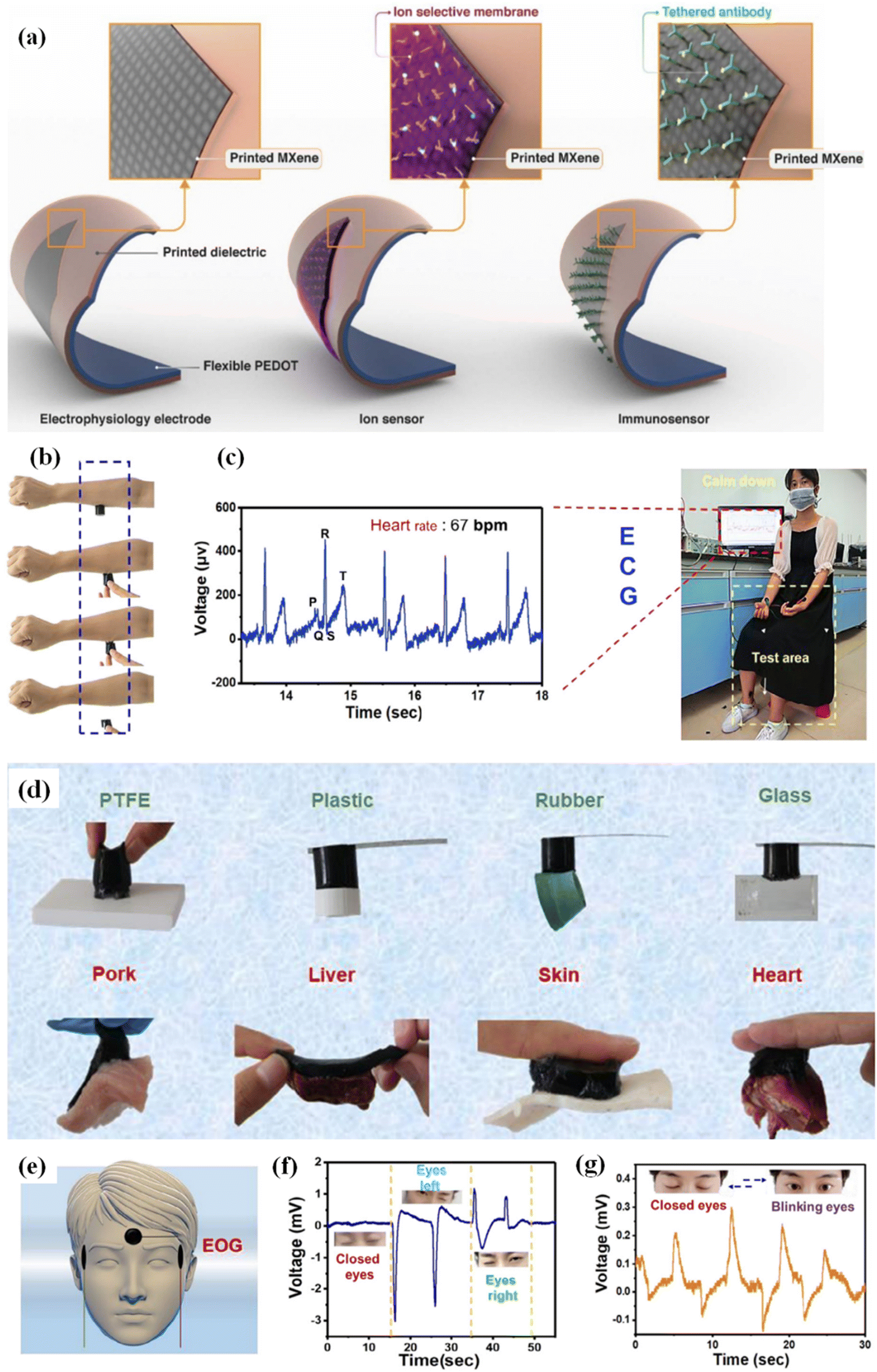
Various kinds of MXenes exhibit good electrical conductivity and properties for biometric sensors, imaging devices, and other biometric electronic applications. Therefore, MXene has emerged as a pivotal component in biometric electronic devices,171,172 leading to the development of many bio-friendly sensors with high sensitivity and high reactivity. Combining MXene-based materials with biometric electronic devices can improve the sensitivity and selectivity of sensors and facilitate the real-time monitoring of biological metabolic processes, enabling diagnosis and promoting personalized life medicine development. MXenes' advantageous properties, particularly their mechanical strength (high Young's modulus), high electrical conductivity, and inherent form, make them strong candidates for composite materials. MXenes also possess a remarkable combination of properties, including chemical stability, electrical conductivity, ion-insertion capability, and tunable bandgap. These properties make them strong candidates for diverse applications in energy storage and catalytic sensors.173–179 MXenes are also known to possess electromagnetic properties, as well as dielectric, thermal conductivity, and optical properties. MXene species such as Ti(n+1)Xn have been reported to exhibit metal-like behavior. With the formation of additional Ti–X bonds as n increases, titanium nitride gains one more electron with N atoms than C atoms. Thus, titanium nitride exhibits more metal properties than titanium carbide. Conversely, end MXene sheets represent narrow bandgap semiconductors or metals depending on the type and direction of the surface groups.180–182 Bioelectronic interfaces play an important role in increasing the use of bioelectronics. Innovative MXtrodes (MXene-infused bioelectronic interfaces) can be used as MXene-based electrodes without millimeter-scale gels in various applications, such as high-density surface electromyography (HDsEMG) mapping, dry EEG recording, electrocardiogram (ECG), cost-effective processes for intraoperative electrical cortical examination, and electrocoagulation (EOG). These MXene-based MXtrodes show superior electrochemical properties to conventional Pt electrodes in various aspects, including charge storage, conductivity, and injection capacity. Also, their low impedance values make MXene-based electrodes compatible with clinical imaging technologies, such as MRI and CT, allowing eliminating interference during scans.172One study explored the use of saponin, a nonionic surfactant, to formulate an inkjet-printable MXene ink.183,184 This approach enabled the direct printing of flexible and highly skin-adhesive electrodes onto conductive polymer substrates on the human body. These bio-derived MXene electrodes were proven to be well-suited for various biosensing applications due to their excellent biocompatibility, electrical stability, and high sensitivity. Their effectiveness in high-fidelity electrocardiogram (ECG) signal detection and even multifunctional biosensing for detecting ions and proteins were demonstrated. The findings suggest that MXene electrodes would be a suitable platform for wearable and skin-attachable electronic devices. The establishment of such a platform could pave the way for advanced wearable technology in the ergonomic medical field beyond just the medical and biomedical fields185 (Fig. 11(a)). Due to their strong, repeatable, and easy-to-remove adhesive properties, stretchable TiO2@MXene-polyacrylic acid (PAA) hydrogels have significant advantages as non-irritating self-adhesive bioelectrodes (Fig. 11(b)).183,184 For physiological signal monitoring, conductive and soft hydrogel-based self-adhesive bioelectrodes of TiO2@MXene nanosheets were assembled and attached to specific parts of the human skin, representing significant progress in the field.186,187Fig. 11(c) shows a regular and specific waveform electrocardiogram (ECG) to help accurately determine the heart rate. Electrocoagulation (EOG) is a novel method for rapidly synthesizing self-assembled PAA hydrogels, in which a catalyst is bonded to Ti3C2Tx MXene nanosheets having excellent conductivity, ultra-stretchability (∼1400%), and anti-aggregation properties (>60 days). This method involved the in situ growth of TiO2 nanoparticles (NPs) on the MXene surface to prevent the nanosheets from being laminated again in a solvent. TiO2@MXene nanosheets having reducing properties can promote the dissociation of initiators, thereby stimulating the polymerization of monomers without heating and the crosslinking of polymer chains to produce hydrogels within a short time.
 | ||
| Fig. 11 Multifunctional MXene-based electrodes. (a) Schematic of three types of MXene electrodes printed on flexible PEDOT substrates. Reproduced from ref. 185 with permission from IOP Sci., copyright 2020. (b) Photograph of a TiO2@MXene–PAA hydrogel (0.05 concentration) adhering firmly to human skin. (c) Hydrogel bioelectrode used to monitor a female subject's electrocardiogram (ECG) and heart rate in real time while she is in a calm state. (d) Adaptability of the TiO2@MXene–PAA hydrogel. An additional graph depicts the maximum adhesive force of the hydrogel with varying the TiO2@MXene content on pig skin, as well as the repeatable adhesive strength of the 0.05 concentration hydrogel to pig skin and iron. Reproduced from ref. 188 with permission from Elsevier, copyright 2020. (e) Diagram of the electrooculogram (EOG) measurement setup for tracking eye movements. Reproduced from ref. 188 with permission from Elsevier, copyright 2020. (f–g) Hydrogel bioelectrode used to monitor the eye movements of a girl in real time. | ||
This ultra-fast self-assembly could effectively solve the nanosheet re-aggregation problem in hydrogels, expanding the bioelectronic applicability of adjustable MXene-based stretchable hydrogels188 (Fig. 11(d)). In another research study, the spontaneous growth of precious metal nanoparticles (Pd, Au, and Pt) on flexible biomimetic MXene paper was induced, enabling the generation of hybrid materials with enhanced electrocatalytic activity in an environmentally friendly way and at a low cost.188 MXene as a sheet-like paper could be used for in situ redox reactions. It could also be used as a chemical template to hybridize precious metal nanoparticles into bimetallic forms. The resulting bimetallic hybridized paper exhibited high electrocatalytic performance. Therefore, it is suitable for applications in energy devices, sensing electronic device sensors, actuators, and chemical filters. This research presented a simple, efficient, and eco-friendly approach for using MXene as an active material in energy-related storage devices and flexible bioelectronics with improved performance.188 MXene technology is also paving the way for a new generation of flexible and wearable high-density surface electromyography (HDsEMG) arrays exemplified by MXtrodes. MXtrodes can be manufactured by the liquid treatment of Ti3C2Tx, which is considered safe and scalable in the range of use. It offers the advantages of easy customization, gel-free operation, cost-effectiveness, and improved usability, overcoming the limitations of existing HDsEMG technology. Based on its low impedance and high conductivity, the MXtrode array has exhibited higher sensing activity, and spatial resolution than some wireless EMG sensors that are currently used in actual clinical trials. A study on an MXtrode also demonstrated its applicability in clinical settings for neuromuscular diagnostics and rehabilitation.189 It enabled the simultaneous acquisition of HDsEMG (high-density surface electromyography) signals and biomechanical mapping during various tasks. Furthermore, successful integration into machine learning pipelines for predicting human walking stages was achieved. These findings highlight the potential of MXene-based flexible bioelectronics in neuromuscular research, including for the exploration of novel diseases.189 However, similar hierarchical studies utilizing 3D porous soft carbon nanofibers (CNFs) for wearable bioelectronic interfaces face challenges. While these CNFs offer significant potential, their production from polyacrylonitrile (PAN) is complex and expensive.
In one study, poly1,1-difluoroethylene (PDFE) was introduced into difluoride through laser-induced carbonization (LIC) and then combined with Ti3C2Tx MXenes to synthesize PDFE-based nanofibers with β phases.190 The study investigations revealed that the β phase of the defluorinated MXene-PDFE nanofiber could be made into a sp2-hybridized hexagonal structure through cyclization/crosslinking decomposition during LIC.191 In particular, this methodology generated laser-induced hierarchical CNFs (LIHCNFs) with a high carbon yield of more than 55%, offering good conductivity (sheet resistance = 4ωsq−1) and remarkable stability for over 500 bending/emission cycles (in the 10% bending range). The wearable LIHCNFs were highly breathable, and could be used for skin computers and reusable electronic tattoos. They could also be used to self-monitor long-term bioelectric potentials and in the control of household electronic products through the design of human–machine interfaces. A LIHCNFs-tattoo was developed with high breathability (≈14 mg m−2 h−1) that could achieve a well-adapted contact with human skin, resulting in a low impedance (23.59 KΩ cm2) between the electrode and the skin, and a low noise bio-potential signal with a high signal-to-noise ratio (SNR) of 41 dB. It remains crucial to develop a suitable method to create carbon nanofibers (CNFs) with customized structural features for multifunctional bio-interfaces using these materials.190 This could be achieved by attaching a hydrogel bioelectrode as a working electrode and positioning another hydrogel electrode on the eyebrow as a reference electrode (Fig. 11(e)). Fig. 11(f) illustrates the detection of various positive and negative constant voltage levels corresponding to eye-opening events. Fig. 11(g) presents normal eye movements for comparison.
A schematic diagram covering various aspects of a facemask sensor is presented in Fig. 12. The facemask was used with a small fiber filter. The LEDization, electronics, and circuit system of the polydimethylsiloxane (PDMS) encapsulation layer are presented in Fig. 12(a). In addition, a schematic diagram of acetone detection using a photo-corrected MXene sensor is presented in Fig. 12(e). That study and others showed that the MXene-based coating method can improve the durability of wearable electronic sensor products, and improve their electrical conductivity, which can ensure reliable performance under various environmental conditions. Besides, the lightweight characteristics of MXenes are advantageous for wearable devices as they can enable safe contact and maximize user comfort. The ongoing advancements in MXene research hold promise for a wide range of applications, including medical devices and biological implants. In particular, this technology has the potential to revolutionize the wearables market. For instance, researchers developed a flexible pressure sensor made from a composite film of MXene and polydopamine (PDA), which demonstrated a high sensitivity of up to 138.8 kPa−1 and a fast response and recovery speed – a prime example of its potential in wearable health monitoring. It could also allow accurately measuring various physiological signals in real-time in portable and wearable formats. These biomedical applications include health warning systems, simple measurement result verification, accurate pulse detection, voice recognition, facial expression analysis, and intelligent control functions. Overall, the findings of the study presented the significant potential of this MXene/PDA-based sensor for the progressive development of flexible and wearable medical devices.192 Advanced nanoplatform wireless masks utilizing field-grown TiO2 and organic molecules bound Ti3C2Tx are also prime examples of portable MXene-based medical devices. This medical combination demonstrated increased acetone sensitivity and improved selectivity by facilitating calibration for light-assisted reactions through an interface using a TiO2-bound MXene. To increase respiratory monitoring with sensors using MXene-based materials, small, flexible, and wearable detection tags were seamlessly integrated into commercialized facemasks. This combination could simultaneously realize convenient breath alcohol concentration (BrAC) detection and wireless data transmission. These systems were designed in stages as a process of a filtering–detection–calibration–transmission system. They could easily detect BrAC levels as low as 0.31 ppm (one millionth) in respiration. To dynamically monitor lipid metabolism, it would thus be possible to conveniently verify the effectiveness of facemasks during an on-body breath test and provide valuable utility to dieters, athletes who control their exercise activities, and fitness enthusiasts. The proposed wearable platform could be provided as an improved personal tool to maximize living health and well-being by introducing new monitoring possibilities, such as daily lipid metabolism management and respiratory analysis in various areas193 (Fig. 12). Flexible supercapacitors (FSCs) are gaining traction in wearable electronics due to their potential applications. However, for medical wearables, ensuring the biocompatibility of both electrodes and electrolytes is crucial. Research on such biocompatible electrolytes is still in its early stages, though one promising development is the production of wearable FSCs that utilize sweat as an electrolyte. These devices employ composite materials, such as Ti3C2 MXene nanosheets and polypyrrole–carboxymethylcellulose (Ti3C2@PPY-CMC), as active electrode materials. To assess the viability of Ti3C2@PPY-CMC-based FSCs, a systematic evaluation using artificial sweat solutions is necessary. The key factors should include a stable power density, high specific capacity, excellent cycling stability, and flexibility. Ultimately, the goal is to create practical, sweat-powered FSC patches that can provide a stable power source for portable electronic devices during physical activities. The results of comprehensive electrochemical performance evaluations and the analysis of FSC patches in various sweat-secreting areas of the body are important factors for their application. Ti3C2@PPY-CMC composites have paved the way for new developments in wearable electronics. They are endowed with potential useful capabilities and biocompatibility for promoting their use in wearable energy-storage devices194 (Fig. 12(c)). As shown in Fig. 12(d), MXene could be uniformly distributed and decorated on cotton fibers by a dip coating method. PtNPs could then be synthesized to combine with MXene (MXen@PtNPs) through the self-subsidization of chloroplatinic acid. The sensor effect using the hydrophilic interference193 effect can be seen in Fig. 12(d) using an activated Al2O3 absorbent between MXene@PtNP fabrics to detect respiratory humidity. MXenes hold promise for various roles in biomedicine, where they can serve as both biomarkers and biomaterials. They can play a crucial role in helping understand metabolic processes, disease development, and drug efficacy.195–197 Their ability to selectively and sensitively detect specific biomolecules within complex biological samples is particularly valuable for diagnostics. Furthermore, MXenes' unique physical and electrical properties make them attractive candidates for theranostics, a field combining therapy and diagnostics. These properties, along with the potential for surface modifications (Table 3) open the door for innovative synthetic strategies in this emerging field.
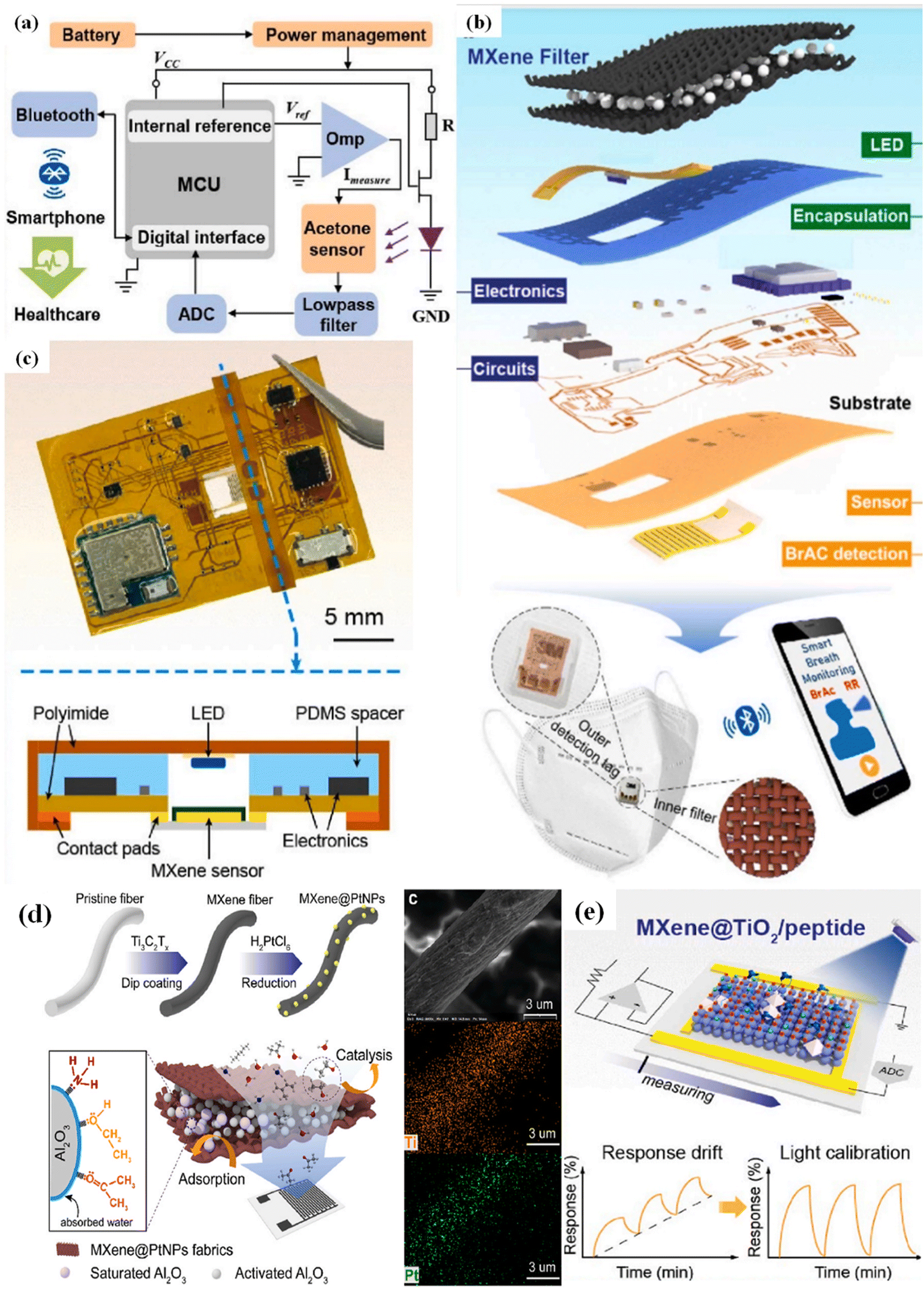 | ||
| Fig. 12 Wireless facemask for breath acetone monitoring. Reproduced from ref. 193 with permission from Elsevier, copyright 2023. (a) Block diagram of the sensing system, highlighting key components, like voltage sources (VCC, Vref), operational amplifier (Omp), measuring current (I measure), microcontroller (MCU), and analog-to-digital converter (ADC); (b) schematic of the facemask's hierarchical structure, featuring a functionalized filter on the inner layer and a flexible detection tag connected to the breath valve outlet. (c) Integrated detection tag for breath acetone sensing, encompassing a physical image and a cross-sectional diagram of its constituent parts. (d) Design and characterization of the MXene-based textile filter, including the manufacturing process of MXene@PtNP-functionalized catalytic fibers and a visual depiction of the filter's operational mechanism. (e) Schematic of breath acetone detection using a light-calibrated MXene sensor. | ||
| Material name | Synthetic strategies of MXenes | Surface modification | Biomedical applications | Cell/tumor models | Injection route/dose | Description (technique and performance) | Ref. |
|---|---|---|---|---|---|---|---|
| Nb2C-PVP | HF etching and TPAOH intercalation | PVP | PTT | 4T1 Breast cancer | Intravenous injection; 20 mg kg−1 | Highly efficient photothermal ablation and eradication of tumors (NIR-I and NIR-II biowindows) | 41 |
| MnOx/Ta4C3–SP | HF etching and ultrasonication | MnOx and SP | Theranostics | 4T1 Breast cancer | Intravenous injection: 20 mg kg−1 | MR/CT/PA imaging-guided efficient PTT ablation of cancer | 67 |
| Ta4C3–IONPs–SP | HF etching and ultrasonication | IONPs and SP | Theranostics | 4T1 Breast cancer | Intravenous injection: 20 mg kg−1 | Photothermal hyperthermia and concurrent MR/CT dual-modality imaging of breast cancer | 71 |
| Ti3C2–IONPs–SP | HF etching and TPAOH intercalation | IONPs and SP | Theranostics | 4T1 Breast cancer | Intravenous injection: 20 mg kg−1 | Contrast-enhanced T2-weighted MR imaging-guided PPT against cancer | 72 |
| Ti3C2–SP | HF etching and TPAOH intercalation | SP | PTT | 4T1 Breast cancer | Intravenous injection; 20 mg kg−1 | In vitro/in vivo photothermal ablation and high photothermal conversion efficiency for tumors | 78 |
| Ta4C3–SP | HF etching and ultrasonication | SP | Theranostics | 4T1 Breast cancer | Intravenous or intratumoral injection: 20 mg kg−1 or 4 mg kg−1 | PA/CT Dual-mode imaging combined with PTT against cancer | 79 |
| DOX@Ti3C2–SP | HF etching and TPAOH intercalation | SP | Theranostics | 4T1 Breast cancer | Intravenous injection: 15 mg kg−1 | Chemotherapy of cancer and PA imaging-guided synergistic photothermal ablation | 80 |
| MnOx/Ti3C2SP | HF etching and TPAOH intercalation | MnOx and SP | Theranostics | 4T1 Breast cancer | Intravenous injection: 20 mg kg−1 | PA dual-modality imaging-guided PTT against cancer and multifunctional theragnostic agents for efficient pH-responsive MR | 82 |
| MO2C–PVA | HF etching, and TBAOH intercalation | PVA | PTT | 4T1 Breast cancer | Intravenous injection; 20 mg kg−1 | Highly biodegradable and efficient theory-oriented photonic tumor hyperthermia | 88 |
| N, P-Ti3C2, MXene QDs | HF etching, strong acid reflux and hydrothermal method | — | Fluorescent imaging | THP-1 monocytes | — | Fluorescent probes for Cu2+ ion sensing and macrophage labeling | 116 |
| Ti3C2 MXene QDs | HF etching, TMAOH intercalation and ultrasonication | — | Fluorescent imaging | — | — | Bright and tunable fluorescence | 117 |
| Nb2C MXene QDs | HF etching, TPAOH intercalation and ultrasonication | — | Fluorescent imaging | NIH3T3 cells | — | Biodegradable and photostable nanofluorophores for metal ions sensing and fluorescence imaging | 118 |
| S, N-Nb2C MXene QDs | Hydrothermal method | — | Fluorescent imaging | Caco-2 cells | — | Highly green, fluorescent probes for Caco-2 cell imaging and Cu2+ ion sensing | 119 |
| V2C MXene QDs | HF etching, sonication and hydrothermal method | — | Fluorescent imaging | — | — | White laser with amplified blue, green, yellow, and red light | 120 |
| Ti2C–PEG | HF etching, DMSO intercalation and mild sonication | PEG | PTT | HACaT, A375, MCF-10A and MCF-7 cells | — | Highly selective agents for PTT | 198 |
| CTAC@Nb2C-MSN-PEG-RG | HF etching and TPAOH intercalation | MSNs, PEG and RGD | Theranostics | U87 glioma | Intravenous injection: 15 mg kg−1 | Targeted and enhanced chemo-photothermal cancer therapy (NIR-II biowindow) | 199 |
| Ti3C2 MXene QDs | HF etching, ultrasonication and hydrothermal induced dots | N.A. | Fluorescent imaging | RAW264.7 cell | N.A. | Biocompatible multicolor cellular imaging probes and excitation-dependent photoluminescence spectra | 121 |
| NMQDs-Ti3C2Tx | HF etching and L-N2 intercalation | — | Chemodynamic therapy | HeLa cervical cancer | Intratumoral injection; 6 or 12 mg kg−1 | Ti-based nanocatalysts and Fenton-like reactions to treat tumors | 200 |
| H-Ti3C2–PEG | HF etching, TPAOH intercalation and sonication | PEG | Sonodynamic therapy | 4T1 breast cancer | Intravenous injection; 20 mg kg−1 | Photothermal-enhanced sonodynamic therapy | 201 |
| Ti3C2@DOX@HA | LiF/HCl etching, TMAOH intercalation and ultrasonication | HA | Synergistic Therapy | HCT-116 colon cancer | Intravenous injection: 2.0 mg kg−1 | Tumor targeting PTT/PDT/chemo synergistic therapy | 202 |
| DOX@Ti3C2@mMSNs-RGD | HF etching and TPAOH intercalation | mMSNs and RGD | Synergistic therapy | SMMC-7721 hepatic cancer | Intravenous injection: 10 mg kg−1 | Photothermal hyperthermia and synergistic chemotherapy against hepatocellular carcinoma | 203 |
| Ti3C2@Metformin@Compound polysaccharide | HF etching, TMAOH intercalation and mild sonication | Compound polysaccharide | Synergistic therapy | MDA-MB-231 breast cancer | Intravenous injection: 20 mg kg−1 | Synergistic treatment of tumors through PTT/PDT/chemotherapy | 204 |
| V2C | Algae Extraction | — | Theranostics | MCF-7 breast cancer | Intravenous injection: 10 mg kg−1 | PA/MR dual-mode imaging-guided PTT against cancer | 168 |
| Ti2N QDs-SP | KF/HCl etching and ultrasonication | SP | Theranostics | 4T1 Breast cancer | Intravenous injection: 20 mg kg−1 | PA imaging-guided PTT in NIR-I/IIbiowindows | 205 |
| W1.33C-BSA | LiF/HCl etching and shaking manually | BSA | Theranostics | 4T1 Breast cancer | Intravenous injection: 20 mg kg−1 | CT/photothermal/PA/fluorescent multimodal imaging-guided PTT (NIR biowindow) | 206 |
| V2C-TAT@Ex-RGD | HF etching and TPAOH intercalation and hydrothermal induced dots | PEG, TAT and Ex-RGD | Theranostics | MCF-7 breast cancer | Intravenous injection: 10 mg kg−1 | Fluorescent/PA/MR imaging-guided nucleus-target low-temperature PTT | 207 |
| Ti3C2@Au-PEG | HF etching and TPAOH intercalation | Au NPs and PEG | Theranostics | 4T1 Breast cancer | Intravenous injection: 20 mg kg−1 | PA/CT dual-modal imaging-guided PTT combined with radiotherapy | 208 |
| AlPH@Nb2C@mSiO2 | HF etching and TPAOH intercalation | PEG and MSNs | Theranostics | 4T1 Breast cancer | Intravenous injection: 20 mg kg−1 | Thermal/PA/Fluorescent imaging-guided PTT combined and thermodynamic cancer therapy | 209 |
| Nb2C-MSNs-SNO | HF etching and TPAOH intercalation | MSNs and PEG | Theranostics | 4T1 Breast cancer | Intravenous injection: 10 mg kg−1 | Photonic thermogaseous therapy against cancer and PA-imaging guidance and monitoring | 210 |
| Fe(II)-Ti3C2 | LiF/HCl etching and ultrasonication | — | Theranostics | MKN45 gastric carcinoma | Intratumoral injection: 2 mg kg−1 | NIR-activated multimodal PTT/chemodynamic/MR imaging nanoplatform for anticancer therapy | 211 |
MXenes are also emerging as significant players among the diverse array of biomarkers and biomaterials involved in biological systems' metabolic, pathogenic, and pharmacological processes. The qualitative and quantitative analyses of these materials are valuable tools for diagnosing metabolic disorders, assessing therapeutic efficacy, and evaluating the environmental risks posed by toxins and pathogens.153–155 The ability to selectively and accurately detect a small number of analytes within a multi-component system is an important prerequisite for biomedical applications. MXenes exhibit excellent physical and electrical properties, which are valuable not only in new medical fields for theranostic applications but also in the corresponding synthetic strategies and surface modification fields (Table 3).
A novel bio-interface engineering strategy was developed to remotely modulate the activity of thermoresistant lysozyme using a photothermal nanoplatform.212 Titanium carbide MXene nanosheets (Ti3C2Tx) were functionalized with polydopamine (PDA) to enhance their photothermal properties and performance durability. Lysozyme biomacromolecules were then immobilized onto the PDA-functionalized MXene surface through electrostatic interactions, creating an integrated nanoplatform (M@P@Lyso).212 The synthesized M@P@Lyso nanoplatform demonstrated precise control of the localized heat and could effectively eliminate methicillin-resistant Staphylococcus aureus (MRSA) through laser-enhanced lysozyme activity (Fig. 13). This novel approach achieved high antibacterial rates against MRSA, exceeding 95%. Additionally, M@P@Lyso accelerated wound healing in mice infected with MRSA, while exhibiting negligible cytotoxicity and excellent biocompatibility. The synergistic bactericidal effects of M@P@Lyso were attributed to the irradiation-induced enhancement of lysozyme activity. This work presents a promising method for promoting the bactericidal effects of lysozyme through remote light control, offering a potential solution for treating multidrug-resistant bacterial infections and for use in biodefense applications. The M@P@Lyso nanoplatform demonstrated an impressive light-to-heat conversion efficiency of 46.88%, enabling precise control of the local temperature. Moreover, the photothermal effect stimulated upregulation of the lysozyme activity, by enhancing its biocatalytic capabilities. Both the in vitro and in vivo experiments demonstrated the effectiveness of M@P@Lyso in combating methicillin-resistant S. aureus (MRSA). The nanoplatform effectively inhibited MRSA proliferation and accelerated wound disinfection in mice, with minimal biological toxicity. The enhanced antibacterial activity of M@P@Lyso was attributed to a combination of factors: the photoenhanced lysozyme activity, mild local hyperthermia induced by the photothermal effect, and the physical destruction caused by the M@PDA nanoplatform. These findings highlighted the potential of bio-interface engineering strategies to modulate the activity of biomolecules and to allow developing novel therapeutic approaches for infectious diseases.212Fig. 13 shows the photothermal-enhanced antibiotic activity against the growth of MRSA.
 | ||
| Fig. 13 Schematic of the bio-interface engineering strategy for immobilizing lysozyme onto MXene nanosheets and the subsequent photothermal-enhanced antibacterial activity against MRSA. Reproduced from ref. 212 with permission from Elsevier, copyright 2023. | ||
Cobalt-doped two-dimensional titanium carbide MXene nanosheets (CMNSs) were synthesized via a template-directed wet chemical approach.213 These nanozymes demonstrated an excellent peroxidase-like activity, catalyzing the oxidation of o-phenylenediamine (OPD) to generate a significantly increased reduction current. This property was leveraged to develop a highly sensitive electrochemical sensor for organophosphate pesticides (OPs). The CMNSs were characterized by their hydrophilicity and water dispersibility, making them suitable for integration into electrochemical devices. Interestingly, the nanozymes showed a unique response to thiol compounds, which enabled their use as catalysts for OP detection based on inhibiting the acetylcholinesterase (AChE) activity.213 An electrochemical sensor was constructed by immobilizing the CMNSs onto an electrode surface. Acetylthiocholine (ATCh) was next added to the system, where it was hydrolyzed to thiocholine by AChE. The generated thiocholine reduced the peroxidase-like activity of the CMNSs, inhibiting the oxidation of OPD. However, in the presence of OPs, AChE activity was inhibited, leading to a decrease in thiocholine production and a corresponding increase in the oxidation of OPD. This change in electrochemical signal was directly correlated to the concentration of OPs in the sample. The proposed sensor demonstrated high sensitivity and selectivity for OP detection, with recovery rates ranging from 97.4% to 103.3% in pakchoi extract solutions.213 The unique properties of the CMNSs, combined with their peroxidase-like activity and response to thiol compounds, make them promising candidates for the development of sensitive and reliable electrochemical sensors for environmental monitoring and food safety applications.213Fig. 14 presents a sensing mechanism for organophosphate clinical detection based on cobalt-doped MXene nanozymes.
 | ||
| Fig. 14 Schematic of the proposed electrochemical sensor based on cobalt-doped MXene nanozymes for organophosphate pesticide detection. Reproduced from ref. 213 with permission from Elsevier, copyright 2022. | ||
4. Challenges and future directions for MXenes in biomedicine
4.1 Challenges
Bacterial infections remain a leading cause of chronic illnesses and even death. The widespread use, even overuse, of antibiotics has unfortunately led to the development of antibiotic-resistant bacteria, making the treatment of infections by such bacteria increasingly challenging globally.214–217 The key regulatory barriers to protect against bacterial infection from materials and products include comprehensive material characterization, rigorous toxicity and biocompatibility assessments, establishing consistent manufacturing processes, and conducting well-designed clinical trials. Thorough risk assessments and mitigation strategies are crucial to address potential safety concerns and expedite regulatory approval. Producing MXenes in large quantities at a consistent quality and cost-effective manner remain a significant challenge. Current synthesis methods often involve complex procedures and hazardous conditions, limiting the scalability and increasing production costs. MXenes can be sensitive to degradation and oxidation, especially when exposed to moisture or air. This instability can affect their properties and limit their long-term shelf life. Ensuring that MXenes are biocompatible and that they will not elicit adverse immune responses is crucial for their safe use in biomedical applications. Surface modifications and functionalization strategies may be necessary to improve their biocompatibility. The regulatory pathways for the development and commercialization of MXene-based biomaterials can be complex and time-consuming. Compliance with safety and efficacy standards is essential for clinical translation. Additionally, long-term in vivo stability and comprehensive biosafety evaluations are essential before clinical use. Overcoming these challenges requires collaboration from scientists across various disciplines, including the pharmaceutical industry. Also, interdisciplinary research and development will be key to unlocking the full potential of MXene-based biomaterials for disease treatment and for improving human health. However, it is already clear that the unique properties of MXenes, particularly their tunable size, conductivity, and near-infrared absorption, make them highly suitable for various biomedical applications. Functionalized MXene composites show promise in bioimaging, drug delivery, antibacterial therapy, biosensing, tissue engineering, and various pharmaceutical treatments. Additionally, conducting long-term studies to evaluate the long-term effects of MXenes on human health and the environment is essential for gaining regulatory approval and public trust.4.2 Future directions
Exploring new synthesis techniques that are more scalable, efficient, and environmentally friendly, such as continuous flow synthesis or microwave-assisted methods, is essential. Developing protective coatings or encapsulation strategies to enhance the stability and shelf life of MXenes should be a key focus. Innovative functionalization approaches should be investigated to customize the properties of MXenes for specific biomedical applications, such as drug delivery, tissue engineering, or biosensing. Comprehensive in vivo studies are needed to evaluate the biocompatibility, safety, and efficacy of MXene-based biomaterials in animal models. Future efforts should explore economically viable manufacturing methods and a comprehensive analysis of the competitive landscape, market trends, and demand should be conducted too.5. Conclusions
MXenes, a novel class of two-dimensional materials, have emerged as promising candidates for biomedical applications due to their unique properties. For instance, their tunable size, metallic conductivity, strong near-infrared absorption, high surface area, and inherent biocompatibility make them ideal candidates for drug delivery, photothermal therapy, diagnostics, and tissue engineering applications. Functionalization with polymers can further enhance their selectivity, responsiveness to external stimuli, and biocompatibility, leading to significant advancements in other application fields, such as photothermal therapy, diagnostic imaging, biosensing, bone regeneration, and antibacterial activity. However, challenges remain before their widespread clinical use. Stable mass production, maintaining structural integrity during storage, precise compositional control, long-term in vivo stability, and comprehensive biosafety evaluations are critical areas that require further research. Addressing these challenges will unlock the potential of MXenes in nanomedicine. In conclusion, although MXene–polymer composites are still in their nascent stages, their future prospects are promising. Continued research aimed at overcoming their current limitations and exploring novel applications will significantly contribute to their development and application, ultimately protecting human health.Author contributions
Won-Chun Oh contributed to the study design. Conceptualization was performed by Suresh Sagadevan, and Karna Wijaya. Data collection, and analysis were performed by Latiful Kabir. The first draft of the manuscript was written by Siwaluk Srikrajang. All authors have read and approved the final manuscript.Data availability
All data generated or analyzed during this study are included in this published article.Conflicts of interest
The authors declare no competing interests in this manuscript.References
- C. P. Bergmann and A. Stumpf, Dental ceramics: microstructure, properties and degradation, Dent. Ceram. Microstruct. Prop. Degrad., 2013, 1–84, DOI:10.1007/978-3-642-38224-6
.
-
P. Balakrishnan and S. Thomas, Inert ceramics, in Fundam. Biomater. Ceram, ed. S. Thomas, P. Balakrishnan and M. S. Sreekala, Elsevier, 2018, pp. 117–127 DOI:10.1016/B978-0-08-102203-0.00005-6
- P. I. Croucher, M. M. McDonald and T. J. Martin, Bone metastasis: the importance of the neighbourhood, Nat. Rev. Cancer, 2016, 16(6), 373–386 CrossRef CAS PubMed
- H. C. Beird, S. S. Bielack, A. M. Flanagan, J. Gill, D. Heymann, K. A. Janeway, J. A. Livingston, R. D. Roberts, S. J. Strauss and R. Gorlick, Osteosarcoma, Nat. Rev. Dis. Primers, 2022, 8, 77 CrossRef PubMed
- N. Rainusso, L. L. Wang and J. T. Yustein, The adolescent and young adult with cancer: state of the art-bone tumors, Curr. Oncol. Rep., 2013, 15(4), 296–307 CrossRef PubMed
- B. Hu, Y. Zhang, G. Zhang, Z. Li, Y. Jing, J. Yao and S. Sun, Research progress of bone-targeted drug delivery system on metastatic bone tumors, J. Controlled Release, 2022, 350, 377–388 CrossRef CAS PubMed
- D. L. Longo, P. S. Meltzer and L. J. Helman, New horizons in the treatment of osteosarcoma, N. Engl. J. Med., 2021, 385(22), 2066–2076 CrossRef PubMed
- H. J. Xiang, Q. H. Yang, Y. S. Gao, D. Y. Zhu, S. S. Pan, T. M. Xu and Y. Chen, Cocrystal strategy toward multifunctional 3D-printing scaffolds enables NIR-activated photonic osteosarcoma hyperthermia and enhanced bone defect regeneration, Adv. Funct. Mater., 2020, 30, 1909938 CrossRef CAS
- M. Jiang, Y. Jike, K. Liu, F. Gan, K. Zhang, M. Xie, J. Zhang, C. Chen, X. Zou, X. Jiang, Y. Dai, W. Chen, Y. Qiu and Z. Bo, Exosome-mediated miR-144-3p promotes ferroptosis to inhibit osteosarcoma proliferation, migration, and invasion through regulating ZEB1, Mol. Cancer, 2023, 22, 113 CrossRef CAS PubMed
- A. Sapiano, C. Caruana, N. Spiteri, A. S. Gatt, S. Degiorgio, A. Samuel, D. Pisani and M. Buhagiar, Extraskeletal osteosarcoma of primary retroperitoneal origin, Lancet Oncol., 2023, 24(6), e284 CrossRef PubMed
- J. S. Whelan and L. E. Davis, Osteosarcoma, chondrosarcoma, and chordoma, J. Clin. Oncol., 2018, 36(2), 188–193 CrossRef CAS PubMed
- D. Zhang, S. Cheng, J. Tan, J. Xie, Y. Zhang, S. Chen, H. Du, S. Qian, Y. Qiao, F. Peng and X. Liu, Black Mn-containing layered double hydroxide coated magnesium alloy for osteosarcoma therapy, bacteria killing, and bone regeneration, Bioact. Mater., 2022, 17, 394–405 CAS
- F. E. Freeman, P. Dosta, L. C. Shanley, N. Ramirez Tamez, C. J. Riojas Javelly, O. R. Mahon, D. J. Kelly and N. Artzi, Localized nanoparticle-mediated delivery of miR-29b normalizes the dysregulation of bone homeostasis caused by osteosarcoma whilst simultaneously inhibiting tumor growth, Adv. Mater., 2023, 35, e2207877 CrossRef PubMed
- R. Sakthivel, L. Y. Lin, Y. F. Duann, H. H. Chen, C. Su, X. Liu, J. H. He and R. J. Chung, MOF-derived Cu-BTC nanowire-embedded 2D leaf-like structured ZIF composite-based aptamer sensors for real-time in vivo insulin monitoring, ACS Appl. Mater. Interfaces, 2022, 14, 28639–28650, DOI:10.1021/ACSAMI.2C06785/ASSET/IMAGES/LARGE/AM2C06785_0007.JPEG
- R. Sakthivel, T.-Y. Liu and R.-J. Chung, Bimetallic Cu5Zn8 alloy-embedded hollow porous carbon nanocubes derived from 3D-Cu/ZIF-8 as efficient electrocatalysts for environmental pollutant detection in water bodies, Environ. Res., 2023, 216, 114609, DOI:10.1016/j.envres.2022.114609
- S. Cao, Y. Xu, Z. Yu, P. Zhang, X. Xu, N. Sui, T. Zhou and T. Zhang, A dual sensing platform for human exhaled breath enabled by Fe-MIL-101-NH2 metal–organic frameworks and its derived Co/Ni/Fe trimetallic Oxides, Small, 2022, 18, 2203715, DOI:10.1002/smll.202203715
- L. Durai, A. Gopalakrishnan and S. Badhulika, One-pot hydrothermal synthesis of NiCoZn a ternary mixed metal oxide nanorod based electrochemical sensor for trace level recognition of dopamine in biofluids, Mater. Lett., 2021, 298, 130044, DOI:10.1016/j.matlet.2021.130044
- M. B. Gawande, R. K. Pandey and R. V. Jayaram, Role of mixed metal oxides in catalysis science-versatile applications in organic synthesis, Catal. Sci. Technol., 2012, 2, 1113, 10.1039/c2cy00490a
- A. Anancia Grace, K. P. Divya, V. Dharuman and J. H. Hahn, Single step sol–gel synthesized Mn2O3–TiO2 decorated graphene for the rapid and selective ultra-sensitive electrochemical sensing of dopamine, Electrochim. Acta, 2019, 302, 291–300, DOI:10.1016/j.electacta.2019.02.053
- N. Sebastian, W.-C. Yu, D. Balram, F. S. Al-Mubaddel and M. Tayyab Noman, Nanomolar detection of food additive tert-butylhydroquinone in edible oils based on novel ternary metal oxide embedded β-cyclodextrin functionalized carbon black, Food Chem., 2022, 377, 131867, DOI:10.1016/j.foodchem.2021.131867
- J. Ahmed, M. M. Rahman, I. A. Siddiquey, A. M. Asiri and M. A. Hasnat, Efficient hydroquinone sensor based on zinc, strontium and nickel based ternary metal oxide (TMO) composites by differential pulse voltammetry, Sens. Actuators, B, 2018, 256, 383–392, DOI:10.1016/j.snb.2017.10.076
- K. Sakthivel, A. Muthumariappan, S.-M. Chen, Y.-L. Li, T.-W. Chen and M. A. Ali, Evaluating ternary metal oxide (TMO) core–shell nanocomposites for the rapid determination of the anti-neoplastic drug Chlorambucil (Leukeran™) by electrochemical approaches, Mater. Sci. Eng., C, 2019, 103, 109724, DOI:10.1016/j.msec.2019.05.009
- M. A. Subhan, P. Chandra Saha, J. Ahmed, A. M. Asiri, M. Al-Mamun and M. M. Rahman, Development of an ultra-sensitive para-nitrophenol sensor using tri-metallic oxide MoO2·Fe3O4·CuO nanocomposites, Mater. Adv., 2020, 1, 2831–2839, 10.1039/D0MA00629G
- M. M. Rahman, M. M. Alam, A. M. Asiri and F. A. D. M. Opo, Fabrication of selective and sensitive chemical sensor probe based on ternary nano-formulated CuO/MnO2/Gd2O3 spikes by hydrothermal approach, Sci. Rep., 2020, 10, 20248, DOI:10.1038/s41598-020-76662-6
- R. M. Obodo, A. C. Nwanya, C. Iroegbu, B. A. Ezekoye, A. B. C. Ekwealor, I. Ahmad, M. Maaza and F. I. Ezema, Effects of swift copper (Cu2+) ion irradiation on structural, optical and electrochemical properties of Co3O4–CuO–MnO2/GO nanocomposites powder, Adv. Powder Technol., 2020, 31, 1728–1735, DOI:10.1016/j.apt.2020.02.010
- G. Zeng, W. Li, S. Ci, J. Jia and Z. Wen, Highly dispersed NiO nanoparticles decorating graphene nanosheets for non-enzymatic glucose sensor and biofuel cell, Sci. Rep., 2016, 6, 36454, DOI:10.1038/srep36454
- H. Wang, T. Maiyalagan and X. Wang, Review on recent progress in nitrogen-doped graphene: synthesis, characterization, and its potential applications, ACS Catal., 2012, 2, 781–794, DOI:10.1021/CS200652Y/ASSET/IMAGES/LARGE/CS-2011-00652Y_0016.JPEG
- N. Li, H. Ma, W. Cao, D. Wu, T. Yan, B. Du and Q. Wei, Highly sensitive electrochemical immunosensor for the detection of alpha fetoprotein based on PdNi nanoparticles and N-doped graphene nanoribbons, Biosens. Bioelectron., 2015, 74, 786–791, DOI:10.1016/j.bios.2015.07.049
- Q. H. Wang, K. Kalantar-Zadeh, A. Kis, J. N. Coleman and M. S. Strano, Electronics
and optoelectronics of two-dimensional transition metal dichalcogenides, Nat. Nanotechnol., 2012, 7, 699–712 CrossRef CAS PubMed
- Q. Wang and D. O’Hare, Recent advances in the synthesis and application of layered double hydroxide (LDH) nanosheets, Chem. Rev., 2012, 112, 4124–4155 CrossRef CAS PubMed
- X. Kong, P. Hao and H. Duan, Super-stable mineralization effect of layered double hydroxides for heavy metals: application in soil remediation and perspective, Exploration, 2021, 1, 20210052 CrossRef PubMed
- X. Ji, L. Ge, C. Liu, Z. Tang, Y. Xiao, W. Chen, Z. Lei, W. Gao, S. Blake, D. De, B. Shi, X. Zeng, N. Kong, X. Zhang and W. Tao, Capturing functional two-dimensional nanosheets from sandwich-structure vermiculite for cancer theranostics, Nat. Commun., 2021, 12, 1124 CrossRef CAS PubMed
- W. Feng, R. Wang, Y. Zhou, L. Ding, X. Gao, B. Zhou, P. Hu and Y. Chen, Ultrathin molybdenum carbide MXene with fast biodegradability for highly efficient theory oriented photonic tumor hyperthermia, Adv. Funct. Mater., 2019, 1–15, 1901942, DOI:10.1002/adfm.201901942
- Z. Liu, H. Lin, M. Zhao, C. Dai, S. Zhang, W. Peng and Y. Chen, 2D superparamagnetic tantalum carbide composite MXenes for efficient breast-cancer theranostics, Theranostics, 2018, 8, 1648–1664, DOI:10.7150/thno.23369
- C. Dai, Y. Chen, X. Jing, L. Xiang, D. Yang, H. Lin, Z. Liu, X. Han and R. Wu, Two-dimensional tantalum carbide (MXenes) composite nanosheets for multiple imaging-guided photothermal tumor ablation, ACS Nano, 2017, 11, 12696–12712, DOI:10.1021/acsnano.7b07241
- H. Lin, Y. Wang, S. Gao, Y. Chen and J. Shi, Theranostic 2D tantalum carbide (MXene), Adv. Mater., 2018, 30, 1703284, DOI:10.1002/adma.201703284
- X. Han, J. Huang, H. Lin, Z. Wang, P. Li and Y. Chen, 2D ultrathin MXene-based drugdelivery nanoplatform for synergistic photothermal ablation and chemotherapy of cancer, Adv. Healthcare Mater., 2018, 7, 1701394, DOI:10.1002/adhm.201701394
- G. Liu, J. Zou, Q. Tang, X. Yang, Y. Zhang, Q. Zhang, W. Huang, P. Chen, J. Shao and X. Dong, Surface modified Ti3C2 MXene nanosheets for tumor targeting photothermal/photodynamic/chemo synergistic therapy, ACS Appl. Mater. Interfaces, 2017, 9, 40077–40086, DOI:10.1021/acsami.7b13421
- L. Zong, H. Wu, H. Lin and Y. Chen, A polyoxometalate-functionalized two-dimensional titanium carbide composite MXene for effective cancer theranostics, Nano Res., 2018, 11, 4149–4168, DOI:10.1007/s12274-018-2002-3
- Z. Li, H. Zhang, J. Han, Y. Chen, H. Lin and T. Yang, Surface nanopore engineering of 2D MXenes for targeted and synergistic multitherapies of hepatocellular carcinoma, Adv. Mater., 2018, 30, 1706981, DOI:10.1002/adma.201706981
- H. Lin, S. Gao, C. Dai, Y. Chen and J. Shi, A two-dimensional biodegradable niobium carbide (MXene) for photothermal tumor eradication in NIR-I and NIR-II biowindows, J. Am. Chem. Soc., 2017, 139, 16235–16247, DOI:10.1021/jacs.7b07818
- X. Ren, M. Huo, M. Wang, H. Lin, X. Zhang, J. Yin, Y. Chen and H. Chen, Highly catalytic niobium carbide (MXene) promotes hematopoietic recovery after radiation by free radical scavenging, ACS Nano, 2019, 13, 6438–6454, DOI:10.1021/acsnano.8b09327
- A. Szuplewska, D. Kulpińska, A. Dybko, A. M. Jastrzębska, T. Wojciechowski, A. Rozmysłowska, M. Chudy, I. Grabowska-Jadach, W. Ziemkowska, Z. Brzózka and A. Olszyna, 2D Ti2C (MXene) as a novel highly efficient and selective agent for photothermal therapy, Mater. Sci. Eng., C, 2019, 98, 874–886, DOI:10.1016/j.msec.2019.01.021
- C. Xing, S. Chen, X. Liang, Q. Liu, M. Qu, Q. Zou, J. Li, H. Tan, L. Liu, D. Fan and H. Zhang, Two-dimensional MXene (Ti3C2) – integrated cellulose Hydrogels: toward smart three-dimensional network nanoplatforms exhibiting light-induced swelling and bimodal photothermal/chemotherapy anticancer activity, ACS Appl. Mater. Interfaces, 2018, 10, 27631–27643, DOI:10.1021/acsami.8b08314
-
P. Balakrishnan, V. G. Geethamma, M. S. Sreekala and S. Thomas, Polymeric biomaterials: state-of-the-art and new challenges, Fundam. Biomater. Polym, Elsevier, 2018, pp. 1–20 DOI:10.1016/B978-0-08-102194-1.00001-3
- K. Chen, N. Qiu, Q. Deng, M.-H. Kang, H. Yang, J.-U. Baek, Y.-H. Koh, S. Du, Q. Huang and H.-E. Kim, Cytocompatibility of Ti3AlC2, Ti3 SiC2, and Ti2 AlN: in vitro tests and first-principles calculations, ACS Biomater. Sci. Eng., 2017, 3, 2293–2301, DOI:10.1021/acsbiomaterials.7b00432
- P. D. Priya Swetha, H. Manisha and K. Sudhakaraprasad, Graphene and graphene-based materials in biomedical science, Part. Part. Syst. Charact., 2018, 35, 1–29, DOI:10.1002/ppsc.201800105
- D. Bitounis, H. Ali-Boucetta, B. H. Hong, D. H. Min and K. Kostarelos, Prospects and challenges of graphene in biomedical applications, Adv. Mater., 2013, 25, 2258–2268, DOI:10.1002/adma.201203700
- L. Ren, P. Gong, X. Gao, Q. Wang, L. Xie, W. Tang, J. Long, C. Liu, W. Tian and M. He, Metal–phenolic networks acted as a novel bio-filler of a barrier membrane to improve guided bone regeneration via manipulating osteoimmunomodulation, J. Mater. Chem. B, 2022, 10, 10128–10138, 10.1039/D2TB01804G
- P. Aprile, D. Letourneur and T. Simon-Yarza, Membranes for guided bone regeneration: a road from bench to bedside, Adv. Healthcare Mater., 2020, 9, 2000707, DOI:10.1002/adhm.202000707
- R. Dimitriou, G. I. Mataliotakis, G. M. Calori and P. V. Giannoudis, The role of barrier membranes for guided bone regeneration and restoration of large bone defects: current experimental and clinical evidence, BMC Med., 2012, 10, 81, DOI:10.1186/1741-7015-10-81
- B. Wang, C. Qin, Y. Liu, Y. Zhang, C. Feng, F. Mi and H. Zhu, Positive space acquiring asymmetric membranes for guiding alveolar bone regeneration under infectious conditions, Biomater. Adv., 2023, 145, 213252, DOI:10.1016/j.bioadv.2022.213252
- Y. Zhu, Z. Wang, R. Zhao, Y. Zhou, L. Feng, S. Gai and P. Yang, Pt decorated Ti3C2Tx MXene with NIR-II light amplified nanozyme catalytic activity for efficient phototheranostics, ACS Nano, 2022, 16, 3105–3118, DOI:10.1021/acsnano.1c10732
- B. Lu, S. Hu, D. Wu, C. Wu, Z. Zhu, L. Hu and J. Zhang, Ionic liquid exfoliated Ti3C2Tx MXene nanosheets for photoacoustic imaging and synergistic photothermal/ chemotherapy of cancer, J. Mater. Chem. B, 2022, 10, 1226–1235, 10.1039/D1TB01938D
- B. Xu, M. Zhu, W. Zhang, X. Zhen, Z. Pei, Q. Xue, C. Zhi and P. Shi, Ultrathin MXene-micropattern-based field-effect transistor for probing neural activity, Adv. Mater., 2016, 28, 3333–3339, DOI:10.1002/adma.201504657
- S. Li, B. Gu, X. Li, S. Tang, L. Zheng, E. Ruiz-Hitzky, Z. Sun, C. Xu and X. Wang, MXene-enhanced chitin composite sponges with antibacterial and hemostatic activity for wound healing, Adv. Healthcare Mater., 2022, 11, 2102367, DOI:10.1002/adhm.202102367
- M. A. Khabisi, F. Shirini, K. Shirini, H. Khorsand, M. Marian and A. Rosenkranz, Additively manufactured MAX- and MXene-composite scaffolds for bone regeneration-recent advances and future perspectives, Colloids Surf., B, 2023, 225, 113282, DOI:10.1016/j.colsurfb.2023.113282
- Y. Huang, X. Zhai, T. Ma, M. Zhang, H. Yang, S. Zhang, J. Wang, W. Liu, X. Jin, W. W. Lu, X. Zhao, W. Hou, T. Sun, J. Shen, H. Pan, Y. Du and C. Yan, A Unified Therapeutic–Prophylactic Tissue-Engineering Scaffold Demonstrated to Prevent Tumor Recurrence and Overcoming Infection toward Bone Remodeling, Adv. Mater., 2023, 2300313, DOI:10.1002/adma.202300313
- S. Athavale, S. A. Micci-Barreca, K. Arole, V. Kotasthane, J. L. Lutkenhaus, M. Radovic and M. J. Green, Effect of terminal groups on the degradation stability of Ti3C2Tz MXenes, Nanoscale, 2023, 15, 12567, 10.1039/d3nr02386a
- R. Liu, J. Li, M. Li, Q. Zhang, G. Shi, Y. Li, C. Hou and H. Wang, MXene-coated air-permeable pressure-sensing fabric for smart wear, ACS Appl. Mater. Interfaces, 2020, 12, 46446–46454, DOI:10.1021/acsami.0c11715
- H. Liu, Z. Cui, L. Luo, Q. Liao, R. Xiong, C. Xu, C. Wen and B. Sa, Facile fabrication of flexible and ultrathin self-assembled Ti3C2T/bacterial cellulose composite films with multifunctional electromagnetic shielding and photothermal conversion performances, Chem. Eng. J., 2023, 454, 140288, DOI:10.1016/j.cej.2022.140288
- L. Yang, J. Cui, L. Zhang, X. Xu, X. Chen and D. Sun, A moisture-driven actuator based on polydopamine-modified MXene/bacterial cellulose nanofiber composite film, Adv. Funct. Mater., 2021, 31, 2101378, DOI:10.1002/adfm.202101378
- P. Shrivastav, S. Pramanik, G. Vaidya, M. A. Abdelgawad, M. M. Ghoneim, A. Singh, B. M. Abualsoud, L. S. Amaral and M. A. S. Abourehab, Bacterial cellulose as a potential biopolymer in biomedical applications: a state-of-the-art review, J. Mater. Chem. B, 2022, 10, 3199–3241, 10.1039/D1TB02709C
- G. Zhang, Y. Lu, J. Song, D. Huang, M. An, W. Chen, P. Han, X. Yao and X. Zhang, A multifunctional nano-hydroxyapatite/MXene scaffold for the photothermal/dynamic treatment of bone tumours and simultaneous tissue regeneration, J. Colloid Interface Sci., 2023, 652, 1673–1684, DOI:10.1016/j.jcis.2023.08.176
- N. Lee, D. Yoo, D. Ling, M. H. Cho, T. Hyeon and J. Cheon, Iron oxide based nanoparticles for multimodal imaging and magnetoresponsive therapy, Chem. Rev., 2015, 115, 10637–10689 CrossRef CAS PubMed
- T. H. Shin, Y. Choi, S. Kim and J. Cheon, Recent advances in magnetic nanoparticlebased multi-modal imaging, Chem. Soc. Rev., 2015, 44, 4501–4516 RSC
- C. Dai, Y. Chen, X. X. Jing, L. H. Xiang, D. Y. Yang, H. Lin, Z. Liu, X. X. Han and R. Wu, Two-dimensional tantalum carbide (MXenes) composite nanosheets for multiple imaging-guided photothermal tumor ablation, ACS Nano, 2017, 11, 12696–12712 CrossRef CAS PubMed
- C. Dai, H. Lin, G. Xu, Z. Liu, R. Wu and Y. Chen, Biocompatible 2D titanium carbide (MXenes) composite nanosheets for pH-responsive MRI-guided tumor hyperthermia, Chem. Mater., 2017, 29, 8637–8652 CrossRef CAS
- W. H. Chen, P. W. Yi, Y. Zhang, L. M. Zhang, Z. W. Deng and Z. J. Zhang, Composites of aminodextran-coated Fe3O4 nanoparticles and graphene oxide for cellular magnetic resonance imaging, ACS Appl. Mater. Interfaces, 2011, 3, 4085–4091 CrossRef CAS PubMed
- G. N. Wang, W. Gao, X. J. Zhang and X. F. Mei, Au nanocage functionalized with ultra-small Fe3O4 nanoparticles for targeting T-1–T-2 dual MRI and CT imaging of tumor, Sci. Rep., 2016, 6, 28258 CrossRef CAS PubMed
- Z. Liu, H. Lin, M. L. Zhao, C. Dai, S. J. Zhang, W. J. Peng and Y. Chen, 2D superparamagnetic tantalum carbide composite MXenes for efficient breast-cancer theranostics, Theranostics, 2018, 8, 1648–1664 CrossRef CAS PubMed
- Z. Liu, M. L. Zhao, H. Lin, C. Dai, C. Y. Ren, S. J. Zhang, W. J. Peng and Y. Chen, 2D magnetic titanium carbide MXene for cancer theranostics, J. Mater. Chem. B, 2018, 6, 3541–3548 RSC
- R. Sakthivel, Y. Lin, M. Yu, U. Dhawan, X. Liu, J. Chen, C. Tung and R. Chung, Colloids Surf., B, 2024, 234, 113755, DOI:10.1016/j.colsurfb.2024.113755
- B. Anasori, M. R. Lukatskaya and Y. Gogotsi, 2D metal carbides and nitrides (MXenes) for energy storage, Nat. Rev. Mater., 2017, 2, 16098 CrossRef CAS
- M. Khazaei, A. Ranjbar, M. Arai, T. Sasaki and S. Yunoki, Electronic properties and applications of MXenes: a theoretical review, J. Mater. Chem. C, 2017, 5, 2488–2503 RSC
- R. Kurapati, K. Kostarelos, M. Prato and A. Bianco, Biomedical uses for 2D materials beyond graphene: current advances and challenges ahead, Adv. Mater., 2016, 28, 6052–6074 CrossRef CAS PubMed
- D. Chimene, D. L. Alge and A. K. Gaharwar, Two-dimensional nanomaterials for biomedical applications: emerging trends and future prospects, Adv. Mater., 2015, 27, 7261–7284 CrossRef CAS PubMed
- H. Lin, X. Wang, L. Yu, Y. Chen and J. Shi, Two-dimensional ultrathin MXene ceramic nanosheets for photothermal conversion, Nano Lett., 2017, 17, 384–391 CrossRef CAS PubMed
- H. Lin, Y. W. Wang, S. S. Gao, Y. Chen and J. L. Shi, Theranostic 2D tantalum carbide (MXene), Adv. Mater., 2018, 30, 1703284 CrossRef PubMed
- X. X. Han, J. Huang, H. Lin, Z. G. Wang, P. Li and Y. Chen, 2D ultrathin MXene-based drug-delivery nanoplatform for synergistic photothermal ablation and chemotherapy of cancer, Adv. Healthcare Mater., 2018, 7, 1701394 CrossRef PubMed
- S. G. Wang, P. Zeng, X. H. Zhu, C. Y. Lei, Y. Huang and Z. Nie, Chimeric peptides self = assembling on titanium carbide MXenes as biosensing interfaces for activity assay of post-translational modification enzymes, Anal. Chem., 2020, 92, 8819–8826 CrossRef CAS PubMed
- X. Chen, X. K. Sun, W. Xu, G. C. Pan, D. L. Zhou, J. Y. Zhu, H. Wang, X. Bai, B. A. Dong and H. W. Song, Ratiometric photoluminescence sensing based on Ti3C2 MXene quantum dots as an intracellular pH sensor, Nanoscale, 2018, 10, 1111–1118 RSC
- X. Shi, H. Wang, X. Xie, Q. Xue, J. Zhang, S. Kang, C. Wang, J. Liang and Y. Chen, Bioinspired ultrasensitive and stretchable MXene-based strain sensor via nacre-mimetic microscale ‘‘Brick-and-Mortar” architecture, ACS Nano, 2019, 13, 649–659 CrossRef CAS PubMed
- S. Gupta, M. Agrawal, M. Conrad, N. A. Hutter, P. Olk, F. Simon, L. M. Eng, M. Stamm and R. Jordan, Poly(2-(dimethylamino)ethyl methacrylate) brushes with incorporated nanoparticles as a SERS active sensing layer, Adv. Funct. Mater., 2010, 20, 1756–1761 CrossRef CAS
- P. Xiao, C. J. Wan, J. C. Gu, Z. Z. Liu, Y. H. Men, Y. J. Huang, J. W. Zhang, L. Q. Zhu and T. Chen, 2D Janus hybrid materials of polymer-grafted carbon nanotube/graphene oxide thin film as flexible, miniature electric carpet, Adv. Funct. Mater., 2015, 25, 2428–2435 CrossRef CAS
- M. Steenackers, A. Kuller, S. Stoycheva, M. Grunze and R. Jordan, Structured and gradient polymer brushes from biphenylthiol self-assembled monolayers by self-initiated photografting and photopolymerization, SIPGP, Langmuir, 2009, 25, 2225–2231 CrossRef CAS PubMed
- J. Chen, K. Chen, D. Y. Tong, Y. J. Huang, J. W. Zhang, J. M. Xue, Q. Huang and T. Chen, CO2 and temperature dual responsive ‘‘Smart’’ MXene phases, Chem. Commun., 2015, 51, 314–317 RSC
- W. Feng, R. Y. Wang, Y. D. Zhou, L. Ding, X. Gao, B. G. Zhou, P. Hu and Y. Chen, Ultrathin molybdenum carbide MXene with fast biodegradability for highly efficient theory-oriented photonic tumor hyperthermia, Adv. Funct. Mater., 2019, 29, 1901942 CrossRef
- H. Huang, C. Dong, W. Feng, Y. Wang, B. Huang and Y. Chen, Biomedical engineering of two-dimensional MXenes, Adv. Drug Delivery Rev., 2022, 184, 114178, DOI:10.1016/j.addr.2022.114178
- R. B. Rakhi, P. Nayak, C. Xia and H. N. Alshareef, Novel amperometric glucose biosensor based on MXene nanocomposite, Nat. Publ. Gr., 2016, 1–10, DOI:10.1038/srep36422
- F. Wang, C. Yang, M. Duan, Y. Tang and J. Zhu, TiO2 nanoparticle modified organ-like Ti3C2 MXene nanocomposite encapsulating hemoglobin for a mediator-free biosensor with excellent performances Biosensors and Bioelectronics TiO2 nanoparticle modi fi ed organ-like Ti3C2 MXene nanocomposite encapsul, Biosens. Bioelectron., 2015, 74, 1022–1028, DOI:10.1016/j.bios.2015.08.004
- H. Liu, C. Duan, C. Yang, W. Shen, F. Wang and Z. Zhu, A novel nitrite biosensor based on the direct electrochemistry of hemoglobin immobilized on MXene-Ti3C2, Sens. Actuators, B, 2015, 218, 60–66, DOI:10.1016/j.snb.2015.04.090
- K. Chen, Y. Chen, Q. Deng, S. H. Jeong, T. S. Jang, S. Du, H. E. Kim, Q. Huang and C. M. Han, Strong and biocompatible poly(lactic acid) membrane enhanced by Ti3C2Tz (MXene) nanosheets for Guided bone regeneration, Mater. Lett., 2018, 229, 114–117, DOI:10.1016/j.matlet.2018.06.063
- G. Prasad, B. Maharjan, S. Shrestha, D. Prasad, D. Yoon, C. Hee and C. Sang, Synthesis, characterizations, and biocompatibility evaluation of polycaprolactone – MXene electrospun fi bers, Colloids Surf., A, 2019, 124282, DOI:10.1016/j.colsurfa.2019.124282
- A. M. Jastrzębska, E. Karwowska, T. Wojciechowski, W. Ziemkowska, A. Rozmysłowska, L. Chlubny and A. Olszyna, The atomic structure of Ti2C and Ti3C2 MXenes is responsible for their antibacterial activity toward E. coli bacteria, J. Mater. Eng. Perform., 2019, 28, 1272–1277, DOI:10.1007/s11665-018-3223-z
- K. Rasool, M. Helal, A. Ali, C. E. Ren, Y. Gogotsi and K. A. Mahmoud, Antibacterial activity of Ti3C2Tx MXene, ACS Nano, 2016, 10, 3674–3684, DOI:10.1021/acsnano.6b00181
- K. Rasool, K. A. Mahmoud, D. J. Johnson, M. Helal, G. R. Berdiyorov and Y. Gogotsi, Efficient antibacterial membrane based on two-dimensional Ti3C2Tx (MXene) nanosheets, Sci. Rep., 2017, 7, 1598, DOI:10.1038/s41598-017-01714-3
- E. A. Mayerberger, R. M. Street, R. M. McDaniel, M. W. Barsoum and C. L. Schauer, Antibacterial properties of electrospun Ti3C2Tz (MXene)/chitosan nanofibers, RSC Adv., 2018, 8, 35386–35394, 10.1039/c8ra06274a
- J. F. Li, Z. Y. Li, X. M. Liu, C. Y. Li, Y. F. Zheng, K. W. K. Yeung, Z. D. Cui, Y. Q. Liang, S. L. Zhu, W. B. Hu, Y. J. Qi, T. J. Zhang, X. B. Wang and S. L. Wu, Interfacial engineering of Bi2S3/Ti3C2Tx MXene based on work function for rapid photo-excited bacteria-killing, Nat. Commun., 2021, 12, 1224 CrossRef CAS PubMed
- C. Yang, Y. Luo, H. Lin, M. Ge, J. L. Shi and X. L. Zhang, Niobium carbide MXene augmented medical implant elicits bacterial infection elimination and tissue regeneration, ACS Nano, 2021, 15, 1086–1099 CrossRef CAS PubMed
- S. Zada, H. Lu, F. Yang, Y. Zhang, Y. Cheng, S. Tang, W. Wei, Y. Qiao, P. Fu, H. Dong and X. Zhang, V2C nanosheets as dual-functional antibacterial agents, ACS Appl. Bio Mater., 2021, 4, 4215–4223 CrossRef CAS PubMed
- S. Pan, J. Yin, L. Yu, C. Zhang, Y. Zhu, Y. Gao and Y. Chen, 2D MXene-Integrated 3D-Printing Scaffolds for Augmented Osteosarcoma Phototherapy and Accelerated Tissue Reconstruction, Adv. Sci., 2020, 7, 1901511, DOI:10.1002/advs.201901511
- J. K. Wychowaniec, J. Litowczenko, K. Tadyszak, V. Natu, C. Aparicio, B. Peplinska, M. W. Barsoum, M. Otyepka and B. Scheibe, Unique cellular network formation guided by heterostructures based on reduced graphene oxide – Ti3C2Tx MXene hydrogels, Acta Biomater., 2020, 115, 104–115, DOI:10.1016/j.actbio.2020.08.010
- Y. Fu, J. Zhang, H. Lin and A. Mo, 2D titanium carbide (MXene) nanosheets and 1D hydroxyapatite nanowires into free standing nanocomposite membrane: in vitro and in vivo evaluations for bone regeneration, Mater. Sci. Eng., C, 2021, 118, 111367, DOI:10.1016/j.msec.2020.111367
- N. Nachev, M. Spasova, N. Manolova, I. Rashkov and M. Naydenov, Electrospun polymer materials with fungicidal activity: a review, Molecules, 2022, 27, 5738, DOI:10.3390/molecules27175738
- A. M. Alqahtani, Guided tissue and bone regeneration membranes: a review of biomaterials and techniques for periodontal treatments, Polymers, 2023, 15, 3355, DOI:10.3390/polym15163355
- C. Feng, J. Xue, X. Yu, D. Zhai, R. Lin, M. Zhang, L. Xia, X. Wang, Q. Yao, J. Chang and C. Wu, Co-inspired hydroxyapatite-based scaffolds for vascularized bone regeneration, Acta Biomater., 2021, 119, 419–431, DOI:10.1016/j.actbio.2020.11.010
- H. Zhou, Y. Zhao, X. Zha, Z. Zhang, L. Zhang, Y. Wu, R. Ren, Z. Zhao, W. Yang and L. Zhao, A Janus, robust, biodegradable bacterial cellulose/Ti3C2Tx MXene bilayer membranes for guided bone regeneration, Biomater. Adv., 2024, 161, 213892, DOI:10.1016/j.bioadv.2024.213892
- Y. Fu, J. Zhang, H. Lin and A. Mo, 2D titanium carbide (MXene) nanosheets and 1D hydroxyapatite nanowires into free standing nanocomposite membrane: in vitro and in vivo evaluations for bone regeneration, Mater. Sci. Eng., C, 2021, 118, 111367, DOI:10.1016/j.msec.2020.111367
- V. N. Borysiuk, V. N. Mochalin and Y. Gogotsi, Bending rigidity of two-dimensional titanium carbide (MXene) nanoribbons: a molecular dynamics study, Comput. Mater. Sci., 2018, 143, 418–424, DOI:10.1016/j.commatsci.2017.11.028
- W.-T. Cao, F.-F. Chen, Y.-J. Zhu, Y.-G. Zhang, Y.-Y. Jiang, M.-G. Ma and F. Chen, Binary strengthening and toughening of MXene/cellulose nanofiber composite paper with nacre-inspired structure and superior electromagnetic interference shielding properties, ACS Nano, 2018, 12, 4583–4593, DOI:10.1021/acsnano.8b00997
- L. Mao, S. Hu, Y. Gao, L. Wang, W. Zhao, L. Fu, H. Cheng, L. Xia, S. Xie, W. Ye, Z. Shi and G. Yang, Biodegradable and electroactive regenerated bacterial cellulose/ MXene (Ti3C2Tx) composite hydrogel as wound dressing for accelerating skin wound healing under electrical stimulation, Adv. Healthcare Mater., 2020, 9, 2000872, DOI:10.1002/adhm.202000872
- S. Kunjachan, J. Ehling, G. Storm, F. Kiessling and T. Lammers, Noninvasive imaging of nanomedicines and nanotheranostics: principles, progress, and prospects, Chem. Rev., 2015, 115, 10907–10937 CrossRef CAS PubMed
- H. Huang, W. Feng and Y. Chen, Two-dimensional biomaterials: material science, biological effect and biomedical engineering applications, Chem. Soc. Rev., 2021, 50, 11381–11485 RSC
- H. Kumar, N. C. Frey, L. Dong, B. Anasori, Y. Gogotsi and V. B. Shenoy, Tunable magnetism and transport properties in nitride MXenes, ACS Nano, 2017, 11, 7648–7655 CrossRef CAS PubMed
- Q. W. Guan, J. F. Ma, W. J. Yang, R. Zhang, X. J. Zhang, X. X. Dong, Y. T. Fan, L. L. Cai, Y. Cao, Y. L. Zhang, N. N. Li and Q. Xu, highly fluorescent Ti3C2 MXene quantum dots for macrophage labeling and Cu2+ ion sensing, Nanoscale, 2019, 11, 14123–14133 RSC
- Z. Q. Wang, J. N. Xuan, Z. G. Zhao, Q. W. Li and F. X. Geng, Versatile cutting method for producing fluorescent ultrasmall MXene sheets, ACS Nano, 2017, 11, 11559–11565 CrossRef CAS PubMed
- G. H. Yang, J. L. Zhao, S. Z. Yi, X. J. Wan and J. N. Tang, Biodegradable and photostable Nb2C MXene quantum dots as promising nanofluorophores for metal ions sensing and fluorescence imaging, Sens. Actuators, B, 2020, 309, 127735 CrossRef CAS
- X. Yan, J. F. Ma, K. X. Yu, J. P. Li, L. Yang, J. Q. Liu, J. C. Wang and L. L. Cai, Highly green fluorescent Nb2C MXene quantum dots for Cu2+ ion sensing and cell imaging, Chin. Chem. Lett., 2020, 31, 3173–3177 CrossRef CAS
- D. Huang, Y. Xie, D. Lu, Z. Wang, J. Wang, H. Yu and H. Zhang, Demonstration of a white laser with V2C MXene-based quantum dots, Adv. Mater., 2019, 31, 1901117 CrossRef PubMed
- Q. Xue, H. J. Zhang, M. S. Zhu, Z. X. Pei, H. F. Li, Z. F. Wang, Y. Huang, Y. Huang, Q. H. Deng, J. Zhou, S. Y. Du, Q. Huang and C. Y. Zhi, Photoluminescent Ti3C2 MXene quantum dots for multicolor cellular imaging, Adv. Mater., 2017, 29, 1604847 CrossRef PubMed
- G. Yang, J. Zhao, S. Yi, X. Wan and J. Tang, Biodegradable and photostable Nb2C MXene quantum dots as promising nanofluorophores for metal ions sensing and fluorescence imaging, Sens. Actuators, B, 2020, 309, 1277, DOI:10.1016/j.snb.2020.127735
- N. Farokhzad and W. Tao, Materials chemistry-enabled platforms in detecting sexually transmitted infections: progress towards point-of-care tests, Trends Chem., 2021, 3, 589–602 CrossRef CAS
- Z. Zhang, Z. Tang, N. Farokhzad, T. Chen and W. Tao, Sensitive, rapid, low-cost, and multiplexed COVID-19 monitoring by the wireless telemedicine platform, Matter, 2020, 3, 1818–1820 CrossRef PubMed
- Z. M. Tang, N. Kong, X. C. Zhang, Y. Liu, P. Hu, S. Mou, P. Liljestrom, J. L. Shi, W. H. Tan, J. S. Kim, Y. H. Cao, R. Langer, K. W. Leong, O. C. Farokhzad and W. Tao, A materials-science perspective on tackling COVID-19, Nat. Rev. Mater., 2020, 5, 847–860 CrossRef CAS PubMed
- Z. Ling, C. E. Ren, M. Q. Zhao, J. Yang, J. M. Giammarco, J. Qiu, M. W. Barsoum and Y. Gogotsi, Flexible and conductive MXene films and nanocomposites with high capacitance, Proc. Natl. Acad. Sci. U. S. A., 2014, 111, 16676–16681 CrossRef CAS PubMed
- X. Sang, Y. Xie, M. W. Lin, M. Alhabeb, K. L. Van Aken, Y. Gogotsi, P. R. Kent, K. Xiao and R. R. Unocic, Atomic defects in monolayer titanium carbide (Ti3C2Tx) MXene, ACS Nano, 2016, 10, 9193–9200 CrossRef CAS PubMed
- Y. Yao, L. Lan, X. Liu, Y. Ying and J. Ping, Spontaneous growth and regulation of noble metal nanoparticles on flexible biomimetic MXene paper for bioelectronics, Biosens. Bioelectron., 2020, 148, 111799 CrossRef CAS PubMed
- R. Zhang, J. Liu and Y. Li, MXene with great adsorption ability toward organic dye: an excellent material for constructing a ratiometric electrochemical sensing platform, ACS Sens., 2019, 4, 2058–2064 CrossRef CAS PubMed
- X. Ma, X. L. Tu, F. Gao, Y. Xie, X. G. Huang, C. Fernandez, F. L. Qu, G. B. Liu, L. M. Lu and Y. F. Yu, Hierarchical porous MXene/amino carbon nanotubes-based molecular imprinting sensor for highly sensitive and selective sensing of fisetin, Sens. Actuators, B, 2020, 309, 127815 CrossRef CAS
- J. S. Zheng, B. Wang, A. L. Ding, B. Weng and J. C. Chen, Synthesis of MXene/DNA/Pd/Pt nanocomposite for sensitive detection of dopamine, J. Electroanal. Chem., 2018, 816, 189–194 CrossRef CAS
- Y. J. Lei, E. N. Zhao, Y. Z. Zhang, Q. Jiang, J. H. He, A. Baeumner, O. S. Wolfbeis, Z. L. Wang, K. N. Salama and H. N. Aishareef, A MXene-based wearable biosensor system for high-performance in vitro perspiration analysis, Small, 2019, 15, 1901190 CrossRef PubMed
- S. Neampet, N. Ruecha, J. Q. Qin, W. Wonsawat, O. Chailapakul and N. Rodthongkum, A nanocomposite prepared from platinum particles, polyaniline and a Ti3C2 MXene for amperometric sensing of hydrogen peroxide and lactate, Microchim. Acta, 2019, 186, 752 CrossRef CAS PubMed
- H. Liu, C. Y. Duan, C. H. Yang, W. Q. Shen, F. Wang and Z. F. Zhu, A novel nitrite biosensor based on the direct electrochemistry of hemoglobin immobilized on MXene-Ti3C2, Sens. Actuators, B, 2015, 218, 60–66 CrossRef CAS
- G. X. Wang, J. F. Sun, Y. Yao, X. S. An, H. Zhang, G. L. Chu, S. Jiang, Y. M. Guo, X. Sun and Y. Liu, Detection of inosine monophosphate (IMP) in meat using doubleenzyme sensor, Food Anal. Meth., 2020, 13, 420–432 CrossRef
- H. L. Chia, C. C. Mayorga-Martinez, N. Antonatos, Z. Sofer, J. J. Gonzalez-Julian, R. D. Webster and M. Pumera, MXene titanium carbide-based biosensor: strong dependence of exfoliation method on performance, Anal. Chem., 2020, 92, 2452–2459 CrossRef CAS PubMed
- P. A. Rasheed, R. P. Pandey, K. A. Jabbar, J. Ponraj and K. A. Mahmoud, Sensitive electrochemical detection of l-cysteine based on a highly stable Pd@Ti3C2Tx (MXene) nanocomposite modified glassy carbon electrode, Anal. Methods, 2019, 11, 3851–3856 RSC
- H. Gu, Y. D. Xing, P. Xiong, H. L. Tang, C. C. Li, S. Chen, R. J. Zeng, K. Han and G. Y. Shi, Three-dimensional porous Ti3C2Tx MXene-graphene hybrid films for glucose biosensing, ACS Appl. Nano Mater., 2019, 2, 6537–6545 CrossRef CAS
- D. D. Song, X. Y. Jiang, Y. S. Li, X. Lu, S. R. Luan, Y. Z. Wang, Y. Li and F. M. Gao, Metalorganic frameworks-derived MnO2/Mn3O4 microcuboids with hierarchically ordered nanosheets and Ti3C2 MXene/Au NPs composites for electrochemical pesticide detection, J. Hazard. Mater., 2019, 373, 367–376 CrossRef CAS PubMed
- F. N. Zhao, Y. Yao, C. M. Jiang, Y. Z. Shao, D. Barcelo, Y. B. Ying and J. F. Ping, Selfreduction bimetallic nanoparticles on ultrathin MXene nanosheets as functional platform for pesticide sensing, J. Hazard. Mater., 2020, 384, 121358 CrossRef CAS PubMed
- S. J. Zhou, C. X. Gu, Z. Z. Li, L. Y. Yang, L. H. He, M. H. Wang, X. Y. Huang, N. Zhou and Z. H. Zhang, Ti3C2Tx MXene and polyoxometalate nanohybrid embedded with polypyrrole: ultra-sensitive platform for the detection of osteopontin, Appl. Surf. Sci., 2019, 498, 143889 CrossRef CAS
- H. Wang, H. Li, Y. Huang, M. Xiong, F. Wang and C. Li, A label-free electrochemical biosensor for highly sensitive detection of gliotoxin based on DNA nanostructure/MXene nanocomplexes, Biosens. Bioelectron., 2019, 142, 111531 CrossRef CAS PubMed
- F. H. Duan, C. P. Guo, M. Y. Hu, Y. P. Song, M. H. Wang, L. H. He, Z. H. Zhang, R. Pettinari and L. M. Zhou, Construction of the 0D/2D heterojunction of Ti3C2Tx MXene nanosheets and iron phthalocyanine quantum dots for the impedimetric aptasensing of microRNA-155, Sens. Actuators, B, 2020, 310, 127844 CrossRef CAS
- H. Wang, J. Sun, L. Lu, X. Yang, J. Xia, F. Zhang and Z. Wang, Competitive electrochemical aptasensor based on a cDNA-ferrocene/MXene probe for detection of breast cancer marker Mucin1, Anal. Chim. Acta, 2020, 1094, 18–25 CrossRef CAS PubMed
- Y. C. Cai, J. Shen, G. Ge, Y. Z. Zhang, W. Q. Jin, W. Huang, J. J. Shao, J. Yang and X. C. Dong, Stretchable Ti3C2Tx MXene/carbon nanotube composite based strain sensor with ultrahigh sensitivity and tunable sensing range, ACS Nano, 2018, 12, 56–62 CrossRef CAS PubMed
- Y. N. Yang, L. J. Shi, Z. R. Cao, R. R. Wang and J. Sun, Strain sensors with a high sensitivity and a wide sensing range based on a Ti3C2Tx (MXene) nanoparticle-nanosheet hybrid network, Adv. Funct. Mater., 2019, 29, 1807882 CrossRef
- Y. Ma, N. Liu, L. Li, X. Hu, Z. Zou, J. Wang, S. Luo and Y. Gao, A highly flexible and sensitive piezoresistive sensor based on MXene with greatly changed interlayer distances, Nat. Commun., 2017, 8, 1207 CrossRef PubMed
- Y. Ma, Y. Yue, H. Zhang, F. Cheng, W. Zhao, J. Rao, S. Luo, J. Wang, X. Jiang, Z. Liu, N. Liu and Y. Gao, 3D synergistical MXene/reduced graphene oxide aerogel for a piezoresistive sensor, ACS Nano, 2018, 12, 3209–3216 CrossRef CAS PubMed
- J. Liu, H. B. Zhang, X. Xie, R. Yang, Z. Liu, Y. Liu and Z. Z. Yu, Multifunctional, superelastic, and lightweight MXene/polyimide aerogels, Small, 2018, 14, 1802479 CrossRef PubMed
- X. P. Li, Y. Li, X. Li, D. Song, P. Min, C. Hu, H. B. Zhang, N. Koratkar and Z. Z. Yu, Highly sensitive, reliable and flexible piezoresistive pressure sensors featuring polyurethane sponge coated with MXene sheets, J. Colloid Interface Sci., 2019, 542, 54–62 CrossRef CAS PubMed
- Y. Guo, M. Zhong, Z. Fang, P. Wan and G. Yu, A wearable transient pressure sensor made with MXene nanosheets for sensitive broad-range human-machine interfacing, Nano Lett., 2019, 19, 1143–1150 CrossRef CAS PubMed
- E. Lee, A. VahidMohammadi, B. C. Prorok, Y. S. Yoon, M. Beidaghi and D. J. Kim, Room temperature gas sensing of two-dimensional titanium carbide (MXene), ACS Appl. Mater. Interfaces, 2017, 9, 37184–37190 CrossRef CAS PubMed
- S. H. Lee, W. Eom, H. Shin, R. B. Ambade, J. H. Bang, H. W. Kim and T. H. Han, Roomtemperature, highly durable Ti3C2Tx MXene/graphene hybrid fibers for NH3 gas densing, ACS Appl. Mater. Interfaces, 2020, 12, 10434–10442 CrossRef CAS PubMed
- S. J. Kim, H. J. Koh, C. E. Ren, O. Kwon, K. Maleski, S. Y. Cho, B. Anasori, C. K. Kim, Y. K. Choi, J. Kim, Y. Gogotsi and H. T. Jung, Metallic Ti3C2Tx MXene gas sensors with ultrahigh signal-to-noise ratio, ACS Nano, 2018, 12, 986–993 CrossRef CAS PubMed
- E. Lee, A. VahidMohammadi, Y. S. Yoon, M. Beidaghi and D. J. Kim, Twodimensional vanadium carbide MXene for gas sensors with ultrahigh sensitivity toward nonpolar gases, ACS Sens., 2019, 4, 1603–1611 CrossRef CAS PubMed
- L. J. Zhao, K. Wang, W. Wei, L. L. Wang and W. Han, High-performance flexible sensing devices based on polyaniline/MXene nanocomposites, InfoMat, 2019, 1, 407–416 CrossRef CAS
- L. Lorencova, T. Bertok, J. Filip, M. Jerigova, D. Velic, P. Kasak, K. A. Mahmoud and J. Tkac, Highly stable Ti3C2Tx (MXene)/Pt nanoparticles-modified glassy carbon electrode for H2O2 and small molecules sensing applications, Sens. Actuators, B, 2018, 263, 360–368 CrossRef CAS
- M. Gao, Y. Xie, W. Yang and L. Lu, Fabrication of novel electrochemical sensor based on MXene/MWCNTs composite for sensitive detection of synephrine, Int. J. Electrochem. Sci., 2020, 15, 4619–4630 CrossRef CAS
- A. Z. Sheng, P. Wang, J. Y. Yang, L. F. Tang, F. Chen and J. Zhang, MXene coupled with CRISPR-Cas12a for analysis of endotoxin and bacteria, Anal. Chem., 2021, 93, 4676–4681 CrossRef CAS PubMed
- K. Wang, Z. Lou, L. L. Wang, L. J. Zhao, S. F. Zhao, D. Y. Wang, W. Han, K. Jiang and G. Z. Shen, Bioinspired interlocked structure-induced high deformability for two-dimensional titanium carbide (MXene)/natural microcapsule-based flexible pressure sensors, ACS Nano, 2019, 13, 9139–9147 CrossRef CAS PubMed
- H. An, T. Habib, S. Shah, H. Gao, M. Radovic, M. J. Green and J. L. Lutkenhaus, Surface-agnostic highly stretchable and bendable conductive MXene multilayers, Sci. Adv., 2018, 4, eaaq0118 CrossRef PubMed
- H. Zhuo, Y. Hu, Z. Chen, X. Peng, L. Liu, Q. Luo, J. Yi, C. Liu and L. Zhong, A carbon aerogel with super mechanical and sensing performances for wearable piezoresistive sensors, J. Mater. Chem. A, 2019, 7, 8092–8100 RSC
- Z. H. Chen, Y. J. Hu, H. Zhuo, L. X. Liu, S. S. Jing, L. X. Zhong, X. W. Peng and R. C. Sun, Compressible, elastic, and pressure-sensitive carbon aerogels derived from 2D titanium carbide nanosheets and bacterial cellulose for wearable sensors, Chem. Mater., 2019, 31, 3301–3312 CrossRef CAS
- Y. Yue, N. S. Liu, W. J. Liu, M. A. Li, Y. A. Ma, C. Luo, S. L. Wang, J. Y. Rao, X. K. Hu, J. Su, Z. Zhang, Q. Huang and Y. H. Gao, 3D hybrid porous MXene-sponge network and its application in piezoresistive sensor, Nano Energy, 2018, 50, 79–87 CrossRef CAS
- A. N. Bashkatov, E. A. Genina, V. I. Kochubey and V. V. Tuchin, Optical properties of human skin, subcutaneous and mucous tissues in the wavelength range from 400 to 2000 nm, J. Phys. D: Appl. Phys., 2005, 38, 2543–2555 CrossRef CAS
- A. L. Antaris, H. Chen, K. Cheng, Y. Sun, G. S. Hong, C. R. Qu, S. Diao, Z. X. Deng, X. M. Hu, B. Zhang, X. D. Zhang, O. K. Yaghi, Z. R. Alamparambil, X. C. Hong, Z. Cheng and H. J. Dai, A small-molecule dye for NIR-II imaging, Nat. Mater., 2016, 15, 235–242 CrossRef CAS PubMed
- K. Welsher, Z. Liu, S. P. Sherlock, J. T. Robinson, Z. Chen, D. Daranciang and H. J. Dai, A route to brightly fluorescent carbon nanotubes for near-infrared imaging in mice, Nat. Nanotechnol., 2009, 4, 773–780 CrossRef CAS PubMed
- S. Zada, W. H. Dai, Z. Kai, H. T. Lu, X. D. Meng, Y. Y. Zhang, Y. R. Cheng, F. Yan, P. C. Fu, X. J. Zhang and H. F. Dong, Algae extraction controllable delamination of vanadium carbide nanosheets with enhanced near-infrared photothermal performance, Angew. Chem., Int. Ed., 2020, 59, 6601–6606 CrossRef CAS PubMed
- X.-H. Zha, Q. Huang, J. He, H. He, J. Zhai, J. S. Francisco and S. Du, The thermal and electrical properties of the promising semiconductor MXene Hf2CO2, Sci. Rep., 2016, 6, 1–10 CrossRef PubMed
- S. Sarikurt, D. Cakır, M. Keçeli and C. Sevik, The influence of surface functionalization on thermal transport and thermoelectric properties of MXene monolayers, Nanoscale, 2018, 10, 8859–8868 RSC
- S. Shankar, B. B. Murphy, N. Driscoll, M. Shekhirev, G. Valurouthu, K. Shevchuk, M. Anayee, F. Cimino, Y. Gogotsi and F. Vitale, Effect of the deposition process on the stability of Ti3C2Tx MXene films for bioelectronics, 2D Mater., 2023, 10, 044001, DOI:10.1088/2053-1583/ace26c
- N. Driscoll, B. Erickson, B. B. Murphy, A. G. Richardson, G. Robbins, N. V. Apollo, G. Mentzelopoulos, T. Mathis, K. Hantanasirisakul, P. Bagga, S. E. Gullbrand, M. Sergison, R. Reddy, J. A. Wolf, H. I. Chen, T. H. Lucas, T. R. Dillingham, K. A. Davis, Y. Gogotsi, J. D. Medaglia and F. Vitale, MXene-infused bioelectronic interfaces for multiscale electrophysiology and stimulation, Sci. Transl. Med., 2021, 13, eabf8629, DOI:10.1126/scitranslmed.abf8629
- S. Bae, Y. G. Kang, M. Khazaei, K. Ohno, Y. H. Kim, M. J. Han, K. J. Chang and H. Raebiger, Electronic and magnetic properties of carbide MXenes—the role of electron correlations, Mater. Today Adv., 2021, 9, 100118, DOI:10.1016/j.mtadv.2020.100118
- A. Zamhuri, G. P. Lim, N. L. Ma, K. S. Tee and C. F. Soon, MXene in the lens of biomedical engineering: synthesis, applications and future outlook, Biomed. Eng. Online, 2021, 20, 2, DOI:10.1186/s12938-021-00873-9
- Y. Li, M. Lai, M. Hu, S. Zhao, B. Liu and J. J. Kai, Insights into electronic and magnetic properties of MXenes: from a fundamental perspective, Sustainable Mater. Technol., 2022, 34, e00516, DOI:10.1016/j.susmat.2022.e00516
- V. Shukla, The tunable electric and magnetic properties of 2D MXenes and their potential applications, Mater. Adv., 2020, 1, 3104–3121, 10.1039/d0ma00548g
- S. Alwarappan, N. Nesakumar, D. Sun, T. Y. Hu and C. Z. Li, 2D metal carbides and nitrides (MXenes) for sensors and biosensors, Biosens. Bioelectron., 2022, 205, 133943, DOI:10.1016/j.bios.2021.113943
- H. Huang, C. Dong, W. Feng, Y. Wang, B. Huang and Y. Chen, Biomedical engineering of two-dimensional MXenes, Adv. Drug Delivery Rev., 2022, 184, 114178, DOI:10.1016/j.addr.2022.114178
-
N. C. Frey, C. C. Price, A. Bandyopadhyay, H. Kumar and V. B. Shenoy, Predicted magnetic properties of MXenes, 2D Met. Carbides Nitrides Struct. Prop. Appl., 2019, pp. 291–300 DOI:10.1007/978-3-030-19026-2_15
- R. Behera and K. Elanseralathan, Dielectric characteristics and simulation of dielectric strength of binary poly(vinylidene fluoride) nanocomposites, Mater. Today Proc., 2023 DOI:10.1016/j.matpr.2023.04.443
- W. Wan, M. Tao, H. Cao, Y. Zhao, J. Luo, J. Yang and T. Qiu, Enhanced dielectric properties of homogeneous Ti3C2Tx MXene@SiO2/polyvinyl alcohol composite films, Ceram. Int., 2020, 46, 13862–13868, DOI:10.1016/j.ceramint.2020.02.179
- M. Han and Y. Gogotsi, Perspectives for electromagnetic radiation protection with MXenes, Carbon, 2023, 204, 17–25, DOI:10.1016/j.carbon.2022.12.036
- X. Pan, Q. Wang, P. He, K. Liu, Y. Ni, L. Chen, X. Ouyang, L. Huang, H. Wang and S. Xu, A bionic tactile plastic hydrogel-based electronic skin constructed by a nerve-like nanonetwork combining stretchable, compliant, and self-healing properties, Chem. Eng. J., 2020, 379, 122271 CrossRef CAS
- X. Pan, Q. Wang, P. He, K. Liu, Y. Ni, X. Ouyang, L. Chen, L. Huang, H. Wang and Y. Tan, Mussel-Inspired Nanocomposite Hydrogel-Based Electrodes with Reusable and Injectable Properties for Human Electrophysiological Signals Detection, ACS Sustainable Chem. Eng., 2019, 7, 7918–7925 CrossRef CAS
- A. Saleh, S. Wustoni, E. Bihar, J. K. El-Demellawi, Y. Zhang, A. Hama, V. Druet, A. Yudhanto, G. Lubineau, H. N. Alshareef and S. Inal, Inkjet-printed Ti3C2Tx MXene electrodes for multimodal cutaneous biosensing, JPhys Mater., 2020, 3, 044004, DOI:10.1088/2515-7639/abb361
- Q. Wang, X. Pan, C. Lin, D. Lin, Y. Ni, L. Chen, L. Huang, S. Cao and X. Ma, Biocompatible, self-wrinkled, antifreezing and stretchable hydrogel-based wearable sensor with PEDOT: sulfonated lignin as conductive materials, Chem. Eng. J., 2019, 370, 1039–1047 CrossRef CAS
- S. Wang, P. Xiao, Y. Liang, J. Zhang, Y. Huang, S. Wu, S.-W. Kuo and T. Chen, Network cracks-based wearable strain sensors for subtle and large strain detection of human motions, J. Mater. Chem. C, 2018, 6, 5140–5147 RSC
- Q. Wang, X. Pan, C. Lin, H. Gao, S. Cao, Y. Ni and X. Ma, Modified Ti3C2Tx (MXene) nanosheet-catalyzed self-assembled, anti-aggregated, ultra-stretchable, conductive hydrogels for wearable bioelectronics, Chem. Eng. J., 2020, 401, 1261, DOI:10.1016/j.cej.2020.126129
- R. Garg, N. Driscoll, S. Shankar, T. Hullfish, E. Anselmino, F. Iberite, S. Averbeck, M. Rana, S. Micera, J. R. Baxter and F. Vitale, Wearable high-density MXene-bioelectronics for neuromuscular diagnostics, rehabilitation, and assistive technologies, Small Methods, 2023, 7, e2201318, DOI:10.1002/smtd.202201318
- M. Sharifuzzaman, M. A. Zahed, S. Sharma, S. M. S. Rana, A. Chhetry, Y. Do Shin, M. Asaduzzaman, S. Zhang, S. Yoon, X. Hui, H. Yoon and Jy Park, β-Phase-Rich Laser-Induced Hierarchically Interactive MXene Reinforced Carbon Nanofibers for Multifunctional Breathable Bioelectronics, Adv. Funct. Mater., 2022, 32 DOI:10.1002/adfm.202107969
- Q. Wanga, X. Pana, C. Lina, H. Gao, S. Cao, Y. Nia and X. Ma, Modified Ti3C2Tx (MXene) nanosheet-catalyzed self-assembled, antiaggregated, ultra-stretchable, conductive hydrogels for wearable bioelectronics, Chem. Eng. J., 2020, 401, 1261, DOI:10.1016/j.cej.2020.126129
- S. Han, M. Zou, X. Pu, Y. Lu, Y. Tian, H. Li, Y. Liu, F. Wu, N. Huang, M. Shen, E. Song and D. Wang, Smart MXene-based bioelectronic devices as wearable health monitor for sensing human physiological signals, VIEW, 2023, 4 DOI:10.1002/VIW.20230005
- X. Li, J. Pan, Y. Wu, H. Xing, Z. An, Z. Shi, J. Lv, F. Zhang, J. Jiang, D. Wang, R. P. S. Han, B. Su, Y. Lu and Q. Liu, MXene-based wireless facemask enabled wearable breath acetone detection for lipid metabolic monitoring, Biosens. Bioelectron., 2023, 222, 114945, DOI:10.1016/j.bios.2022.114945
- J. V. Vaghasiya, C. C. Mayorga-Martinez, J. Vyskocil and M. Pumera, Flexible wearable MXene Ti3C2-Based power patch running on sweat, Biosens. Bioelectron., 2022, 205, 114092, DOI:10.1016/j.bios.2022.114092
- N. Farokhzad and W. Tao, Materials chemistry-enabled platforms in detecting sexually transmitted infections: progress towards point-of-care tests, Trends Chem., 2021, 3, 589–602 CrossRef CAS
- Z. Zhang, Z. Tang, N. Farokhzad, T. Chen and W. Tao, Sensitive, rapid, low-cost, and multiplexed COVID-19 monitoring by the wireless telemedicine platform, Matter, 2020, 3, 1818–1820 CrossRef PubMed
- Z. M. Tang, N. Kong, X. C. Zhang, Y. Liu, P. Hu, S. Mou, P. Liljestrom, J. L. Shi, W. H. Tan, J. S. Kim, Y. H. Cao, R. Langer, K. W. Leong, O. C. Farokhzad and W. Tao, A materials-science perspective on tackling COVID-19, Nat. Rev. Mater., 2020, 5, 847–860 CrossRef CAS PubMed
- A. Szuplewska, D. Kulpinska, A. Dybko, A. M. Jastrzebska, T. Wojciechowski, A. Rozmyslowska, M. Chudy, I. Grabowska-Jadach, W. Ziemkowska, Z. Brzozka and A. Olszyna, 2D Ti2C (MXene) as a novel highly efficient and selective agent for photothermal therapy, Mater. Sci. Eng., C, 2019, 98, 874–886 CrossRef CAS PubMed
- X. X. Han, X. X. Jing, D. Y. Yang, H. Lin, Z. G. Wang, H. T. Ran, P. Li and Y. Chen, Therapeutic mesopore construction on 2D Nb2C MXenes for targeted and enhanced chemo-photothermal cancer therapy in NIR-II biowindow, Theranostics, 2018, 8, 4491–4508 CrossRef CAS PubMed
- X. S. Li, F. Liu, D. P. Huang, N. Xue, Y. Y. Dang, M. Q. Zhang, L. L. Zhang, B. Li, D. Liu, L. Wang, H. Liu and X. T. Tao, Nonoxidized MXene quantum dots prepared by microexplosion method for cancer catalytic therapy, Adv. Funct. Mater., 2020, 30, 2000308 CrossRef CAS
- G. Li, X. Zhong, X. Wang, F. Gong, H. Lei, Y. Zhou, C. Li, Z. Xiao, G. Ren and L. Zhang, Titanium carbide nanosheets with defect structure for photothermal enhanced sonodynamic therapy, Bioact. Mater., 2022, 8, 409–419 CAS
- G. Y. Liu, J. H. Zou, Q. Y. Tang, X. Y. Yang, Y. W. Zhang, Q. Zhang, W. Huang, P. Chen, J. J. Shao and X. C. Dong, Surface modified Ti3C2 MXene nanosheets for tumor targeting photothermal/photodynamic/chemo synergistic therapy, ACS Appl. Mater. Interfaces, 2017, 9, 40077–40086 CrossRef CAS PubMed
- Z. L. Li, H. Zhang, J. Han, Y. Chen, H. Lin and T. Yang, Surface nanopore engineering of 2D MXenes for targeted and synergistic multitherapies of hepatocellular carcinoma, Adv. Mater., 2018, 30, 1706981 CrossRef PubMed
- L. Bai, W. H. Yi, T. Y. Sun, Y. L. Tian, P. Zhang, J. H. Si, X. Hou and J. Hou, Surface modification engineering of two-dimensional titanium carbide for efficient synergistic multitherapy of breast cancer, J. Mater. Chem. B, 2020, 8, 6402–6417 RSC
- J. D. Shao, J. Zhang, C. Jiang, J. Lin and P. Huang, Biodegradable titanium nitride MXene quantum dots for cancer phototheranostics in NIR-I/II biowindows, Chem. Eng. J., 2020, 400, 126009 CrossRef CAS
- B. Zhou, H. Yin, C. Dong, L. Sun, W. Feng, Y. Pu, X. Han, X. Li, D. Du, H. Xu and Y. Chen, Biodegradable and excretable 2D W1.33C i-MXene with vacancy ordering for theory-oriented cancer nanotheranostics in near-infrared biowindow, Adv. Sci., 2021, 8, 2101043 CrossRef CAS PubMed
- Y. Cao, T. Wu, K. Zhang, X. Meng, W. Dai, D. Wang, H. Dong and X. Zhang, Engineered exosome-mediated near-infrared-II region V2C quantum dot delivery for nucleus-target low-temperature photothermal therapy, ACS Nano, 2019, 13, 1499–1510 CAS
- W. T. Tang, Z. L. Dong, R. Zhang, X. Yi, K. Yang, M. L. Jin, C. Yuan, Z. D. Xiao, Z. Liu and L. Cheng, Multifunctional two-dimensional core-shell MXene@gold nanocomposites for enhanced photo-radio combined therapy in the second biological window, ACS Nano, 2019, 13, 284–294 CrossRef CAS PubMed
- H. Xiang, H. Lin, L. Yu and Y. Chen, Hypoxia-irrelevant photonic thermodynamic cancer nanomedicine, ACS Nano, 2019, 13, 2223–2235 CAS
- H. H. Yin, X. Guan, H. Lin, Y. Y. Pu, Y. Fang, W. W. Yue, B. G. Zhou, Q. Wang, Y. Chen and H. X. Xu, Nanomedicine-enabled photonic thermogaseous cancer therapy, Adv. Sci., 2020, 7, 1901954 CrossRef CAS PubMed
- Y. Z. Wu, X. R. Song, W. Xu, K. Y. Sun, Z. K. Wang, Z. Y. Lv, Y. Wang, Y. Wang, W. Zhong, J. Wei, H. L. Cai and X. S. Wu, NIR-activated multimodal photothermal/chemodynamic/magnetic resonance imaging nanoplatform for anticancer therapy by Fe(II) ions doped MXenes (Fe-Ti3C2), Small, 2021, 17, 2101705 CrossRef CAS PubMed
- D. Zhang, L. Huang, D.-W. Sun, H. Pu and Q. Wei, Bio-interface engineering of MXene nanosheets with immobilized lysozyme for light-enhanced enzymatic inactivation of methicillin-resistant Staphylococcus aureus, Chem. Eng. J., 2023, 452, 139078 CrossRef CAS
- L. Yu, J. Chang, X. Zhuang, H. Li, T. Hou and F. Li, Two-dimensional cobalt-doped Ti3C2 MXene nanozyme-mediated homogeneous electrochemical strategy for pesticides assay based on in situ generation of electroactive substances, Anal. Chem., 2022, 94(8), 3669–3676 CrossRef CAS PubMed
- M. Aziz, M.-A. Shahbazi, V. Alinezhad and H. A. Santos, The progress and prospect of zeolitic imidazolate frameworks in cancer therapy, antibacterial activity, and biomineralization, Adv. Healthcare Mater., 2020, 9(12), 2000248 CrossRef PubMed
- K. Mehraneh, S. Nadri, P. Mohammadi, S. Iravani, N. Ahmadi, V. Alinezhad, M.-A. Shokrgozar, M. Haddad, E. Mostafavi and A. Maleki, Zeolitic imidazolate frameworks: from bactericidal properties to tissue regeneration, J. Controlled Release, 2023, 359, 326–346 CrossRef PubMed
- N. N. Sheno, S. Farhadi, A. Maleki and M. Hamidi, A novel approach for the synthesis of phospholipid bilayer-coated zeolitic imidazolate frameworks: preparation and characterization as a pH-responsive drug delivery system, New J. Chem., 2019, 43(4), 1956–1963 RSC
- B. Andrea, E. Piacenza, F. Sancenon, M. Hamidi, A. Maleki, R. J. Turner and R. Martínez-Máñez, Mesoporous silica-based materials with bactericidal properties, Small, 2019, 15(24), 1900669 CrossRef PubMed
| This journal is © The Royal Society of Chemistry 2025 |