


MOF-based arginine nanocarriers for coordinated immunometabolic and antitumor modulation in triple negative breast cancer
 *a
Aibhe
Boran,
b
*a
Aibhe
Boran,
b
Abstract
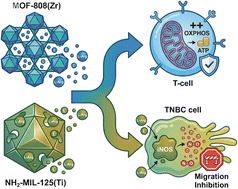
L-Arginine (L-Arg) is a key immunometabolite and nitric oxide (˙NO) precursor with therapeutic potential in cancer and immunotherapy. However, its clinical application is hindered by poor bioavailability and uncontrolled dosing. Here, two distinct metal–organic frameworks (MOFs), NH2-MIL-125(Ti) and MOF-808(Zr), were engineered as nanocarriers for L-Arg to enable coordinated tumour–immune modulation in triple-negative breast cancer (TNBC). L-Arg loading and release were systematically characterized, followed by Seahorse metabolic flux, flow cytometry, live-cell imaging, and wound healing assays to evaluate biological effects in activated human T cells and inducible nitric oxide synthase (iNOS)-transduced MDA-MB-231 cells. Both MOFs demonstrated successful L-Arg encapsulation with distinct release kinetics. In activated CD4+ T cells, Arg-loaded MOFs induced profound metabolic reprogramming independent of detectable ˙NO production. MOF-808-Arg enhanced oxidative phosphorylation and preserved spare respiratory capacity, while NH2-MIL-125-Arg triggered hypermetabolism characterized by elevated proton leak and loss of respiratory reserve, mimicking high-dose L-Arg stress. In contrast, in iNOS-expressing MDA-MB-231 cells, both MOFs increased intracellular ˙NO levels, resulting in reduced viability and inhibited migration. These findings demonstrate that controlled arginine delivery exerts dual and context-dependent effects, coupling ˙NO-mediated tumour cytotoxicity with ˙NO-independent enhancement of T-cell metabolic fitness. Overall, this work establishes MOF-based nutrient delivery as a strategy that integrates redox-based gasotransmitter therapy with immunometabolic reprogramming, highlighting the importance of carrier-dependent release kinetics in shaping both tumour and immune cell responses in metabolically hostile cancers such as TNBC.
- This article is part of the themed collection: 34th Annual Conference of the European Society for Biomaterials, an official ESB2025 collection
 Please wait while we load your content...


