


Polystyrene and polytetrafluoroethylene nanoplastics affect probiotic bacterial characteristics and penetrate their cellular membrane
 a
Mirko
Cortese,
ad
Carla
Isernia,
a
Roberto
Fattorusso,
a
Gaetano
Malgieri
*a
a
Mirko
Cortese,
ad
Carla
Isernia,
a
Roberto
Fattorusso,
a
Gaetano
Malgieri
*a
Abstract
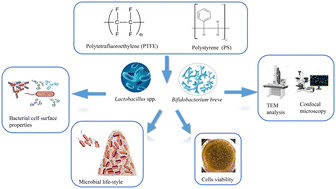
One of the main targets of nanoplastic (NP) toxicity is the gastrointestinal tract, where the gut microbiota acts as a crucial biological barrier, by regulating nutrient and energy metabolism and maintaining the immune defence system. Lactic acid bacteria (LAB) are key components of the human intestinal microbiota and include many of the most important health-promoting probiotic strains. It has been proposed that specific LAB strains can protect against human toxicity caused by polystyrene (PS) NPs. Despite these findings, it is still not completely clear how the physiology and functional traits of LAB are influenced by NPs. In this study, we report how PS and polytetrafluoroethylene NPs, having significantly different chemical compositions, affect the key surface-associated phenotypic traits of selected LAB and penetrate their cellular membranes. Here, we show that NPs, particularly PS-NPs, significantly affect the hydrophobicity and auto-aggregation of the bacterial strains, in a species- and strain-dependent manner. PS-NP exposure resulted in a marked reduction in surface hydrophobicity and, in most cases, a concomitant increase in auto-aggregation; notably, Bifidobacterium breve Reuter exhibited the highest sensitivity to PS-NPs. Accordingly, membrane permeability assays and TEM analysis revealed substantial loss of cell wall integrity and consequent internalization of PS-NPs by the bacterial cells. In terms of lifestyle transitions, PS-NP exposure promoted a shift from planktonic to biofilm-associated growth in LAB strains. Overall, these findings highlight the disruptive potential of NPs on bacterial physiology and viability, with implications for gut microbiota stability and probiotic efficacy. The differential responses observed emphasize the importance of strain-specific assessments when evaluating NP toxicity.
- This article is part of the themed collection: Nanoplastics in the Environment
 Please wait while we load your content...


