


Recent physicochemical surface modification approaches to enhance triboelectric nanogenerator performance: materials, processing and applications
 *adef
and
Chang Kyu
Jeong
*abe
*adef
and
Chang Kyu
Jeong
*abe
Abstract
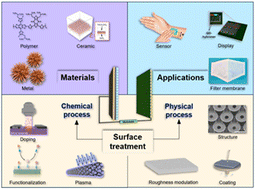
Triboelectric nanogenerators (TENGs) have emerged as promising energy-harvesting devices capable of converting ambient mechanical energy into electricity through contact electrification and electrostatic induction. However, achieving high output performance and operational stability remains challenging due to their limited charge density and inefficient interfacial charge transfer. In this review, we comprehensively discuss surface modification approaches, encompassing materials selection, advanced processing techniques, and diverse application strategies, which collectively elevate TENG performance. We categorize key material systems and highlight how tailored surface modifications such as nano/micro-structuring, chemical functionalization, dielectric engineering, and plasma treatments enhance charge generation and retention. Moreover, we analyze processing methodologies that optimize surface morphology and electronic properties, thereby improving frictional interactions and charge trapping efficiency. These enhancements directly translate into superior device metrics, including increased open-circuit voltage, current density, and energy conversion efficiency. Finally, we explore practical implementations across wearable sensors, IoT platforms, and flexible electronic systems, illustrating how surface-engineered TENGs advance the development of next-generation self-powered technologies. This review aims to provide a comprehensive framework that integrates materials, processing, and application perspectives, offering guidance for future research toward high-performance, reliable TENG systems.
- This article is part of the themed collection: Recent Review Articles
 Please wait while we load your content...


