

Contributors to the Emerging Investigators collection 2026: Part 1
Georgiy Akopov is an assistant professor of chemistry at Rutgers University, Newark. He got his PhD in inorganic chemistry at UCLA with Dr Richard Kaner studying superhard metal borides. He then moved to Iowa State University and did postdoctoral research with Dr Kirill Kovnir before receiving the Spedding Postdoctoral Fellowship at Ames National Laboratory, focusing on thermoelectric and NLO properties of intermetallics. In 2022 he joined the Department of Chemistry at Rutgers University, Newark. His group’s research mainly focuses on catalysis: photocatalysis using perovskites and HER using layered transition metal borides.
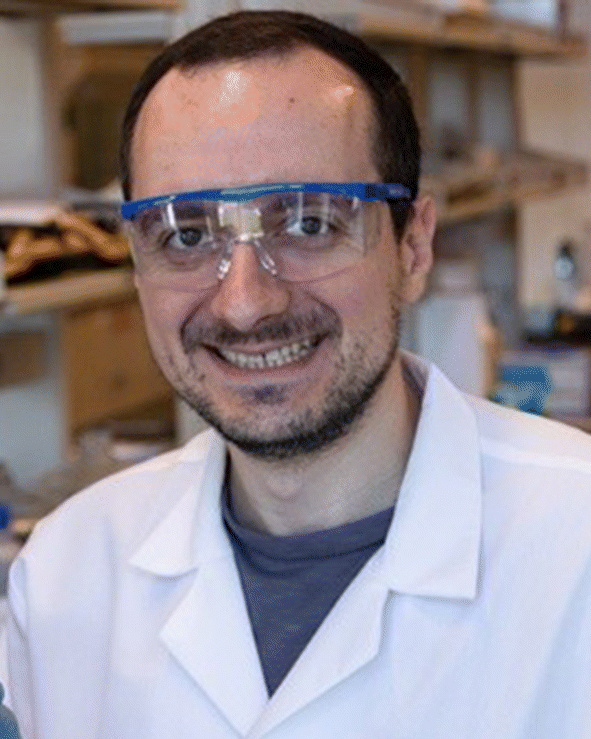
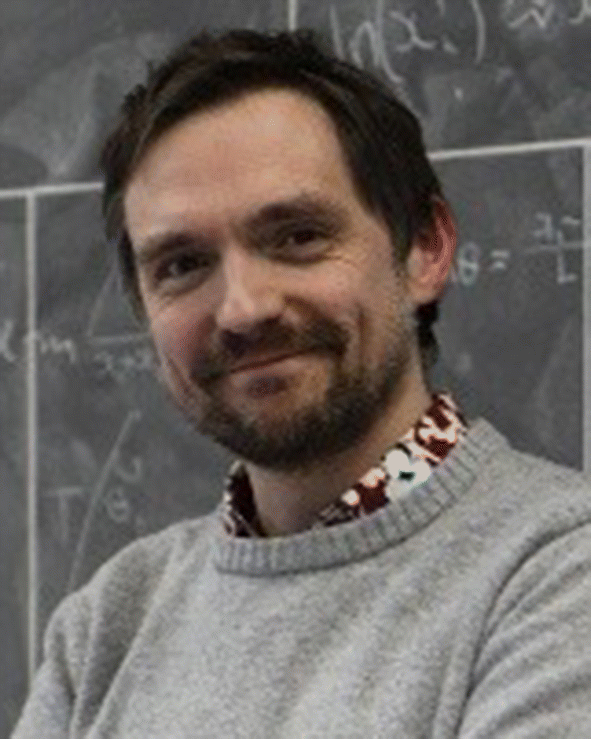
Stijn De Baerdemacker [he/him/his] is a Canada Research Chair in Theoretical Chemistry, associated scientific director at the Research Institute for Data Science & AI, and PI of the QuNB quantum chemistry group at the University of New Brunswick. He works on the development of quantum many-body techniques for understanding chemical processes in materials, drug discovery, and renewable energy. With a background in theoretical nuclear physics, he is an early adopter of quantum computing and explores the “unreasonable effectiveness” of machine learning approaches. Stijn enjoys thinking fast & slow, and drawing from both sides of the brain.

Xiaojuan Bai is a professor at Beijing University of Civil Engineering and Architecture. She received her PhD degree from Tsinghua University in 2014 under the guidance of Prof. Yongfa Zhu. Her current research is mainly focused on photocatalysis and its applications in environmental purification. She has published 60 peer-reviewed papers (40 in journals with impact factor > 10) in top-tier journals in the areas of materials chemistry and water-treatment technology. These publications have been cited over 5000 times and her h-index is 31. In 2021, 2022 and 2025, she was named to the World’s Top 2% of Scientists list published by Stanford University in the United States.
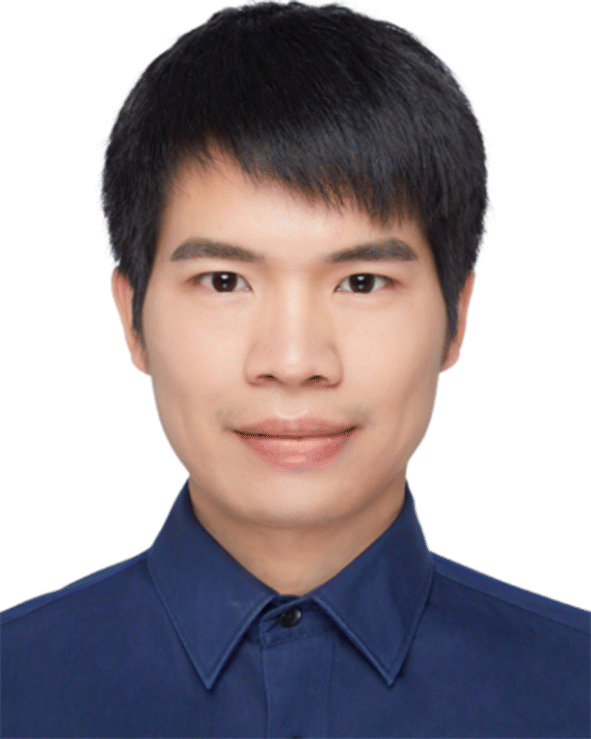
De-Shan Bin is a professor at Jinan University. He earned his PhD degree from the Institute of Chemistry, Chinese Academy of Sciences in 2018. He then worked at the National Institute of Advanced Industrial Science and Technology (AIST)-Kyoto University Chemical Energy Materials Open Innovation Laboratory in Japan as a postdoctoral research fellow. He started his current position as a PI in 2020. His research primarily focuses on the design and synthesis of high-performance electrode materials for sodium- and potassium-based batteries.
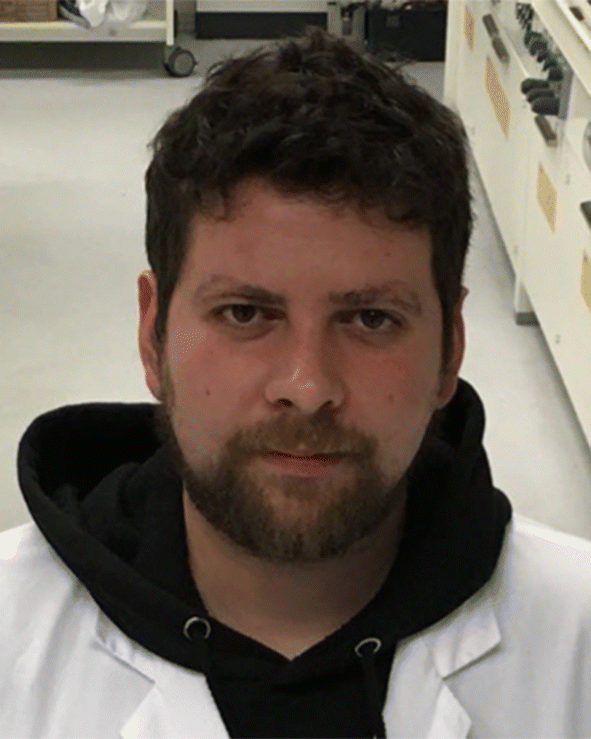
Arturo Blanco earned his PhD in 2019 under the supervision of Profs. Carlos Peinador and Marcos D. García, focusing on the design and synthesis of pH-responsive pyridinium-based molecular receptors. After gaining industrial experience in drug synthesis at Eurofins-Villapharma Research (Murcia, Spain), he joined Prof. Silvia Marchesan’s group in Trieste (Italy) in 2022 through a Xunta de Galicia postdoctoral fellowship, where he developed pH-responsive pseudopeptides able to self-assemble into nanotubes. He is currently leading research on stimulus-responsive self-assembled nanotube systems in the group of Profs. Carlos Peinador and Marcos D. García.
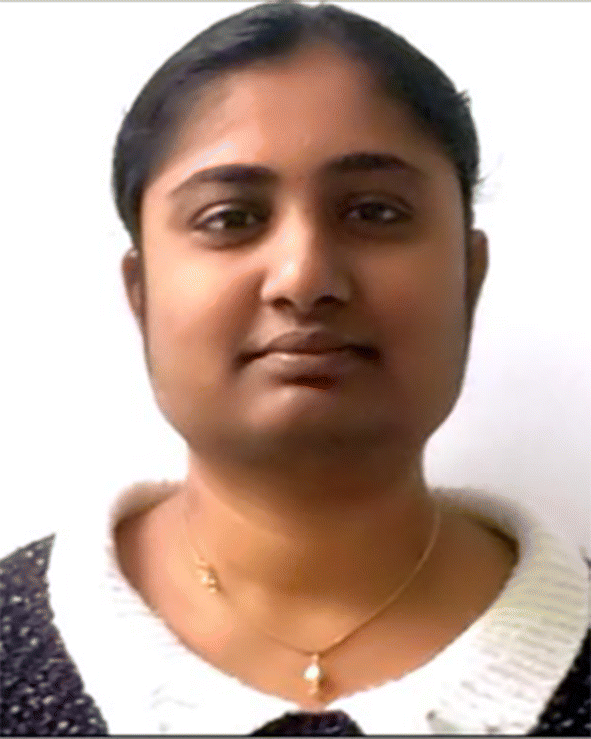
Geetha Bolla is a research fellow at the University of Alabama and the University of Wyoming. Prior to that, she was a postdoc fellow at Ben-Gurion University, National University of Singapore. She obtained her PhD degree from the University of Hyderabad and worked as an INDO-US postdoc fellow at MIT to understand pharmaceutical continuous crystallization. She gained experience in optoelectronic crystals to develop single-crystal electronics at ICCAS Beijing. Her research interest is to develop sustainable crystallization methods and their applications in various areas, such as nuclear-waste management, pharma, and smart photo/thermo-salient materials, to solve the current cutting-edge global challenges through crystallization.
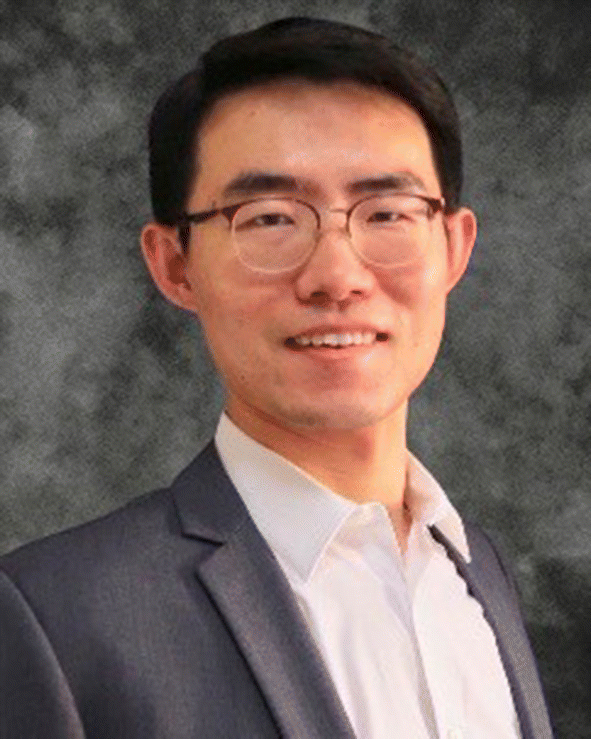
Wei Cao has been a professor at Beijing Normal University since 2022. He received his PhD in 2016 from Tsinghua University, under the mentorship of Prof. Huaping Xu. Following his doctoral studies, he conducted postdoctoral research at UCLA and Northwestern University. His research interests lie in polymer chemistry and radiation chemistry, particularly their applications in chemo- and radiotherapy and radiation protection. He has received several prestigious national research grants, including the National Key R&D Program Youth Scientist Project. His work has garnered significant attention from leading scientific outlets including EurekAlert!, C&EN, Universe Today, and The Independent.
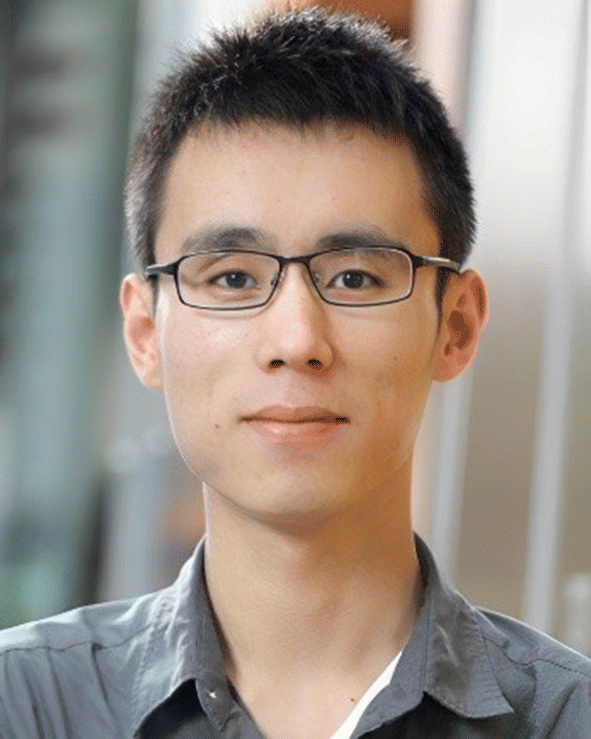
Shangshang Chen is an associate professor in the School of Chemistry, Nanjing University. He received his Bachelor’s degree from Nanjing University in 2014, followed by his PhD from the Hong Kong University of Science and Technology in 2018. Subsequently, he pursued postdoctoral research at the University of North Carolina at Chapel Hill. In 2022, he joined the State Key Laboratory of Coordination Chemistry, Nanjing University, as a principal investigator. His research interests focus on organic optoelectronic materials and organic/perovskite solar devices.
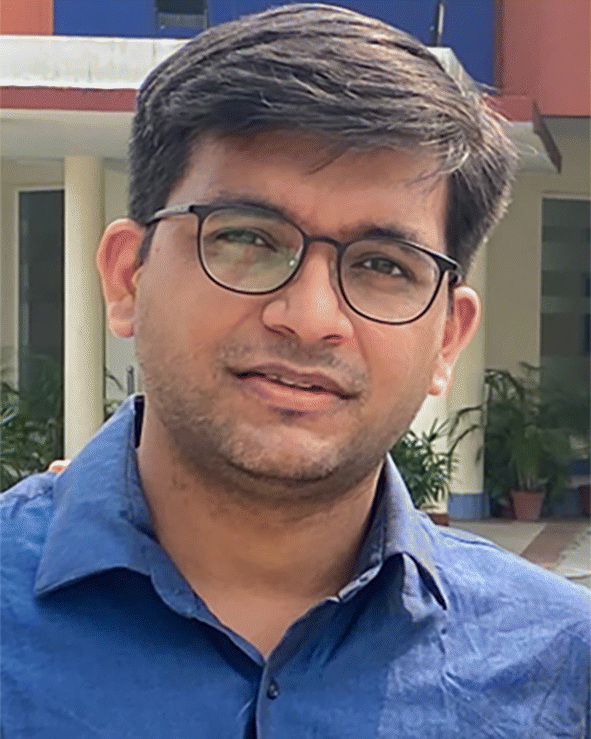
Prodyut Dhar is an associate professor in the School of Biochemical Engineering, Indian Institute of Technology (BHU) Varanasi. He earned his PhD in chemical engineering from the Indian Institute of Technology Guwahati in 2017, and a BTech in biotechnology from the National Institute of Technology Durgapur in 2012. He is the recipient of several prestigious fellowships, including the Japan Society of Promotion of Science (JSPS) Fellowship, the Har Govind Khorana IYBF (2024), and the Ramalingaswami Fellowship (2021) from the Department of Biotechnology (DBT), Govt. of India. His research focuses on biomaterials, biodegradable polymers, bionanotechnology, biorefineries, renewable energy systems, and sustainable materials, particularly cellulose-based innovations for diverse applications.
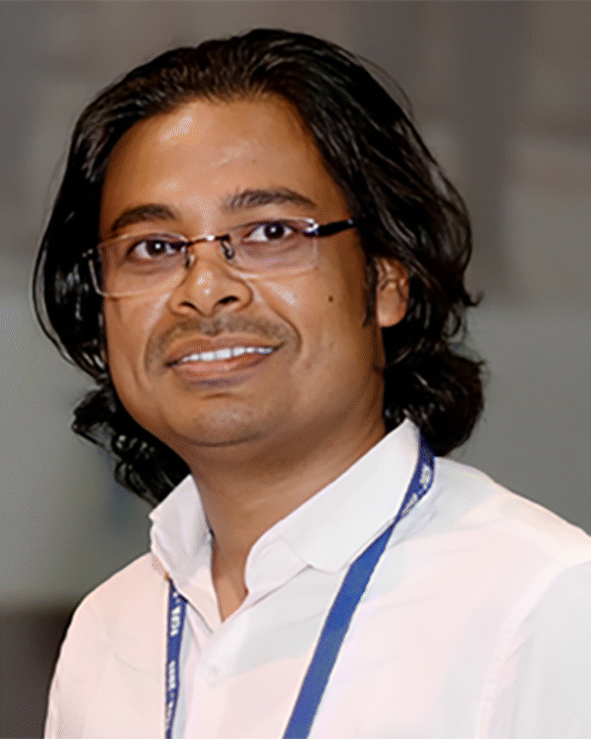
Goutam Ghosh received his PhD in 2014 from the University of Calcutta, Kolkata, India. After his PhD, he joined the Indian Association for the Cultivation of Science (IACS), Kolkata, as a postdoctoral researcher. After that, he moved to Westfälische Wilhelms Universität (WWU) Münster, Germany, as a postdoctoral research fellow. In 2023, he received prestigious “Ramanujan Fellowship” from ANRF, Govt. of India. Presently, he is an assistant professor (Ramanujan Faculty) at the Centre for Nano and Soft Matter Sciences (CeNS), Bangalore. His current research interest focuses on controlled supramolecular polymerization of peptides and amphiphilic molecules, polymers, and their numerous applications.

Ignacio Insua (Nacho) is a principal investigator at the Centre for Research in Biological Chemistry and Molecular Materials (CiQUS), in the University of Santiago de Compostela, Spain. He obtained his PhD in 2018 from the University of Birmingham, followed by postdoctoral stays at the University of Melbourne and Santiago de Compostela. He currently holds a Ramón y Cajal tenure track position and ERC Starting Grant. His group works on peptide self-assembly for supramolecular nanomaterial engineering, with applications ranging from dynamic responsive materials and self-replication to antimicrobial technologies.
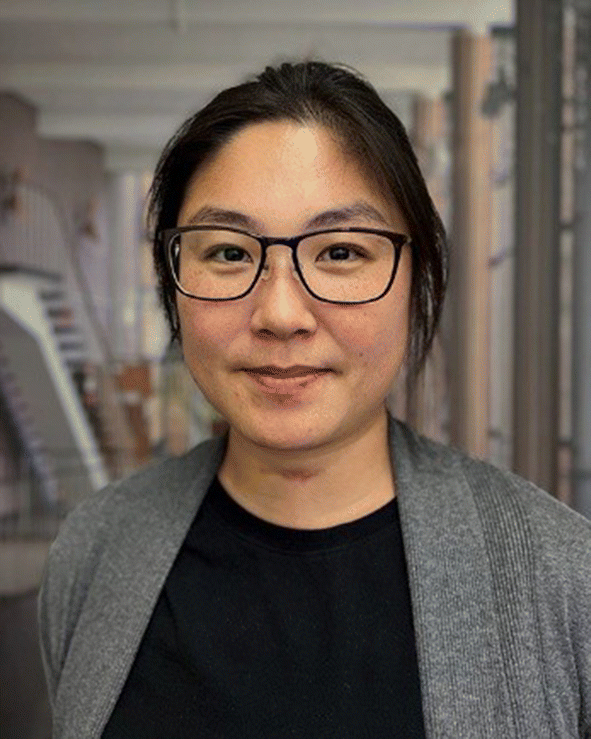
Minkyung Kang is a senior lecturer at the University of Sydney. She received her PhD in chemistry from the University of Warwick in 2018, where she developed advanced electrochemical imaging techniques for single-nanoparticle analysis. Her research focuses on nanoscale electrochemistry, particularly the development of scanning electrochemical probe microscopy and single-entity approaches to understand structure–activity relationships in energy materials and sensors.
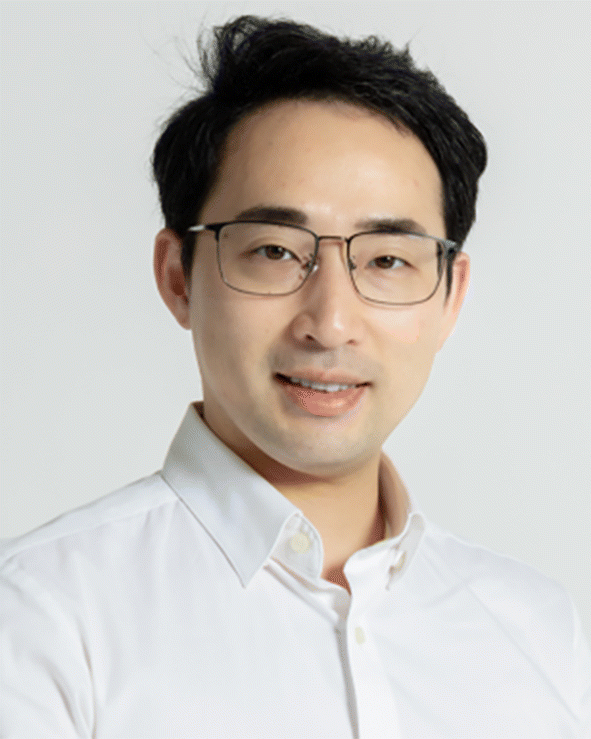
Haegyeom Kim is a Career Staff Scientist at the Materials Sciences Division of Lawrence Berkeley National Laboratory (LBNL). He received his PhD in 2015 from Seoul National University and was a postdoctoral researcher at LBNL until early 2019. His research interest lies in materials design for energy storage and conversion materials based on the fundamental understanding of the synthesis process–structure–property relationship. He has published more than 100 peer-reviewed articles and 6 patents to date. He was selected as a Clarivate ‘Highly Cited Researcher (HCR)’, and won several awards, including the Berkeley Lab Director’s Exceptional Achievement and ISSI’s Young Scientist Award.
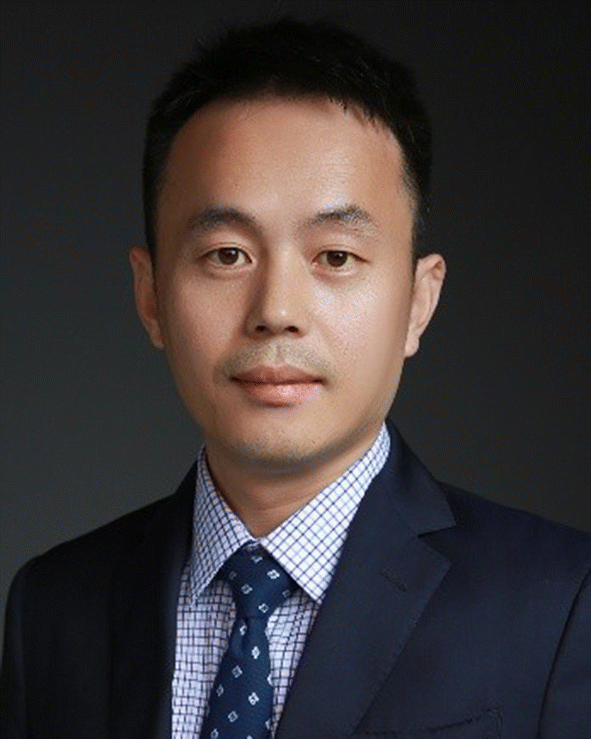
Kai Li received his BSc degree in chemistry from the University of Science and Technology of China in 2008. He then obtained his PhD degree in 2013 from the University of Hong Kong, where he worked under the supervision of Prof. Chi-Ming Che. Following a postdoctoral fellowship at the same institution, he joined Shenzhen University as an assistant professor. He was promoted to associate professor in 2022 and to full professor in 2024. His research interests focus on the development of photoactive transition metal complexes for diverse applications.

Jiang Liu received his PhD from Sun Yat-Sen University in China. From 2016 to 2021, he worked as an associate professor in the Faculty of Chemistry and Materials Science of Nanjing Normal University. In 2022, he joined South China Normal University and was appointed as a professor. His research interest focuses on the design and synthesis of crystalline catalysts (e.g., metal–organic frameworks/clusters/cages, covalent–organic frameworks, and their derived nanomaterials) for photocatalytic inorganic/organic small molecule conversion.
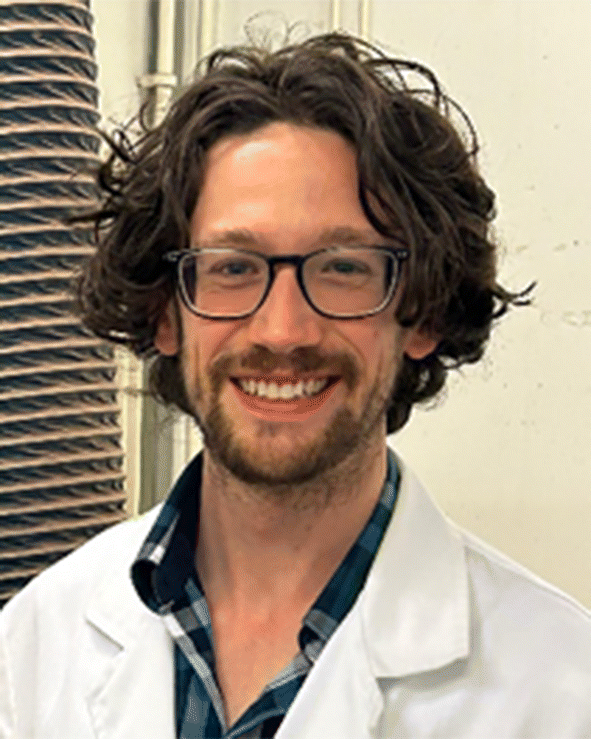
Alastair T. M. Marsh is currently appointed as a Scientist at the Ecole Polytechnique Federale de Lausanne, working with Prof. Karen Scrivener at the Laboratory of Construction Materials. From 2019-2023, he was a Research Fellow in the group of Prof. Susan Bernal at the University of Leeds. He has a PhD in civil engineering from the University of Bath (2019), and a MEng in materials science from the University of Oxford (2013). His research interests are based around the ‘processing–structure–properties–performance–sustainability’ relationships of construction materials, and how to improve livelihoods through the way we make the built environment.
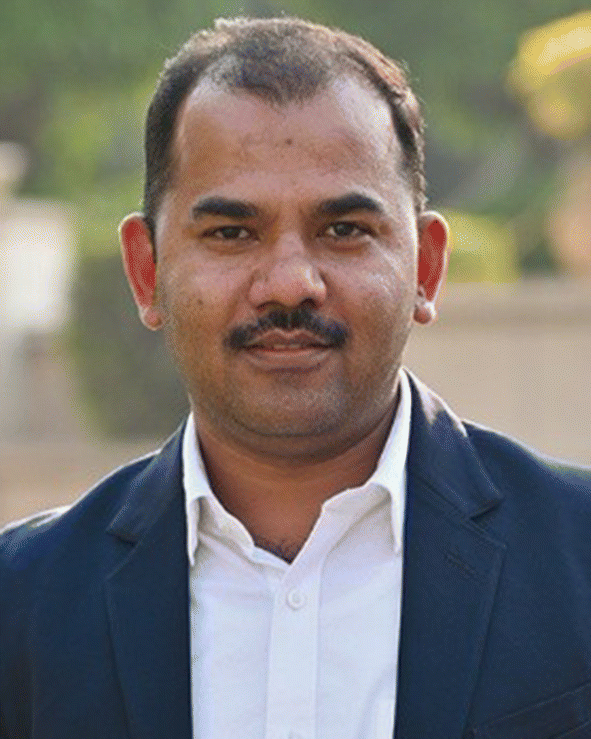
Pradip Pachfule has been a faculty member at the S. N. Bose National Centre for Basic Sciences in Kolkata, India, since 2021. He received his PhD in chemical sciences in 2014 from CSIR-National Chemical Laboratory, Pune, India. He then worked as a JSPS postdoctoral research fellow at AIST, Osaka, Japan. He then held positions as an Alexander von Humboldt postdoctoral fellow and a postdoctoral research fellow at Technische Universität Berlin in Germany. Dr Pachfule’s research focuses on synthesizing covalent organic frameworks for use in photocatalytic water splitting, hydrogen peroxide generation, organic transformations, and energy storage.
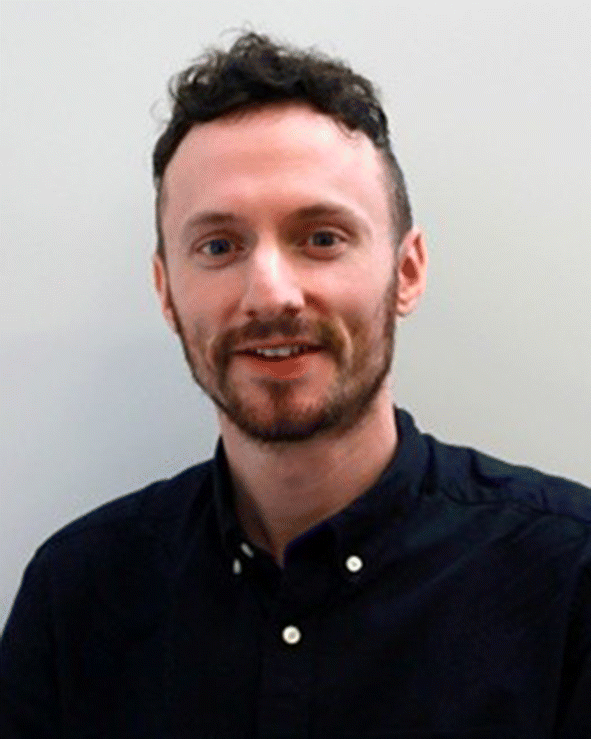
Gregory J. P. Perry is a lecturer in organic chemistry at the University of Southampton (UK). His research group focuses on methodology development for the synthesis of small organic molecules with interests in photoredox catalysis and carbon isotope labelling. Prior to joining the University of Southampton, Greg studied for his MChem at the University of Liverpool (UK) and his PhD at the University of Manchester (UK), before appointments at Nagoya University (Japan), the University of Manchester (UK) and Kyoto University (Japan). Alongside this recognition in Chemical Communications, he has also been selected as an Organic Chemistry Frontiers Emerging Investigator.
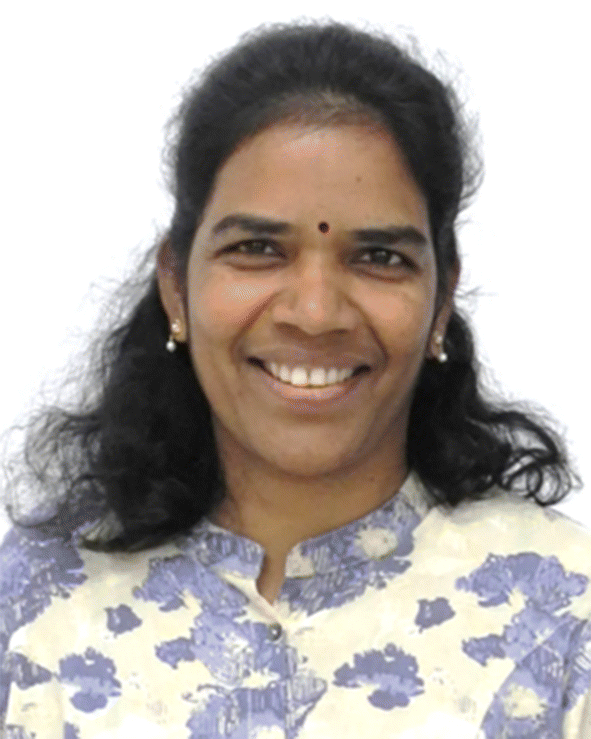
P. Rajamalli is an assistant professor at the Materials Research Centre, Indian institute of Science (IISc), Bangalore, India. In 2019, she joined IISc as an independent researcher and has established a research group on the topic of “Organic Functional Materials for organic light emitting diodes (OLEDs)”. Rajamalli previously worked as a postdoc researcher at the University of St Andrews, UK, and the National Tsing Hua University, Taiwan; She obtained her PhD degree from the Indian Institute of Technology Madras in 2012. Rajamalli’s research interests are focused on organic functional materials, TADF emitters, host materials, and dendrimer-derived emitters for OLED applications.

Lingzi Sang is an assistant professor in the Department of Chemistry at the University of Alberta. Dr Sang received her PhD from the University of Arizona (2015) and her BSc from Xiamen University (2009). Before joining U of A in 2018, Dr Sang was a postdoctoral researcher at the University of Illinois Urbana Champaign. Dr Sang is broadly interested in chemistry at the interfaces of electrochemical devices such as secondary batteries, fuel cells, and electrochemical sensors. Dr Sang’s group develops in operando characterization approaches to correlate the performance of electrochemical devices with the fundamental physiochemical nature of the critical interfaces.

Chang-Long Tan received his PhD degree from Fuzhou University in May 2025 and currently works as a postdoctoral researcher at the University of Electronic Science and Technology of China. Over the past five years, he has published more than 20 papers in prestigious journals, including Nat. Commun., Angew. Chem., ACS Catal., Appl. Catal. B, and Artif. Photosynth. His research interests primarily focus on heterogeneous photoredox catalysis, with an emphasis on the design of composite-based catalysts, fundamental studies of catalyst structures and reaction mechanisms, and their applications in artificial photosynthesis and other redox catalytic processes.
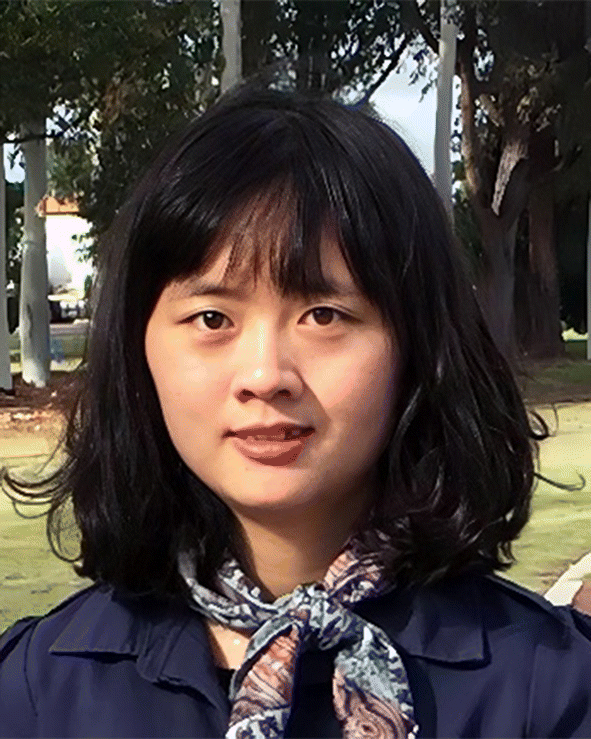
Wenjie Tian is a senior lecturer and ARC Future Fellow in the School of Chemical Engineering at Adelaide University. She received her PhD in chemical engineering from Curtin University, Australia, in 2018. Her research focuses on the design and development of functional nanomaterials with precise structural control to tackle challenges in environmental remediation and energy conversion, aiming to deliver sustainable solutions through innovative materials science and engineering.
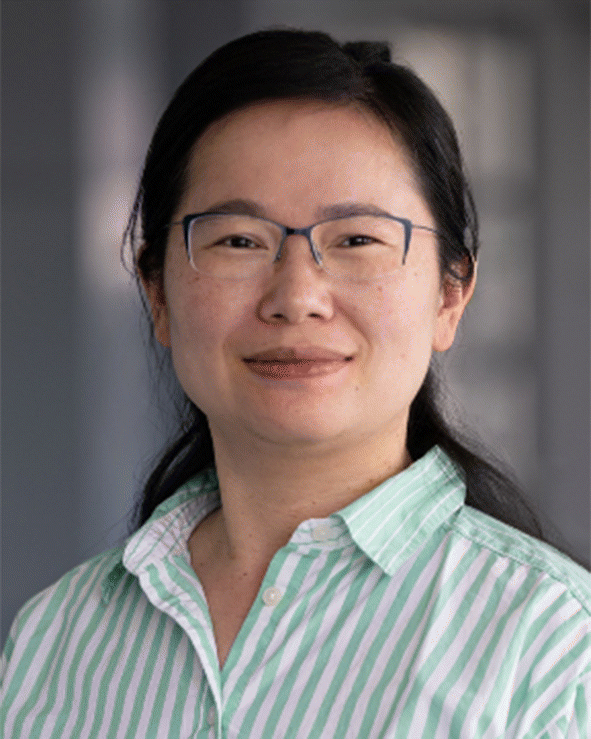
Wenjing Wang is an associate professor in the Life Sciences Institute and the Department of Chemistry at the University of Michigan, Ann Arbor. She earned her PhD in bioorganic chemistry in 2012 at Michigan State University with Dr Babak Borhan, and then completed postdoctoral training with Dr Alice Ting at the Massachusetts Institute of Technology and Stanford University. Dr Wang began her independent career at the University of Michigan in 2018. Her lab integrates protein engineering, chemical biology and synthetic biology to develop molecular sensors and tools for probing a range of neuronal processes.
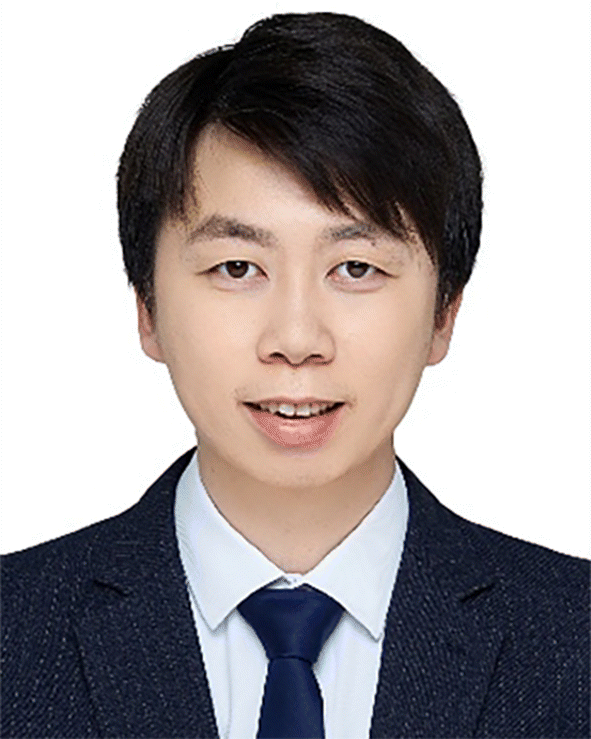
Yuping Wang is an assistant professor in the Department of Chemistry at Zhejiang University. He graduated with a bachelor’s degree in chemistry from Peking University in 2012. In 2017, he obtained his PhD from Northwestern University, where he was guided by Nobel Laureate in Chemistry (2016), Professor Sir Fraser Stoddart. His postdoctoral studies at the Massachusetts Institute of Technology from 2017 to 2021 were carried out under the supervision of Professor Robert J. Macfarlane. In September 2021, he joined Zhejiang University to conduct independent research, with his research centered on the development of innovative force-responsive supramolecular and polymer materials.
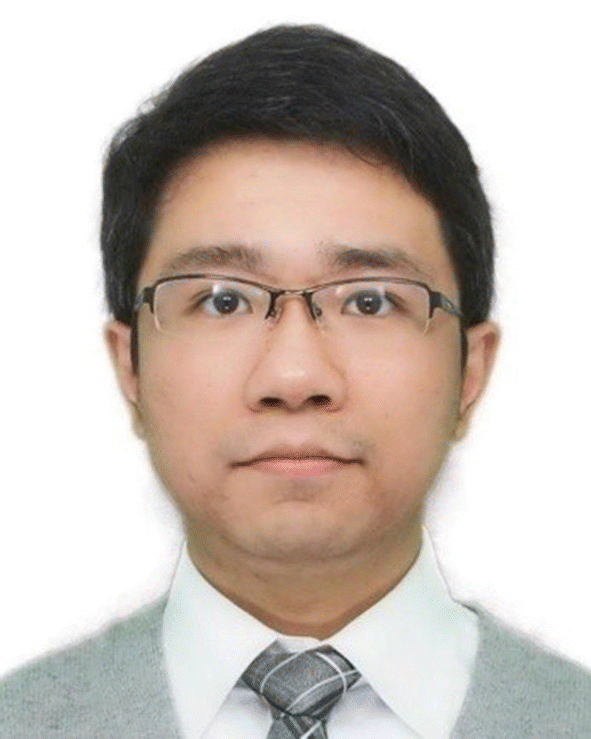
Jian Xu is currently an assistant professor at Kyoto University, Japan. He received his PhD from Kyoto University in 2017, under the supervision of Prof. Setsuhisa Tanabe, and subsequently worked as a JSPS postdoc in the same lab between 2017–2020. From 2020, he became the ICYS research fellow (RF) in the National Institute for Materials Science (NIMS), Japan. Since 2024, he has been an assistant professor at Kyoto University. His research is focused on (persistent) phosphors, transparent ceramics, luminescence thermometry, solid-state laser lighting, high pressure spectroscopy, mechanoluminescence, and perovskite-nanocrystal-embedded glass/glass–ceramics.
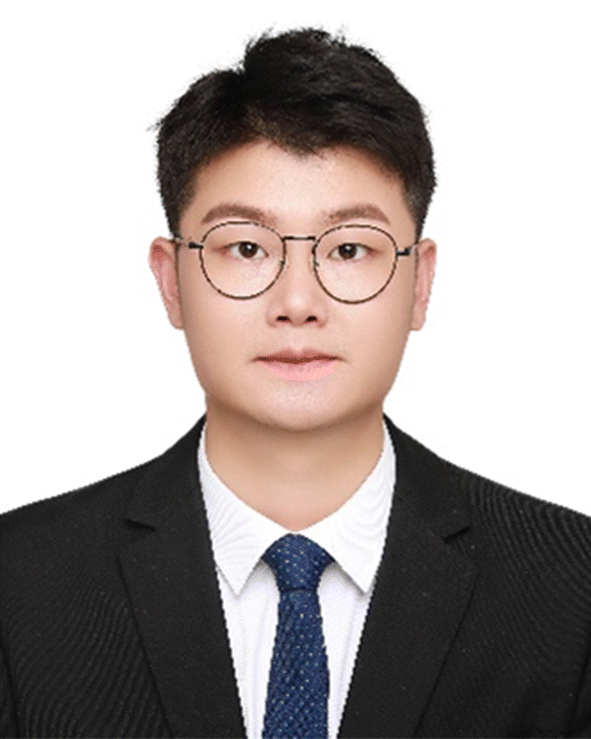
Kai Zeng is currently working as an associate professor at the Institute of Smart City and Intelligent Transportation, Southwest Jiaotong University. He received his PhD degree in new energy science and engineering from Soochow University in 2022 and subsequently conducted postdoctoral research at Nanjing University. His research interests focus on the design, fabrication and application of advanced electrocatalysts for water electrolysis, metal–air batteries and fuel cells, etc.
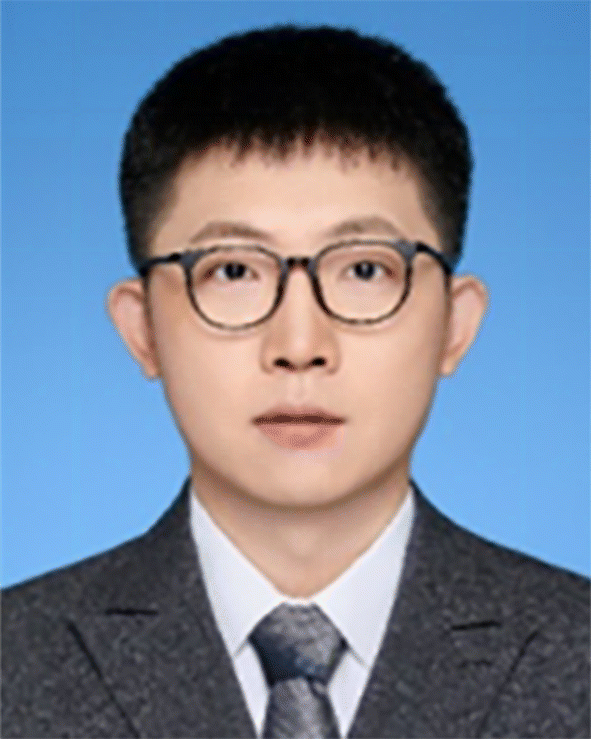
Zhitao Zhang received his bachelor’s degree in the Department of Polymer Materials from East China University of Science and Technology, China, in 2012 and his PhD degree in polymer chemistry and physics from Fudan University, China, in 2017. He was a postdoctoral fellow in chemical engineering at Stanford University from 2017 to 2022, and then joined the School of Chemistry and Chemical Engineering at Shanghai Jiao Tong University. His research focuses on soft electronic materials and devices. To date, he has published over 60 papers.
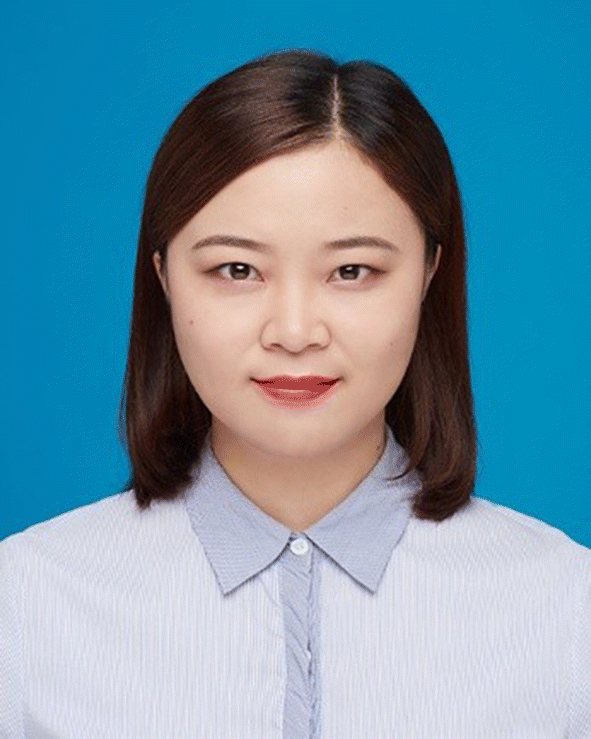
Xiuli Zheng obtained her bachelor’s degree from Shandong Normal University and doctoral degree from the University of Chinese Academy of Sciences. Currently, she serves as an associate researcher at the Technical Institute of Physics and Chemistry, Chinese Academy of Sciences, mainly engaged in research on the design, synthesis and application of organic phototherapeutic agents.
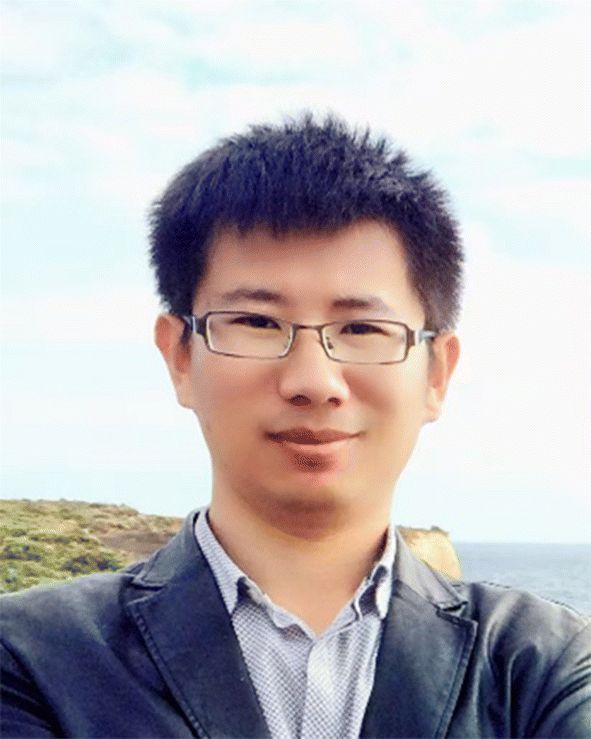
Prof. Tengfei Zhou’s research is focused on low-temperature batteries and interfacial catalysis problems encountered in energy storage systems. All his publications have collectively attracted over 12![[thin space (1/6-em)]](https://www.rsc.org/images/entities/char_2009.gif) 500 citations. Zhou started his professional research career as an Australian Research Council (ARC) DECRA Fellow in the Institute for Superconducting and Electronic Materials at the University of Wollongong. He is currently a professor at the Institutes of Physical Science and Information Technology at Anhui University.
500 citations. Zhou started his professional research career as an Australian Research Council (ARC) DECRA Fellow in the Institute for Superconducting and Electronic Materials at the University of Wollongong. He is currently a professor at the Institutes of Physical Science and Information Technology at Anhui University.
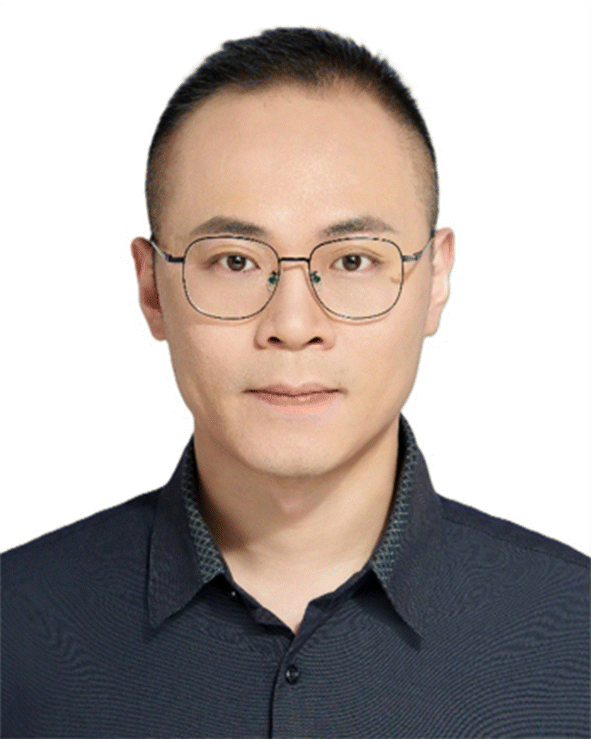
Taotao Zhuang is now a full professor in the Department of Chemistry at the University of Science and Technology of China, where he joined in April 2020 as an independent principal investigator. He also holds a dual appointment as a professor in the Key Laboratory of Precision and Intelligent Chemistry. His group is now working to synthesize novel chiral functional micro/nano materials, understand the mechanism of structure–property relationships, and realize practical optical applications, including information interaction, 3D displays, and bio-sensing using homemade materials. He has been recognised as a Clarivate Highly Cited Researcher (Cross-Field).
| This journal is © The Royal Society of Chemistry 2026 |