


Transition metal-based single-atom catalysts used for the CO2 reduction reaction to CO

Abstract
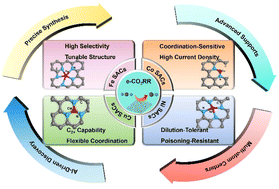
The electrocatalytic CO2 reduction reaction (e-CO2RR), powered by renewable energy under mild conditions, has emerged as an effective way for converting CO2 into value-added chemicals with flexible and controllable selectivity. The catalysts play significant roles in determining the reaction pathways and the final products. The rational design of the advanced electrocatalysts to achieve an efficient e-CO2RR is highly desired. Transition metal-based single-atom catalysts (SACs), where individual transition metal atoms are uniformly dispersed and anchored on a solid support, can maximize the efficiency of metal atomic utilization and offer unique active sites for efficient CO2 conversion with high selectivity. Among the electrocatalytic CO2 reduction products, carbon monoxide (CO) stands out for its high catalytic current density, high yield, and benefits from a substantial cost advantage due to its gaseous nature, bypassing the need for the energy-intensive separation required for liquid products. Different from previous reviews, this paper reviews the recent research progress of transition metal SACs in the field of electrochemical CO2 reduction to CO. The article first introduces the reaction mechanism and main reaction pathways of the e-CO2RR to CO, then describes the recently reported transition metal SACs and their synthesis methods, and focuses on the performance analysis. This review can provide valuable references for further research and application of transition metal SACs in the e-CO2RR.
- This article is part of the themed collection: Journal of Materials Chemistry A Recent Review Articles
 Please wait while we load your content...


