


 PLATFORM UPDATE:


Microbial biosynthesis of quantum dots: regulation and application

Abstract
Quantum dots (QDs) are nanoscale semiconductor materials that have found wide applications in fields such as biosensing and solar cells. Conventionally, QDs are synthesized chemically, but biosynthetic methods using microorganisms have been developed as an alternative strategy. Microbially biosynthesized QDs possess better biocompatibility than chemically synthesized QDs due to the proteins and peptides attached to their surfaces. In this review, we outline the recent advances in the biosynthesis of QDs using microorganisms including bacteria, fungi, and viruses. We also discuss the current understanding of the regulation of the biosynthetic process by extracellular and intracellular factors. Additionally, we highlight the potential of QD–microbe biohybrids self-assembled in the process of QD biosynthesis.
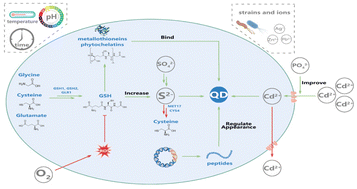
- This article is part of the themed collections: FOCUS: Luminescent materials for biomedicine and 2023 Inorganic Chemistry Frontiers Review-type Articles
 Please wait while we load your content...


