Barkha
Singh
ab,
Rohan
Bahadur
b,
Priyanka
Maske
b,
Mayuri
Gandhi
a,
Dipty
Singh
*c and
Rohit
Srivastava
*b
aCentre for Research in Nano Technology & Science (CRNTS), Sophisticated Analytical Instrument Facility (SAIF), IIT Bombay, Powai, Mumbai, 400076, India. E-mail: 93barkhasingh@gmail.com; mngandhi@iitb.ac.in
bDepartment of Biosciences and Bioengineering, Indian Institute of Technology (IIT) Bombay, Powai, Mumbai, 400076, India. E-mail: rohanbahadur@gmail.com; priyamaske1104@gmail.com; rsrivasta@iitb.ac.in; Tel: +91 222 576 7746
cDepartment of Neuroendocrinology, National Institute for Research in Reproductive and Child Health (NIRRCH), Parel, Mumbai, 400012, India. E-mail: singhd@nirrch.res.in
First published on 24th January 2023
Red emissive gold nanoclusters have potential as biological fluorescent probes, but lack sufficient light-to-heat conversion efficiency for photothermal therapy (PTT). MXene nanomaterials, on the other hand, have shown promise in PTT due to their strong near-infrared absorption abilities, but their instability caused by restacking of the sheets can decrease their available surface area. One approach to address this issue is to design sheets with wrinkles or folds. However, the crumpled or 3D MXene materials reported in the literature are actually aggregates of multiple nanosheets rather than a single sheet that is folded. In this study, a modified method for crumpling a single MXene sheet and further conjugating it with red emissive gold nanoclusters and folic acid was developed. A detailed in vitro toxicity study was performed in various cell lines and cellular uptake in cancer cells was studied using AFM to understand its interaction at the nano–bio interface. The material also demonstrated excellent utility as a bioimaging and PTT agent in vitro, with its high fluorescence allowing bioimaging at a lower concentration of 12 μg mL−1 and a photothermal conversion efficiency of 43.51%. In vitro analyses of the cell death mechanisms induced by PTT were conducted through studies of apoptosis, cell proliferation, and ROS production. In vivo acute toxicity tests were conducted on male and female Wistar rats through oral and intravenous administration (20 mg kg−1 dose), and toxicity was evaluated using various measures including body weight, hematology, serum biochemistry, and H&E staining. The findings from these studies suggest that the MXene gold nanoconjugate could be useful in a range of biomedical applications, with no observed toxicity following either oral or intravenous administration.
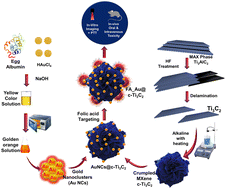
Noble metal nanoclusters (NCs), because of their ultrafine size and lack of toxicity, are more attractive for biolabeling and bioimaging applications than semiconductor quantum dots (QDs) which generally contain hazardous metal species e.g., cadmium and lead.9,10 Gold nanoclusters (Au NCs) are incredibly versatile and have been explored as bioimaging probes for image-guided therapy because of their ultrafine size, unique molecule-like properties, photostability, large Stokes shift, long luminescence lifetime, and nontoxicity.11–14 Satisfactory biodistribution and renal clearance are other features that could pave the way for enhanced in vivo treatment outcomes.15–17 Au NCs can be energetically considered as molecules when significant quantization of the conduction band occurs due to the quantum confinement phenomenon resulting in distinct optical features such as fluorescence upon light activation.18 Possession of strong red/NIR luminescence properties makes Au NCs highly suitable fluorescent nanomaterials for bio-imaging. Despite these advantages, Au NCs have significantly less phototherapeutic potential than typical photothermal agents such as gold nanorods or graphene oxide.19 Owing to their easy chemical functionalization, Au NCs can be conjugated with a photosensitizer for light-mediated tumor ablation with bio-imaging.20
Large absorption cross-sections for optical wavelengths, minimal toxicity, ease of surface modifications, and high solubility in biocompatible solutions are all desirable characteristics for a photosensitizing agent.21 2D layered materials, such as chalcogenides, metal oxides, nitrides, sulphides, and carbides, have attracted a lot of attention as a result of progress in graphene research since its discovery.22,23 MXenes are a group of two-dimensional (2D) transition-metal carbides and nitrides synthesized from the MAX phase where M is a transition metal (Ti, Ta, Nb, V, and Mo), A represents a group 13 or 14 element (Al, Si, Ge, Sn, S, As, P, In, Ga, Tl, and Pb) and X is C or N. The general chemical formula of MXenes is Mn+1XnTx (n = 1, 2, 3) where Tx represents surface termination groups such as –OH,
O, and –F.24–26 MXenes have shown considerable promise in a variety of fields, including energy, batteries, supercapacitors, photocatalysis, and environmental remediation.27–30 Owing to their low cytotoxicity, unique optical properties, and easy bulk synthesis, MXene nanosheets are also gaining popularity in biological applications,31 particularly in regenerative medicine, antibacterial and anticancer therapies, and bio-imaging, although they are still in early stages.32,33 The prominent challenges faced by pristine MXene nanosheets are oxidation, reduced surface area, and instability caused by their undesired self-restacking and aggregation. One of the ways to overcome this challenge is through electrostatically induced crumpling of MXene sheets to generate a 3D MXene structure.34–37 This transformation from two dimensions to three dimensions can also improve surface functionalization and distribute properties evenly within the structure.38 One of the easiest methods for producing a 3D MXene structure is alkali-induced crumpling.39 However, the process causes the flocculation of numerous sheets to form a 3D architecture. The method can be modified to produce folds in single sheets instead of flocculation.
Prior to the therapeutic use of nanoparticles, it is essential to investigate the toxicity of the synthesized nanocomposite since the toxicity of a substance is strongly reliant on its composition, dose, length of treatment, and mode of administration (intravenous, intra-peritoneal, oral pulmonary, and intravitreal administration).40 The most prevalent method of administering nanomaterials for PTT is the intravenous route; however, human exposure to nanomaterials may also occur orally. Consequently, it is necessary to test the toxicity of any nanomaterial using several administration routes before classifying it as non-toxic. Currently, the most common method for studying the in vivo toxicity of MXene-based formulations is intravenous injection. There is a significant gap in the current data on toxicity assessments of MXenes, particularly in terms of other modes of administration and assessments based on sex and reproductive organs.
MXenes coupled with other nanoparticles (Au, Ag, and Pd) were also created for various biomedical applications (Table S1†).41,42 However, the use of MXenes in conjunction with gold nanoclusters in multimodal imaging-guided cancer therapy has seldom been documented. This work presents an improved method for crumpling MXene sheets simultaneously using heating and alkali treatment. The synthesized crumpled MXene nanosheets were further combined with gold nanoclusters to design a nanocomposite for the intended application in image-guided photothermal therapy. The study also evaluated the preliminary in vivo acute toxicity of the nanocomposite when administered orally and intravenously in Wistar male and female rats. Detailed acute toxicity analysis including body weight, organ weight, hematology, serum biochemistry and histopathology was performed to understand the administration mode-dependent toxicity/safety of this MXene based nanocomposite. The interaction and internalization of the material in breast cancer cells was examined using atomic force microscopy (AFM), while bioimaging was evaluated using confocal microscopy. In addition, a systematic in vitro photothermal therapy study was conducted, including analyses of cell death mechanisms through apoptosis, cell proliferation, and ROS production.
000 U penicillin, 10 mg streptomycin and 25 μg amphotericin B), and 1× trypsin-EDTA solution were procured from Hi-Media. Resazurin sodium salt, propidium iodide, 4′,6-diamidino-2-phenylindole (DAPI), dichlorodihydrofluorescein diacetate (DCFDA), and phorbol 12-myristate 13-acetate (PMA) were procured from Sigma. An FITC Annexin V Apoptosis Detection Kit was procured from BD Biosciences.
000 rpm for 30 min. The pellet was washed multiple times until the pH of the supernatant became 6. The obtained pellet (HF_Ti3C2) was freeze dried to obtain a black powder. The powder was immersed in equal wt% TMAOH and a dispersion was formed in water for the delamination process. The reaction was first bath sonicated for 30 min and then kept on a stirrer overnight. The solution was dialyzed and further freeze dried (TMA+_Ti3C2). To induce alkali-based crumpling, the above powder at 2.5 mg mL−1 was heated at 80 °C and 2 M NaOH was added and stirred overnight. The solution was dialyzed and freeze dried to obtain black powder (c-Ti3C2).
000 rpm for 60 min at 10 °C. The resultant solution was lyophilized to get the NHS–folic acid complex. 20 μg of the FA–NHS was added to 1 mg mL−1 solution of Au@c-Ti3C2. The resultant powder was dialyzed and freeze dried to obtain the final product FA_Au@c-Ti3C2 which is a greenish black powder.
Characterization, in vitro experiments and in vivo methodology are provided in the ESI.†
Amino acids, biomolecules, and polymers that act as functionalizing and reducing reagents are required for the preparation of stable and highly luminous Au NCs.43,44 Herein, microwave assisted fluorescent Au NCs were synthesized using one-pot reduction of HAuCl4 with egg albumin.45 The cloudy solution of gold salt containing egg albumin changes into a golden brown solution when irradiated with microwave (Fig. S1a†). The protein acts as both a catalyst and stabilizer in the reaction. The microwave treatment time was optimized to achieve the maximum emission. The solution began emitting red emission after 3 minutes of microwave treatment, with an intensity increase up to 10 minutes of microwave treatment time, after which the emission intensity reached saturation (Fig. S1b†). The morphology of the synthesized Au NCs was observed using TEM (Fig. 1a and b). The obtained Au NCs were spherical in shape with an average diameter of 4.27 ± 1.27 nm (Fig. 1a, inset) which is in accordance with the reported literature.46
The MXene sheets were synthesized using the chemical etching method and delaminated using TMAOH (TMA+_Ti3C2). The delaminated sheets were further treated with alkali media at 80 °C to induce crumpling. The obtained solution was black in color, well dispersed and did not show any visible aggregation in the aqueous phase. This may be attributed to the good delamination property of TMAOH in conjunction with heat treatment in NaOH solution (used to induce wrinkles). Crumpled Ti3C2 sheets (c-Ti3C2) when observed under TEM showed a wrinkled morphology with multiple folds (Fig. 1c). The crumpling of MXene as observed was due to the self-folding of a thin sheet rather than flocculation of multiple sheets together shown by Di Zhao et al.39 This alkali induced crumpling gave rise to a 3D-like architecture. The lateral size of the c-Ti3C2 nanosheets was under 400 nm with very thin edges indicating that the nanosheets were mono or few layered (Fig. 1d). The selected area electron diffraction (SAED) pattern showed hexagonal symmetry (Fig. 1d, inset) confirming that c-Ti3C2 is still crystalline in nature. The 3D-like MXene structure can provide active sites for conjugation of gold nanoclusters.
The surface charge of the nanocomposite was determined using zeta potential which also helped to understand the chemistry behind the conjugation (Fig. S2a†). The surface charge of both c-Ti3C2 and Au NCs was found to be negative with a magnitude of −49.92 ± 1.1 (Fig. S2b†) and −8.28 ± 0.67 mV (Fig. S2c†), respectively. The gold nanocluster conjugation on c-Ti3C2 was done with the help of triethylamine (TEA) which is a tertiary amine having positive charge. The addition of TEA to c-Ti3C2 resulted in the change of surface charge from −49.92 ± 1.1 to −21.85 ± 0.56 mV (Fig. S2d†). The considerable change in the zeta potential after the addition of TEA indicates the amine functionalization of c-Ti3C2 through electrostatic absorption. The amine functional groups on c-Ti3C2 and negatively charged gold nanoclusters were incubated overnight and purified afterwards (Au@c-Ti3C2). The surface charge of Au@c-Ti3C2 was found to be −19.87 ± 0.86 mV (Fig. S2e†). The gold nanoclusters can be observed to be dispersed evenly on the surface of crumbled MXene sheets under the effect of electrostatic interaction (Fig. 1e and f). This shows that the efficient assembly of the Au NCs on c-Ti3C2 can be achieved through the use of amine functionalization. The SAED pattern shows the semi crystalline nature of the material compared to the hexagonal arrangement confirming the presence of both gold and MXene together (Fig. 1g). Elemental mapping confirmed the presence of Ti (titanium), Au (gold), O (oxygen), and N (nitrogen) (Fig. S3†). To compare the effect of morphology on loading percentage, gold conjugation was also done on flat Ti3C2 nanosheets (TMA+_Ti3C2). The TEM images showed very few gold nanoclusters on flat sheets (Fig. S4†). The gold content was evaluated through ICP and it was observed that compared to TMA+_Ti3C2, the crumpled sheets (c-Ti3C2) showed a 2.14-fold increase in the conjugated gold concentration. The 3D like structure with wrinkles and ridges may act as a pocket to hold an increased amount of gold nanoclusters compared to flat plain sheets. The same kind of phenomenon could be observed by Xing He et al. while loading vancomycin on crumpled graphene oxides compared to flat graphene oxides.47 This work shows a novel strategy not only to obtain crumpled MXene sheets, but also to load higher gold content.
In order for nanoparticles (NPs) to be effective in biomedicine, they must meet certain criteria. These include outperforming conventional agents in in vitro or in vivo applications while causing minimal cytotoxicity. NPs must also be able to efficiently reach their intended destination by avoiding non-specific interactions with plasma proteins and evade the reticuloendothelial system. Additionally, NPs must maintain their colloidal stability under physiological conditions and preferably over a wide pH range. NPs must also localize to the targeted location to avoid unwanted interaction with normal healthy cells. As a result, chemical modification of the NP surface is often necessary to allow specific interactions with target cells.48 In this work, Au@c-Ti3C2 was further conjugated with folic acid (FA_Au@c-Ti3C2) to develop and enhance specific targeting of cancer cells while limiting the side effects. Folic acid is one of the most widely used compounds that could target the folate receptors on tumor cells. The obtained solution was greenish black in color. The size distribution of FA_Au@c-Ti3C2 as observed with SEM (Fig. 1h) was found to show a small lateral size of 196.23 ± 49.85 nm (Fig. 1h, inset) which might be beneficial for biomedical application. The surface charge of FA_Au@c-Ti3C2 was determined to be −29.95 ± 1.5 mV (Fig. S2f†) indicating good stability of the material.
XRD was used to understand the structural characteristics of the nanomaterial synthesized (Fig. 2e). The characteristic peaks of the (001) and (002) planes are observed at 9.49 and 19.04° in the MAX phase (Ti3AlC2).49 The peaks of the planes shift to lower angles after etching with hydrofluoric acid which leads to successful removal of aluminium atoms from the MAX phase. The peak of the (001) plane at 9.49° in the MAX phase shifts to 8.96° and 8.03° in HF_Ti3C2 and TMA+_Ti3C2, respectively, suggesting a significant increase in interlayer spacing. As an effect of Al etching, the interlayer spacing change can be recognized through the shift in this peak.50 The disappearance of the peak at 38.65° of the (104) plane indicates Ti3AlC2 exhaustion and proves that the generated MXene is a pure phase.51 The crumpled MXene (c-Ti3C2) showed (001) and (002) peaks at 7.09° and 14.21°, respectively, indicating further delamination leading to one or two layered thick MXene sheets. The observation of a strong peak in the XRD pattern of Au NCs was difficult due to other elements present in egg protein. Smaller 2θ peaks were observed for Au NCs at 45.5° corresponding to the (111) lattice plane.52 The peaks for the (001) and (002) planes could be observed at 6.58° and 14.51° in Au@c-Ti3C2 along with other characteristic peaks of MXene. However, in Au@c-Ti3C2, peaks at 27.15° and 31.86° were also observed due to the formation of Ti3C2(OH)2.53,54 The result indicates that the nanocomposite contains surface hydroxyl groups which may be attributed to the deposition of gold nanoclusters on the MXene sheets. The surface modification and conjugation of Au@c-Ti3C2 with folic acid did not lead to any phase change in FA_Au@c-Ti3C2.
XPS and FTIR analyses were performed to understand the chemical conjugation of the material at different synthesis steps. Gold salt reacts with egg albumin to generate Au NCs. The Au NCs further conjugated with c-Ti3C2 and folic acid can thus have a range of functional groups on their surface, resulting in diverse bonding environments. For FA_Au@c-Ti3C2, Ti 2p spectra show the presence of Ti1+ (455.3/460.3 eV), Ti2+ (457.1/461.9 eV) and Ti3+ (458.2/464.3 eV) assigned to 2p3/2 and 2p1/2, respectively (Fig. 2f). The three peaks may arise from the Ti–C attached to different surface termination groups and are commonly attributed to Ti–C–TO, Ti–C–TF,O, and Ti–C–TF. XPS showed minimal surface oxide functional groups which are found in the Ti 2p regions in the form of TiO2 peaks. The maximum peaks at 84.1 and 87.9 eV in the Au 4f deconvoluted spectra correspond to 4f7/2 and 4f5/2, respectively (Fig. 2g). In contrast to the peak locations of bulk Au (84.0 and 87.4 eV), this positive shift occurs when the cluster size is decreased. Au 4f7/2 and 4f5/2 could further be deconvoluted into Au(0), Au(I) and Au(III). The peaks for Au(0), Au(I), and Au(III) were centered at 84.09, 85.34, and 86.75 eV for Au 4f7/2, and at 87.93, 89.09, and 91.14 eV for Au 4f5/2.55,56 The C 1s spectrum (Fig. 2h) includes C–Ti at 283.8 eV, C–C at 284.8 eV, C–N at 285.9 eV, C
O at 287.4 eV and O–C
O at 288.3 eV. The N 1s spectra (Fig. 2i) show pyridinic (398.1 eV), pyrrolic (399.07 eV) and graphitic (399.8 eV) peaks. The presence of nitrogen in the material can be mostly due to the conjugation of folic acid, which is a nitrogen rich compound.
FTIR analyses (Fig. S5†) show that the HF assisted etching of the MAX phase leads to a peak around 1024 cm−1 in c-Ti3C2 which can be linked to the F-terminated carbon. A peak appearing at 1650 cm−1 is attributed to C
O stretching. The peak at 1542 cm−1 representing the symmetric vibrations of the carboxylic group in c-Ti3C2 is overlapped by the broad peak of the NH group of the folic acid at 1550–1700 cm−1. A peak at 2923 cm−1 which might be due to the C–H stretching appears to be more prominent in Au NCs. Another broad peak observed at 3456 cm−1 can be attributed to O–H stretching and is accentuated in FA_Au@c-Ti3C2 because of the carboxylic acid bonds present in FA. The presence of the –OH bond in FA_Au@c-Ti3C2 signifies that a successful conjugation of FA with Au@c-Ti3C2 may have taken place. Furthermore, the reduction in the C–H peak in FA_Au@c-Ti3C2 in comparison with that of AuNCs may be due to the bonding of C–H groups with c-Ti3C2. The FTIR spectrum clearly shows that folic acid has been effectively coupled to Au@c-Ti3C2.
The fluorescence property of the synthesized material was confirmed with the help of photoluminescence spectroscopy (Fig. 3c and d). Gold nanoclusters showed λmax emission at 356 nm when excited with 250 nm, which red shifted to 395 nm in Au@c-Ti3C2 which is due to the conjugation of gold nanoclusters with c-Ti3C2. When the excitation wavelength was increased to 300 nm the gold nanoclusters showed a maximum emission wavelength of 363 nm while Au@c-Ti3C2 showed a very broad emission in the range of 300–500 nm. These results demonstrate that both materials exhibit excitation-dependent fluorescence.
The colloidal stability of FA_Au@c-Ti3C2 was evaluated in several solvents. Stable dispersion in both aqueous and complete media is an integral property of any material with potential for use in bio-applications. FA_Au@c-Ti3C2 exhibited excellent dispersion in Milli-Q water, PBS, and Dulbecco's modified Eagle's medium supplemented with fetal bovine serum (c-DMEM) (Fig. 3f). The material stability in the aforesaid solvents was tested for up to 5 days (Fig. S6†), as c-DMEM turned yellow on the fifth day owing to a common shift in its pH. Up to this point, the material showed excellent stability. The dispersion of the material was also further investigated in a few protic and aprotic solvents. Fig. 3g shows the digital images of FA_Au@c-Ti3C2 dispersed in various solvents such as water, methanol, ethanol, isopropyl alcohol, acetic acid, ethyl acetate, dimethylformamide, dimethylsulfoxide, acetone, acetonitrile, and dichloromethane. The material dispersed well in all the solvents except in dichloromethane in which it showed precipitation.
Hemocompatibility testing is another significant evaluation in nano-therapeutics as nanomaterials come into contact with blood immediately if injected intravenously. Hemocompatibility is mostly dependent on concentration, structure, size and shape of nanomaterials.60 The adverse effect of nanomaterials in blood includes hemolysis which was tested using human red blood cells in this study (Fig. 4e). Here, Triton-X-100 was taken as a positive control as it is known to cause disruption of the RBCs, while PBS was considered as a negative control as it has no hemolytic activity. The Triton-X treated cells gave a red supernatant upon centrifugation confirming the disruption of RBCs and the presence of hemoglobin in the solution. The PBS and nanomaterial-treated cells showed a good pellet and a clear supernatant indicating intact RBCs. The quantitative hemolytic activity was checked by measuring the absorbance of the supernatant. FA_Au@c-Ti3C2 showed <5% hemolysis up to 500 μg mL−1 similar to PBS demonstrating the high hemocompatibility of the synthesized nanomaterial. The morphology of the treated RBCs was visualised under E-SEM for the qualitative assay (Fig. 4f) as the cell–NP interactions can cause significant erythrocyte aggregation, detrimental morphological changes and cytoskeletal distortions. PBS-treated RBCs showed an oval biconcave disk-shaped morphology. There also was no change in the morphology and the number density of the RBCs post exposure to FA_Au@c-Ti3C2. No morphology could be observed in Triton-X treated red blood cells due to the disruption. All the above cytotoxic studies indicate the non-toxicity of FA_Au@c-Ti3C2 in a wide range of tested concentrations and also suggest that the biocompatibility of the nanomaterial varies according to the cell line probably due to the difference in the metabolism, morphology and permeability.61
Fig. 6a presents the analysis of the serum biochemistry. The liver is the key organ engaged in human metabolism and detoxification. SGPT and SGOT are enzymes found in the liver and cardiac cells and are released into the bloodstream in the case of liver or heart damage.62 The normal values of SGPT and SGOT indicate the non-toxic nature of FA_Au@Ti3C2 towards liver function. Normal levels of bilirubin also indicate normal functioning of the liver in all the treated rats. Comparable triglyceride, cholesterol and high-density lipoprotein concentrations indicate that there is no metabolism imbalance of lipids in mice. The difference in triglyceride levels between male and female rats is due to the fact that compared to similarly aged male rats, female rats are more effective in removing triglycerides from plasma.63,64 Creatinine is generally used for evaluation of renal damage and acts as a kidney function parameter, and there was no observed significant difference in its level too. Histopathology is one of the most critical evaluation parameters for determining the toxicity of a nano-formulation. The microscopy images of vital organs such as the liver, kidneys, lungs, heart and brain did not show any abnormalities in either male or female treated rats (Fig. 6b).
AFM was used to examine the uptake of the material by cancer cells and study the impact of internalization on the cell surface (Fig. 7c). In the control cells, a very well-defined nucleus, cytoplasmic region and lamellipodium could be observed. A similar observation could be made in the Au@c-Ti3C2 treated cells, but the cytoskeleton of the cells appeared more compact in the 2D view in the case of FA_Au@c-Ti3C2. No cell membrane disruption was observed in the treated cells. Further, the roughness and height of control cells and treated cells were compared (Fig. S14†). For the height, two regions, that is, the nucleus and cytoskeleton, were selected and compared (Fig. S14a–c†). There was a very slight difference in the height of the nucleus region of control, Au@c-Ti3C2 and FA_Au@c-Ti3C2 treated cells (Fig. S14d†). The difference in height was more pronounced in the cytoskeleton region (Fig. S14e†). FA_Au@c-Ti3C2 treated cells showed the minimum height among the samples. The cell surface roughness also increased slightly in the case of Au@c-Ti3C2 and FA_Au@c-Ti3C2 compared to control (Fig. S14f†). These analyses suggest that the cell flattening and roughness may be accredited to cellular interaction with nanoparticles and their internalization by endocytosis and show that the folic acid helps in enhanced uptake of the material.69
The cytotoxicity of the PTT treatment using FA_Au@c-Ti3C2 was examined in MDAMB cells. The induced cytotoxicity was found to be dependent on both concentration and laser irradiation time. There was around ∼70% decrease in cellular viability when incubated with 30 ppm titanium and laser irradiated for 10 min with an 808 nm laser at 2 W. There was complete cancer cell ablation as the concentration was increased to 40 ppm (Fig. 8c). Cytotoxicity was also observed with respect to laser irradiation time where the laser irradiation was performed for 3, 5, 7, and 10 minutes at 40 ppm titanium (Fig. 8d). The cytotoxicity increased as the laser irradiation time increased from 3 to 10 minutes. Cells treated with laser alone or nanoparticles alone (40 ppm) did not show any cell death demonstrating the safety and specificity of the treatment.
The effect of PTT treatment using FA_Au@c-Ti3C2 on the cell growth was also examined through cell cycle analysis using PI dye (Fig. 9). A propidium iodide DNA profile reveals cells in G1, S, and G2 phases. DNA fragmentation occurs when cells die and undergo apoptosis. In cell cycle histograms, this may be observed as a population to the left of the G1 peak, indicated by a G0 population.72 The percentages of the G0, G1, S, and G2 stages of the cell cycle at various laser irradiation times for PTT are depicted in Fig. 9h. Compared to the control group, cells treated with nanoparticles alone or laser irradiation alone did not show any cell damage, as evidenced by the lack of change in the percentage of cell cycle stages. However, changes in the cell cycle of cancer cells were observed following laser treatment with internalized FA_Au@c-Ti3C2. Flow cytometry indicated that PTT treatment inhibited cell growth. The widespread distribution of FA_Au@c-Ti3C2 inside the cytoplasm of irradiated cancer cells may have a major effect post PTT due to the increased temperature. The intracellular temperature increase has a substantial influence on the DNA of cells, resulting in a drop in cell viability. The PTT treatment even after 1 minute of laser irradiation showed an increase in G0 and G1 phases and a decrease in the S phase. These results suggested the occurrence of G1 phase arrest after PTT. As the laser irradiation time increased to 3 and 7 min, respectively, the apoptotic cell number increased and, therefore, the peak can only be observed in the G0 phase. Cells treated with Triton-X 100 were considered as positive control as it causes fragmentation of DNA and cell death when exposed to higher concentration. The PC also showed the peak at G0.
In addition to generating hyperthermia-induced cell death, PTT may have other anticancer effects such as accelerating the generation of reactive oxygen species and improving its own efficacy by triggering photodynamic treatment. ROS, or reactive oxygen species, represent oxygen containing free radical species. It is believed that oxidative damage to DNA, proteins, and lipids caused by ROS stress promotes programmed cell death.73,74 The hydroxyl radical, superoxide anion, and hydrogen peroxide (H2O2) are some of the most prevalent reactive oxygen species. 2′,7′-Dichlorodihydrofluorescein diacetate (H2DCFDA) is the most used probe for detecting cellular H2O2. In the presence of reactive oxygen intermediates, non-fluorescent H2DCFDA is converted to the highly fluorescent 2′,7′-dichlorofluorescein (DCF).
Herein also H2DCFDA dye was used to evaluate the influence of PTT on ROS formation utilizing FA_Au@c-Ti3C2 (Fig. S16†). The lack of green fluorescence in the untreated cells (negative control), cells + NIR, and cells + NPs indicates the absence of ROS formation. The cells treated with H2O2 served as the positive control (PC) and exhibited a high level of green fluorescence. The PTT treated cells displayed intense green fluorescence comparable to PC. The intensity of the fluorescence increased as the duration of the laser irradiation extended from 1 to 10 minutes.
All in vitro studies indicated that FA_Au@c-Ti3C2 mediated PTT successfully triggered the death of cancer cells. Annexin V-PI studies and the cell cycle assay indicated that apoptosis was the primary cause of cell death and that PTT-induced apoptosis leads to G1 phase cell cycle arrest. According to the findings of the ROS study, laser therapy can lead to the production of reactive oxygen species (photodynamic therapy), which may contribute to the increased cancer cell mortality rate.75
Herein, the toxicity of FA_Au@c-Ti3C2 was investigated using Wistar male and female rats at a dosage of 20 mg kg−1 after 14 days of intravenous and oral administration, respectively. The weight/organ coefficient, hematological analysis, blood serum biochemistry, and histopathology were utilized to assess the influence of the nanocomposite delivery route on rats. When delivered orally, FA_Au@c-Ti3C2 showed no harmful effects which also opens a pathway for future application of MXene based nanomaterials in gastro-intestinal applications. However, there was a little increase in platelet count with intravenous delivery. Aside from that, no negative effects were found. The detailed toxicity investigation indicates that better functionalization or passivation might be performed to minimize any adverse reactions in the I.V. mode and make the material more bio-compatible.
The photothermal transduction study of FA_Au@c-Ti3C2 was done using an 808 nm laser and it exhibited a photothermal conversion efficiency of 43.51%. It showed a photothermal response of 48.3 °C in 5 minutes at a concentration of 100 μg mL−1, which increased to 56.3 °C when the concentration was increased to 200 μg mL−1. FA_Au@c-Ti3C2 demonstrated no cytotoxicity up to 250 μg mL−1 in L929 mouse fibroblast cells. Its fluorescence and photothermal effects on breast cancer cells were used to image and eradicate cancer cells in vitro. The mechanism of in vitro cell death through photothermal therapy (PTT) was determined to be apoptosis. Overall, FA_Au@c-Ti3C2 shows outstanding photothermal activity and no in vivo toxicity whether administered orally or intravenously. All of the investigations indicated that the material might be employed as an image guided PTT agent in the future.
Footnote |
| † Electronic supplementary information (ESI) available. See DOI: https://doi.org/10.1039/d2nr05773e |
| This journal is © The Royal Society of Chemistry 2023 |