


Evolving electrocatalytic nitrate-to-ammonia conversion on Cu- and Co-based catalyst engineering with paired electrolysis approaches

Abstract
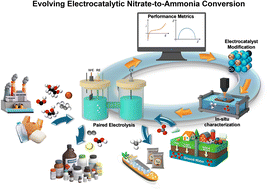
The electrocatalytic nitrate (NO3−) reduction reaction to ammonia (NH3) offers a sustainable pathway for wastewater remediation and distributed NH3 synthesis, presenting a capable alternative to the energy-intensive Haber–Bosch process. Copper (Cu)- and cobalt (Co)-based catalysts are among the most promising for this reaction due to their favourable electronic structure for NO3− activation and cost-effectiveness. However, their propensity for rapid deactivation caused by the strong adsorption of intermediates like *NO that poison active sites remains a primary impediment to high selectivity and stability. This review comprehensively investigates recent breakthroughs in overcoming this limitation through advanced catalyst design strategies specifically for Cu- and Co-based systems. In detail, the protocols were critically examined to regulate intermediate adsorption strength via facet engineering, oxidation state modulation, single-atom dispersion and construction of bimetallic catalysts that provide synergistic *H species to enhance hydrogenation kinetics through optimization of the d band center of Cu and Co. Furthermore, innovative tandem catalysis systems and paired electrolysis configurations are also explored to couple the NO3− reduction reaction with alternative oxidation reactions (AORs) to drastically improve energy efficiency and economic viability. Therefore, by synthesizing these design principles this review aims to guide the development of next-generation, high-performance and durable Cu- and Co-based electrocatalysts for scalable sustainable nitrogen management.
- This article is part of the themed collections: Recent Review Articles and Nanocatalysis
 Please wait while we load your content...


