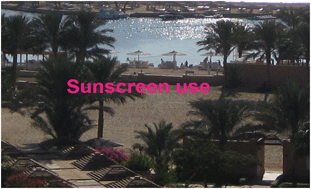
With this observation study we aimed to determine how and when sunscreen was used. 20 sun seekers were observed during a one-week sun holiday in Hurghada, Egypt. The sunscreen application thickness was related to part of body, time outdoors, exposure to ultraviolet radiation and to sunburning. Skin sites with sunscreen were exposed to UVR significantly longer and received significantly higher UVR doses than skin sites without sunscreen. They received an average of 0.62 SED [0.0–9.3 SED] (13% of their MED) before the first sunscreen application of the day. The average sunscreen used was SPF15 and the sunscreen application thickness was in average 0.79 mg cm−2 giving an approximated effect of SPF3. For different body parts either the total UVR exposure dose or the UVR exposure time and UVR exposure dose before the first sunscreen application were higher for sunburned than non-sunburned skin sites. In the final model gender, skin type and UVR to skin (adjusted for SPF and sunscreen application thickness) were significant predictors of sunburning. The sunscreen application thickness of 0.79 mg cm−2 was less than the 2 mg cm−2 used for testing SPF. The late start of sunscreen use and improper application thickness was ineffective in preventing sunburn, and therefore could not compensate for the risk of prolonged UVR exposure and high UVR doses. Our results lead us to suspect that the protective effect of sunscreen use against DNA-damage, and thereby skin cancer, is minimal the way sunscreen is used under real sun holiday conditions.
You have access to this article
 Please wait while we load your content...
Something went wrong. Try again?
Please wait while we load your content...
Something went wrong. Try again?


 PLATFORM UPDATE: