


 SCHEDULED MAINTENANCE

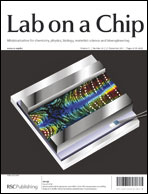
Ensembles of engineered cardiac tissues for physiological and pharmacological study: Heart on a chip†‡
Abstract
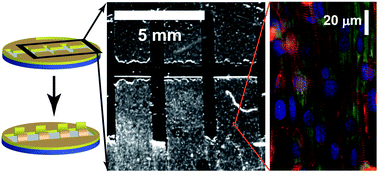
Traditionally, muscle physiology experiments require multiple tissue samples to obtain morphometric, electrophysiological, and contractility data. Furthermore, these experiments are commonly completed one at a time on cover slips of single cells, isotropic monolayers, or in isolated muscle strips. In all of these cases, variability of the samples hinders quantitative comparisons among experimental groups. Here, we report the design of a “heart on a chip” that exploits muscular thin film technology – biohybrid constructs of an engineered, anisotropic ventricular myocardium on an elastomeric thin film – to measure contractility, combined with a quantification of action potential propagation, and cytoskeletal architecture in multiple tissues in the same experiment. We report techniques for real-time data collection and analysis during pharmacological intervention. The chip is an efficient means of measuring structure-function relationships in constructs that replicate the hierarchical tissue architectures of laminar cardiac muscle.
 Please wait while we load your content...


