


 SCHEDULED MAINTENANCE


Medicinal plant acid-treatment for a healthier herb tea and recycling of the spent herb residue†
Abstract
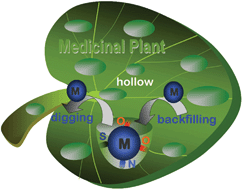
Many kinds of medicinal plants are used in the treatment of disease, and a proportion of these plants grow tenaciously in soils contaminated with heavy metals. An example of one such medicinal plant is the herb Thlaspi rotundifolium L., which accumulates selenium (Se), and has anti-oxidation, anti-aging, anti-cancer and immunity-adjusting properties, but also simultaneously hyperaccumulates harmful metals such as Cd and Zn from the soil. An interesting model named ‘digging metals@plant then backfilling’ has been suggested, where the metals are removed from the plant by acid treatment, then the nano-pores imprinted with the heavy metals are backfilled from the drinking water. Experimental studies of this idea indicate that it can remove unwanted substances from the herb itself and also from the drinking water, ensuring the safety of the herb tea. Additionally, the Se normally embedded in the herb was not noticeably lost. Thus, this model provides a sustainable solution for the disposal of heavy metals using metal-accumulating plants.
 Please wait while we load your content...


