


 SCHEDULED MAINTENANCE

Two-hundredfold volume concentration of dilute cell and particle suspensions using chip integrated multistage acoustophoresis†
Abstract
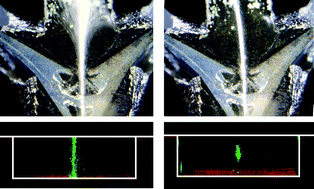
Concentrating cells is a frequently performed step in cell biological assays and medical diagnostics. The commonly used centrifuge exhibits limitations when dealing with rare cell events and small sample volumes. Here, we present an acoustophoresis microfluidic chip utilising ultrasound to concentrate particles and cells into a smaller volume. The method is label-free, continuous and independent of suspending fluid, allowing for low cost and minimal preparation of the samples. Sequential concentration regions and two-dimensional acoustic standing wave focusing of cells and particles were found critical to accomplish concentration factors beyond one hundred times. Microparticles (5 μm in diameter) used to characterize the system were concentrated up to 194.2 ± 9.6 times with a recovery of 97.1 ± 4.8%. Red blood cells and prostate cancer cells were concentrated 145.0 ± 5.0 times and 195.7 ± 36.2 times, respectively, with recoveries of 97.2 ± 3.3% and 97.9 ± 18.1%. The data demonstrate that acoustophoresis is an effective technique for continuous flow-based concentration of cells and particles, offering a much needed intermediate step between sorting and detection of rare cell samples in lab-on-a-chip systems.
 Please wait while we load your content...


