


 SCHEDULED MAINTENANCE


Coffee melanoidins: structures, mechanisms of formation and potential health impacts
Abstract
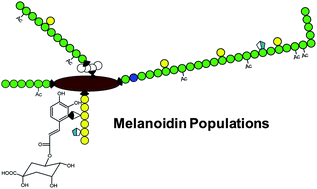
During the roasting process, coffee bean components undergo structural changes leading to the formation of melanoidins, which are defined as high molecular weight nitrogenous and brown-colored compounds. As coffee brew is one of the main sources of melanoidins in the human diet, their health implications are of great interest. In fact, several biological activities, such as antioxidant, antimicrobial, anticariogenic, anti-inflammatory, antihypertensive, and antiglycative activities, have been attributed to coffee melanoidins. To understand the potential of coffee melanoidin health benefits, it is essential to know their chemical structures. The studies undertaken to date dealing with the structural characterization of coffee melanoidins have shown that polysaccharides, proteins, and chlorogenic acids are involved in coffee melanoidin formation. However, exact structures of coffee melanoidins and mechanisms involved in their formation are far to be elucidated. This paper systematizes the available information and provides a critical overview of the knowledge obtained so far about the structure of coffee melanoidins, mechanisms of their formation, and their potential health implications.
- This article is part of the themed collection: First International Congress on Cocoa, Coffee and Tea
 Please wait while we load your content...


