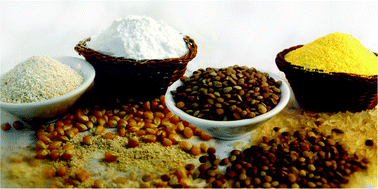
Renewed interest in under-utilized plant species that can be used for obtaining flour mainly arises from the finding and promotion of nutritionally relevant attributes. These products can also gain value as functional foods and ingredients. Although they are often presented as new crops and raw materials, they have been used by local populations in traditional ways for many centuries. Their innovation is rather related to the ways in which old and new uses are being readdressed. The present work summarizes recent information about production, chemical composition, nutritional and functional components and health benefits of non-traditional flours. Amongst the most representative groups, pseudocereals, roots and tubers, and leguminous flours are included. Since non-traditional flours or other derivatives could contain relatively high amounts of antinutritional factors that also have health implications, related information about this subject is included.
You have access to this article
 Please wait while we load your content...
Something went wrong. Try again?
Please wait while we load your content...
Something went wrong. Try again?


 SCHEDULED MAINTENANCE