


 SCHEDULED MAINTENANCE


The carbon abatement potential of high penetration intermittent renewables†
Abstract
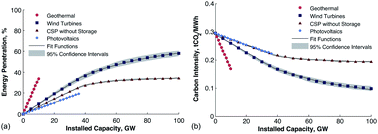
The carbon abatement potentials of wind turbines, photovoltaics, and concentrating solar power plants were investigated using dispatch simulations over California with 2005–06 meteorological and load data. A parameterization of the simulation results is presented that provides approximations of both low-penetration carbon abatement rates and maximum carbon abatement potentials based on the temporal characteristics of the resource and the load. The results suggest that shallow carbon emissions reductions (up to 20% of the base case) can be achieved most efficiently with geothermal power and demand reductions via energy efficiency or conservation. Deep emissions reductions (up to 89% for this closed system), however, may require the build-out of very large fleets of intermittent renewables and improved power system flexibility, communications, and controls. At very high penetrations, combining wind and solar power improved renewable portfolio performance over individual build-out scenarios by reducing curtailment, suggesting that further reductions may be met by importing uncorrelated out-of-state renewable power. The results also suggest that 90–100% carbon emission reductions will rely on the development of demand response and energy storage facilities with power capacities of at least 65% of peak demand and energy capacities large enough to accommodate seasonal energy storage.
 Please wait while we load your content...


