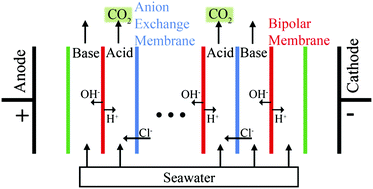
An efficient method for extracting the dissolved CO2 in the oceans would effectively enable the separation of CO2 from the atmosphere without the need to process large volumes of air, and could provide a key step in the synthesis of renewable, carbon-neutral liquid fuels. While the extraction of CO2 from seawater has been previously demonstrated, many challenges remain, including slow extraction rates and poor CO2 selectivity, among others. Here we describe a novel solution to these challenges – efficient CO2 extraction from seawater using bipolar membrane electrodialysis (BPMED). We characterize the performance of a custom designed and built CO2-from-seawater prototype, demonstrating the ability to extract 59% of the total dissolved inorganic carbon from seawater as CO2 gas with an electrochemical energy consumption of 242 kJ mol−1(CO2).
You have access to this article
 Please wait while we load your content...
Something went wrong. Try again?
Please wait while we load your content...
Something went wrong. Try again?