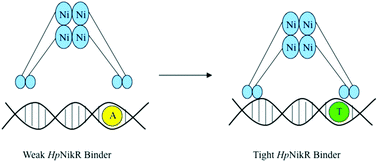
HpNikR is a prokaryotic nickel binding transcription factor found in Helicobacter pylori, where it functions as a regulator of multiple genes including those involved in nickel ion homeostasis and acid adaptation. The target operator sequences of the genes that are regulated by HpNikR do not have symmetric recognition sites, and the mechanism by which HpNikR distinguishes between the genes it regulates is not well understood. HpNikR utilizes a two-tiered mode of DNA binding in which some target sequences are bound with high affinity (Kd of nM) and others with low affinity (Kd of μM). An alignment of the high affinity and low affinity binder sequences identified a consensus binding sequence. The consensus sequence was conserved to a greater degree for the high affinity binder sequences compared to the low affinity binder sequences. The exact bases within the consensus sequence that are crucial for a high affinity binding interaction have not been identified. Here we sought to identify key residues from the consensus sequence that are crucial for a tight binding interaction using a competitive fluorescence anisotropy assay. Systematic mutations were made to a weak binder operator sequence, PnikR, so that it more closely resembled the consensus sequence and the effect of these mutations on protein–DNA binding was measured. Similarly, mutations that disrupted the consensus sequence were made to a tight binder operator sequence, PureA, and their effects on protein–DNA binding were measured. Taken together, these studies implicate thymine 10, located on the 3′ end of the palindrome, as crucial for tight binding.
You have access to this article
 Please wait while we load your content...
Something went wrong. Try again?
Please wait while we load your content...
Something went wrong. Try again?


 SCHEDULED MAINTENANCE