


 SCHEDULED MAINTENANCE

Designing organometallic compounds for catalysis and therapy
Abstract
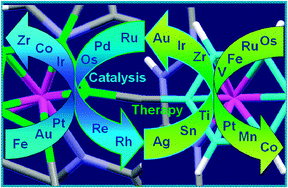
Bioorganometallic chemistry is a rapidly developing area of research. In recent years organometallic compounds have provided a rich platform for the design of effective catalysts, e.g. for olefin metathesis and transfer hydrogenation. Electronic and steric effects are used to control both the thermodynamics and kinetics of ligand substitution and redox reactions of metal ions, especially RuII. Can similar features be incorporated into the design of targeted organometallic drugs? Such complexes offer potential for novel mechanisms of drug action through incorporation of outer-sphere recognition of targets and controlled activation features based on ligand substitution as well as metal- and ligand-based redox processes. We focus here on η6-arene, η5-cyclopentadienyl sandwich and half-sandwich complexes of FeII, RuII, OsII and IrIII with promising activity towards cancer, malaria, and other conditions.
 Please wait while we load your content...


