


 SCHEDULED MAINTENANCE


Electrochemical determination of glutathione: a review
Abstract
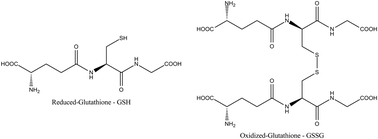
The physiological importance of glutathione and glutathione disulfide is evident from their implications in an array of medical conditions including diabetes, Parkinson's disease and cancer. As such the need for simple, rapid and cheap assays to aid clinical diagnostics and treatment is clear. These requirements are, in principle at least, ideally suited to electrochemical detection. Accordingly a large array of voltammetric methods ultimately aimed at making cheap and most likely disposable electrodes have been reported. This critical review analyses the context in which physiological glutathione measurement can be undertaken electrochemically and compares it to current assay approaches, while also covering the current literature for glutathione disulfide detection. The various characteristics and limitations of the methodologies are compared and contrasted, with the analytical parameters (matrix, pH, limit of detection, etc.) tabulated to aid comparison.
- This article is part of the themed collection: 2012's Top 25 most read Analyst articles
 Please wait while we load your content...


