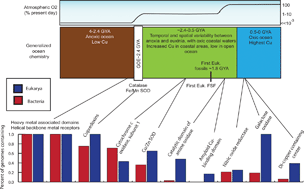
The bioavailability of different metals has likely changed over the course of Earth's history. Based on geochemical models, copper became much more bioavailable with the advent of an oxidizing atmosphere. This posed both a challenge and an opportunity for the organisms at that time. Specifically, copper resistance mechanisms were required first and to do this Bacteria appear to have modified already existing protein structures. Later, Cu-utilizing proteins evolved and continue to be used sparingly, at least relative to later evolving Eukarya, by Bacteria but with significant biogeochemical consequences. Copper is a strong soft metal that can attack intracellular iron–sulfur centers of various proteins under primarily anoxic conditions. In oxic conditions, copper can catalyze a Fenton-like reaction that may cause lipid peroxidation and protein damage. The inherent ability of copper to inflict damage upon multiple cellular functions has been harnessed by macrophages and perhaps amoeba to kill and later digest bacteria and other microorganisms. Notably, these organisms, unlike Bacteria, most likely evolved after increases in copper availability, implying that Eukarya utilized their own trafficking and resistance mechanisms, in addition to the natural toxicity of copper, as leverage in interactions with Bacteria. In an “arms race,” some pathogenic bacteria have evolved new mechanisms for copper resistance, which is relevant given renewed interest in the use of copper surfaces due to their antimicrobial properties.
You have access to this article
 Please wait while we load your content...
Something went wrong. Try again?
Please wait while we load your content...
Something went wrong. Try again?


 SCHEDULED MAINTENANCE