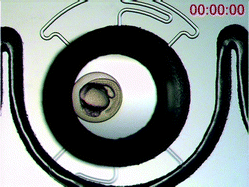
The zebrafish embryo is a small, cheap, whole-animal model which may replace rodents in some areas of research. Unfortunately, zebrafish embryos are commonly cultured in microtitre plates using cell-culture protocols with static buffer replacement. Such protocols are highly invasive, consume large quantities of reagents and do not readily permit high-quality imaging. Zebrafish and rodent embryos have previously been cultured in static microfluidic drops, and zebrafish embryos have also been raised in a prototype polydimethylsiloxane setup in a Petri dish. Other than this, no animal embryo has ever been shown to undergo embryonic development in a microfluidic flow-through system. We have developed and prototyped a specialized lab-on-a-chip made from bonded layers of borosilicate glass. We find that zebrafish embryos can develop in the chip for 5 days, with continuous buffer flow at pressures of 0.005–0.04 MPa. Phenotypic effects were seen, but these were scored subjectively as ‘minor’. Survival rates of 100% could be reached with buffer flows of 2 µL per well per min. High-quality imaging was possible. An acute ethanol exposure test in the chip replicated the same assay performed in microtitre plates. More than 100 embryos could be cultured in an area, excluding infrastructure, smaller than a credit card. We discuss how biochip technology, coupled with zebrafish larvae, could allow biological research to be conducted in massive, parallel experiments, at high speed and low cost.
You have access to this article
 Please wait while we load your content...
Something went wrong. Try again?
Please wait while we load your content...
Something went wrong. Try again?


 SCHEDULED MAINTENANCE