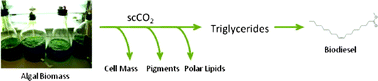
Supercritical carbon dioxide (scCO2) was used to extract components of interest from Scenedesmus dimorphus, a microalgae species, under varied algal harvesting and extraction conditions. Liquid chromatography-mass spectrometry (LC-MS) was used to quantify the concentration of fatty acid methyl esters (FAME) and the FAME profile of transesterified lipids, phospholipids and pigments extracted under varied supercritical temperatures and pressures. The scCO2 extraction results are compared with conventional solvent extraction to evaluate differences in the efficiency and nature of the extracted materials. Algae harvested by centrifugation (vs.lyophilization) demonstrated a similar extraction efficiency in scCO2, indicating potential energy benefits by avoiding conventional algal mass dehydration prior to extraction. Centrifuged algae and optimized extraction conditions (6000 psi; 100 °C) resulted in comparable FAME yields to conventional processes, as well as increased selectivity, reflected in the decreased pigment, nitrogen and phospholipid contamination of the FAME. Cell pre-treatments—sonication, microwave, bead beating and lyophilization—showed an enhancement in extraction yield in both conventional solvent and scCO2 extraction, allowing for improved extraction efficiencies. This study suggests that scCO2, a green solvent, shows great potential for algal lipid extraction for the sustainable production of biodiesel.
You have access to this article
 Please wait while we load your content...
Something went wrong. Try again?
Please wait while we load your content...
Something went wrong. Try again?


 PLATFORM UPDATE: