


Viable methodologies for the synthesis of high-quality nanostructures
Abstract
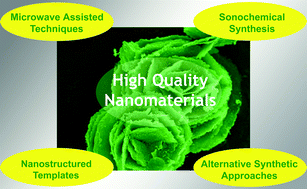
The development of environmentally benign methods for the synthesis of nanomaterials has become increasingly relevant as chemists look to shape a more sustainable future. In this critical review, we present current work towards developing alternative methods for synthesizing a wide range of high-quality nanomaterials with predictable and controllable size, shape, composition, morphology and crystallinity. In particular, we focus on the inherent advantages of utilizing porous
 Please wait while we load your content...


