


 SCHEDULED MAINTENANCE:

Microwave chemistry for inorganic nanomaterials synthesis
Abstract
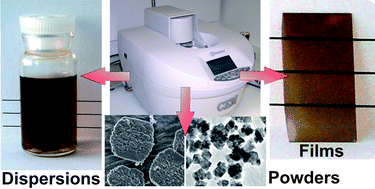
This Feature Article gives an overview of microwave-assisted liquid phase routes to inorganic nanomaterials. Whereas microwave chemistry is a well-established technique in organic synthesis, its use in inorganic nanomaterials' synthesis is still at the beginning and far away from having reached its full potential. However, the rapidly growing number of publications in this field suggests that microwave chemistry will play an outstanding role in the broad field of Nanoscience and Nanotechnology. This article is not meant to give an exhaustive overview of all nanomaterials synthesized by the microwave technique, but to discuss the new opportunities that arise as a result of the unique features of microwave chemistry. Principles, advantages and limitations of microwave chemistry are introduced, its application in the synthesis of different classes of functional nanomaterials is discussed, and finally expected benefits for nanomaterials' synthesis are elaborated.
- This article is part of the themed collection: Nanoscale 10th Anniversary: Top Cited Articles
 Please wait while we load your content...


