


 SCHEDULED MAINTENANCE


Quantitative elemental bio-imaging of Mn, Fe, Cu and Zn in 6-hydroxydopamine induced Parkinsonism mouse models
Abstract
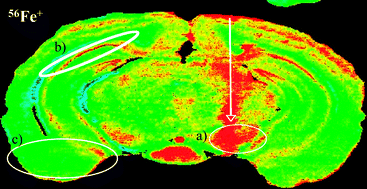
This study demonstrates the application of quantitative elemental bio-imaging for the determination of the distribution Cu, Mn, Fe and Zn in Parkinsonism mouse model brains. Elevated concentrations of these metals within the substantia nigra (SN) are suspected to play a role on the development of Parkinson’s disease. Elemental bio-imaging employs laser ablation inductively coupled mass spectrometry (LA-ICP-MS) to construct images of trace element distribution. Quantitative data was produced by ablating the standard tissue sections and recording the mean signal intensity calibrated against multi level matrix matched tissue standards. The concentrations of Fe within the substantia nigra of the lesioned animals increased significantly when compared against control animals. Furthermore, the data was compared against solution nebulisation ICP-MS in which the whole substantia nigra was excised. The trends were the same for both methods; however the elemental bio-imaging method returned significantly higher concentrations. This was caused by dilution from inclusion of surrounding tissue of the SN during the excision procedure.
 Please wait while we load your content...