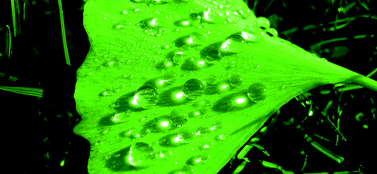
This review paper presents the diversity of plant surface structures from a single cell to multi-cellular surface sculptures. There is still no comprehensive book which provides an overview of the diversity of plant surface structures. This article presents a guide for the description of cellular and sub-cellular plant surface structures, which include hairs, wax crystals and surface folding. Biological surfaces are multifunctional boundary layers to their environment. Functionally optimized surfaces are one of the key innovations in the more than 400 million years of evolution of land plants. In the plant surface, micro- and nanostructures play a special role, and a large diversity of surface structures exists at different size levels. Well known functional aspects of plant surface structures are the reduction of particle adhesion, the sliding structures of carnivorous plants for insect catching, and the self-cleaning properties of the superhydrophobic Lotus (Nelumbo nucifera) leaves. Their structures and functions might be useful models for the development of functional materials. The surface properties of plants are based on physico-chemical principles and can be transferred to technical “biomimetic” materials, as successfully done for the self-cleaning properties of the Lotus leaves. This article is designed as an introduction for biologists and non biologists and should stimulate the reader to initiate or intensify the study of biological surfaces.
You have access to this article
 Please wait while we load your content...
Something went wrong. Try again?
Please wait while we load your content...
Something went wrong. Try again?


 SCHEDULED MAINTENANCE