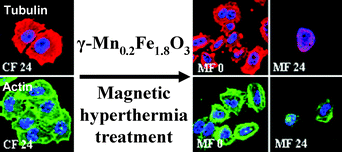
Magnetic nanoparticles of γ-MnxFe2−xO3 (0 ≤x≤ 1.3) have been synthesized successfully using a single step process wherein the respective inorganic salts were thermally decomposed in ethylene glycol at 200 °C. Single phase formation is evident in the as prepared dried samples without any further treatment. XRD line broadening along with TEM suggest that the particle size is below 30 nm. Both the magnetic and XRD data support the substitution of Mn3+ ions at the tetrahedral site of γ-Fe2O3. Improved magnetization value (78 emu g−1) is obtained for the sample with x = 0.2 compared to one with x = 0 (62 emu g−1) if measured at 20 kOe. Aqueous suspensions of the sample with x = 0.2 were prepared using a polymer, Acrypol 934, with an aim to examine the possible use of these suspensions in the magnetic hyperthermia treatment of cancer. These suspensions were found to be biocompatible at concentration as high as 3.75 mg mL−1 of culture media. Hyperthermia induced by the application of an AC magnetic field in the presence of the above suspension caused HeLa cell death. The cell death was found to be proportional to the quantity of the particles and the duration of application of the AC magnetic field. Following hyperthermia treatment, cells showed varying degrees of membrane blebbing with significant disruption of the actin and tubulin cytoskeletons. The apparent disruption of the actin and microtubule cytoskeletons of cells might be responsible for the death of cells following hyperthermia treatment. These observations suggest that the suspension of these particles may be evaluated for magnetic hyperthermia treatment of cancer.